

Many companies rely on OneTrust to manage cookie consent and ensure compliance with GDPR and other privacy laws. It’s a smart investment. OneTrust is a powerful platform that helps organisations handle complex consent scenarios across multiple markets.
But here’s the reality we often see at Nixon Digital: Using OneTrust doesn’t guarantee compliance.
This might come as a surprise, especially considering the resources companies invest in tools like OneTrust. But the truth is, compliance depends as much on how the platform is implemented as on the platform itself.
The hidden risk: data shared before consent
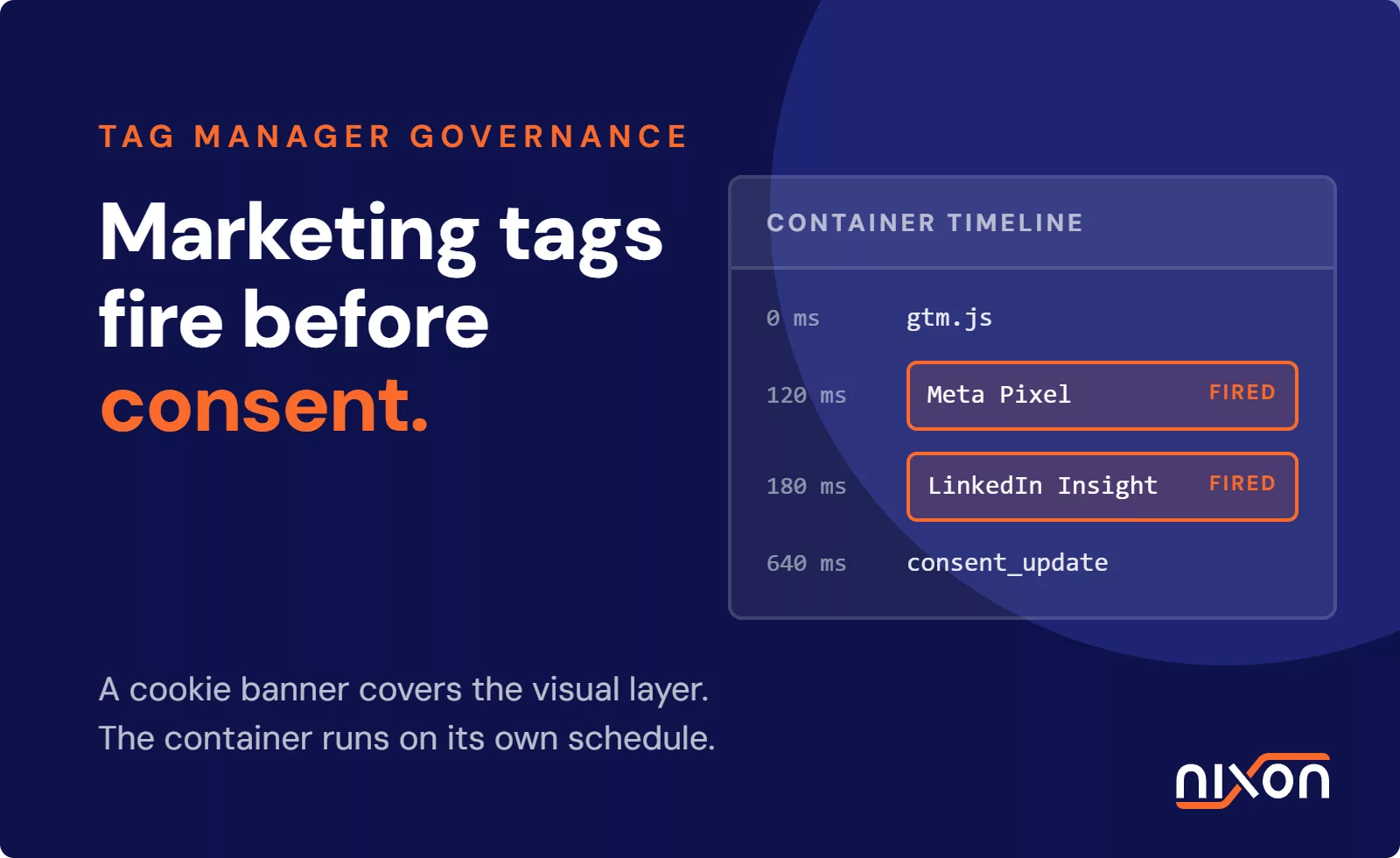
Even if OneTrust is active on your website, incorrect implementation can lead to serious privacy gaps. One of the most common issues we find during audits is that third-party scripts still load before a user gives consent. These scripts can come from ad platforms, chat widgets, or embedded content.
What does that mean in practice?
It means your website might be sharing personal data, such as a visitor’s IP address and device information, with external providers the moment they land on the page. Even if the visitor explicitly chooses not to accept cookies, these scripts are often still loaded due to incorrect implementation. This digital fingerprint, combined with the context of where it was captured, contributes to detailed user profiling.
From a legal perspective, that is a problem. From a reputational standpoint, it’s a risk you don’t want to take. It’s also why many third-party services are “free.” The real value isn’t in the tool, but in the data it collects.
Misconfigured setups are more common than you think
As an official OneTrust implementation partner, we audit these setups regularly. Unfortunately, we find that many of them aren’t airtight. Cookie banners may look good on the homepage, but fail to block trackers deeper into the site. The “Reject all” button might not actually block everything except essential cookies.
We see this issue across industries and regions. There are a few reasons why:
- CMPs like OneTrust are often deployed by marketing or web teams without involving privacy experts
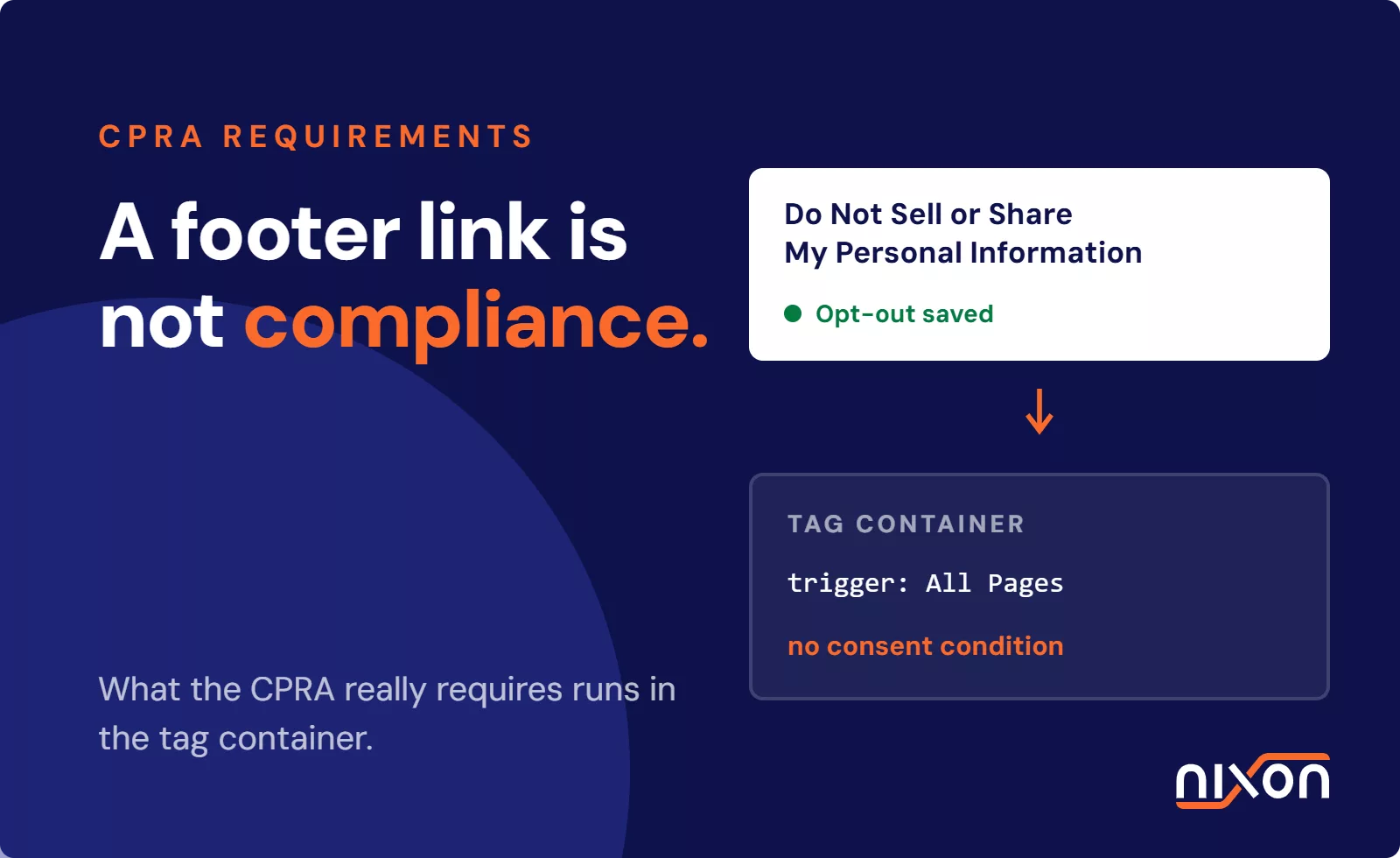
- Scripts are added directly in tag managers, bypassing consent rules
- Cookie categories are incorrectly mapped
- The banner may appear to work correctly, but deeper pages such as product detail views or blog articles often still trigger trackers. These pages are frequently overlooked during the implementation of OneTrust, leading to gaps in compliance.
The result is a false sense of compliance. The banner is live, reports are generated, and everything seems fine on the surface. But in the background, data is already being shared before consent is collected.
What this means for your organisation
If your implementation doesn’t match your policies, there’s a risk of:
- Regulatory fines from data protection authorities
- Complaints from privacy-aware customers
- Negative audit findings and delays in internal approval processes
- Damage to your company’s reputation
These issues are especially difficult to manage when you have a large website portfolio across different countries, languages and platforms.
How to check if your setup is actually working
You can start by manually inspecting your site using browser tools like Google Chrome DevTools. Look under the Network tab to see which third-party domains are contacted and which cookies are dropped before consent.
Or you can make it easier. We created Nixon Lite, a tool that scans your website and checks whether your cookie banner is actually doing its job. Within seconds, you’ll see if scripts or trackers are loading too early, and where the gaps are.
In just a few clicks, Nixon Lite validates whether your cookie banner and consent setup are working as they should across all pages.
Prefer a hands-off approach? No problem. Just fill in the details below and we’ll get back to you with a detailed report on your website’s privacy compliance status.
Frequently Asked Questions
Does using OneTrust guarantee full GDPR or CCPA compliance?
No, using OneTrust alone does not guarantee full compliance with GDPR, CCPA, or other privacy laws. OneTrust is a powerful Consent Management Platform (CMP), but compliance depends on correct setup, configuration, and ongoing monitoring. If consent rules, cookie blocking, or data mapping are not implemented properly, your site may still violate regulations. Compliance requires both the right tools and consistent privacy management practices tailored to your specific website.
Why might a website still be non-compliant even with OneTrust installed?
A website may still be non-compliant if OneTrust is not configured correctly or if scripts bypass its controls. Common issues include cookies loading before consent, incomplete consent categories, or outdated privacy policies. Third-party integrations may also introduce unauthorized trackers. While OneTrust provides the framework, businesses must actively maintain configurations, audit scripts, and update settings regularly to align with evolving privacy requirements and ensure actual legal compliance.
What role does configuration play in OneTrust compliance?
Proper configuration is crucial for OneTrust to work effectively. This includes accurately categorizing cookies, ensuring all non-essential trackers are blocked before consent, and providing clear “Accept” and “Reject” options. Misconfigured banners or incorrectly assigned cookies can cause violations. Regular audits help verify that your OneTrust setup is functioning correctly, especially after website changes or third-party tool updates that might bypass cookie control settings.
How can I ensure OneTrust is helping my website stay compliant?
To ensure OneTrust supports compliance, run regular privacy scans to confirm that cookies and trackers are blocked until consent is given. Keep your cookie categorization accurate, update your privacy policy frequently, and test banner functionality across all devices. Train your team on proper usage and integrate OneTrust with ongoing compliance monitoring tools like Nixon Pro or the Nixon Platform. Combining automation with human oversight ensures your consent management remains effective and legally sound.
Is OneTrust enough on its own to handle all compliance needs?
While OneTrust is a leading CMP, it should be part of a broader compliance strategy. Legal compliance also requires policy updates, staff training, vendor management, and regular website audits. Relying solely on OneTrust without active monitoring and adjustments may leave gaps. A combination of technology, internal processes, and legal expertise is the most reliable way to ensure ongoing adherence to privacy laws like GDPR, CCPA, and ePrivacy.