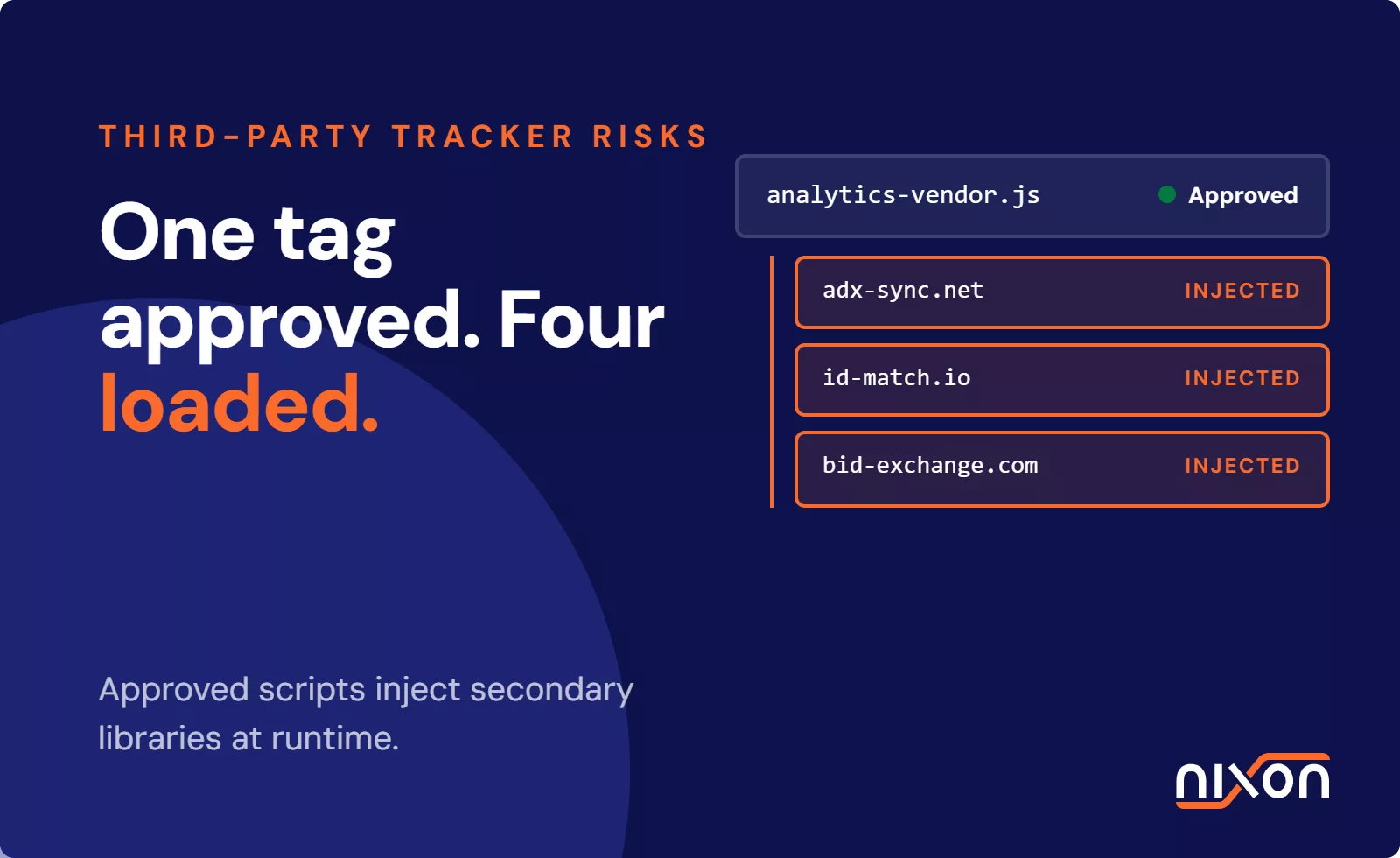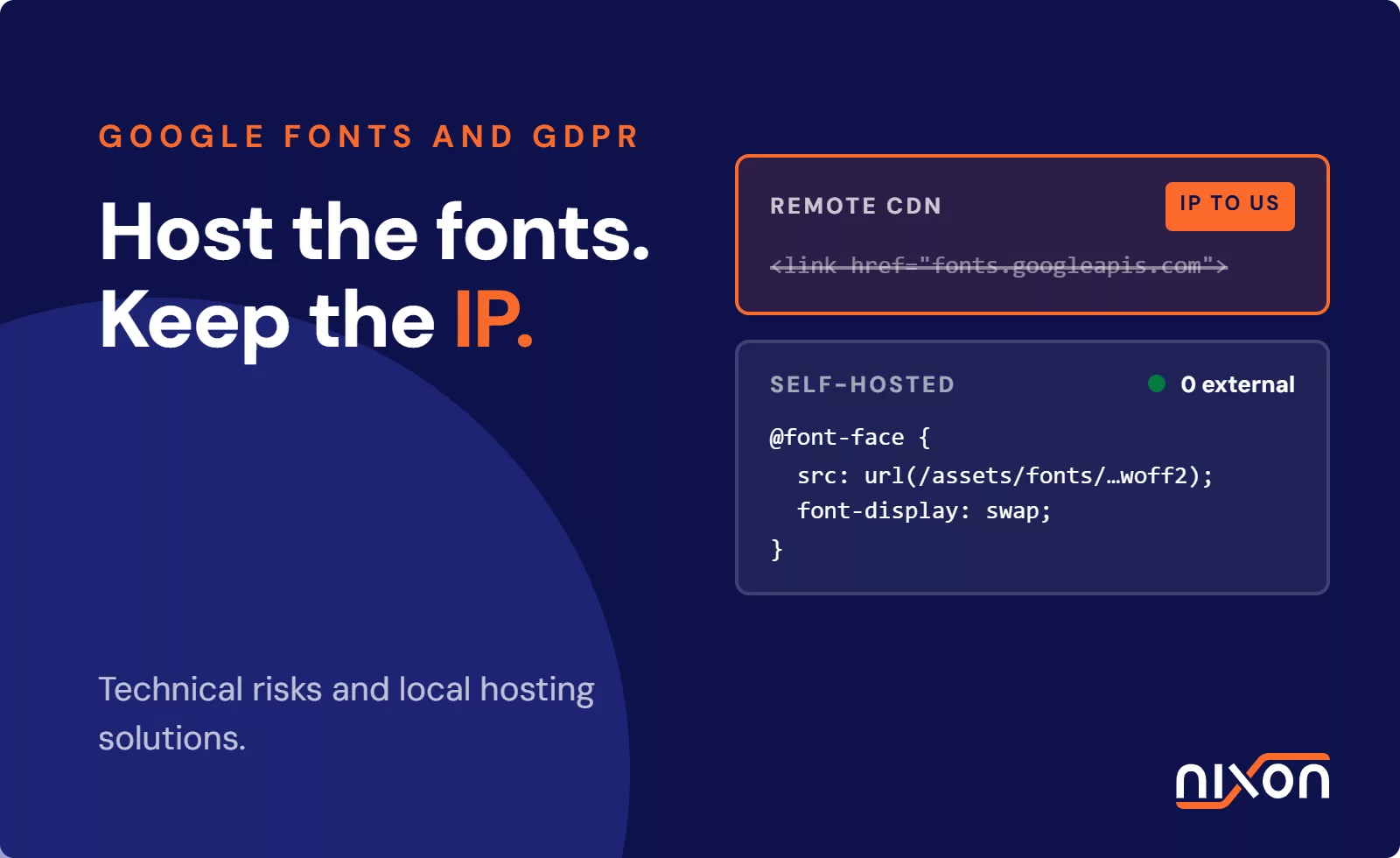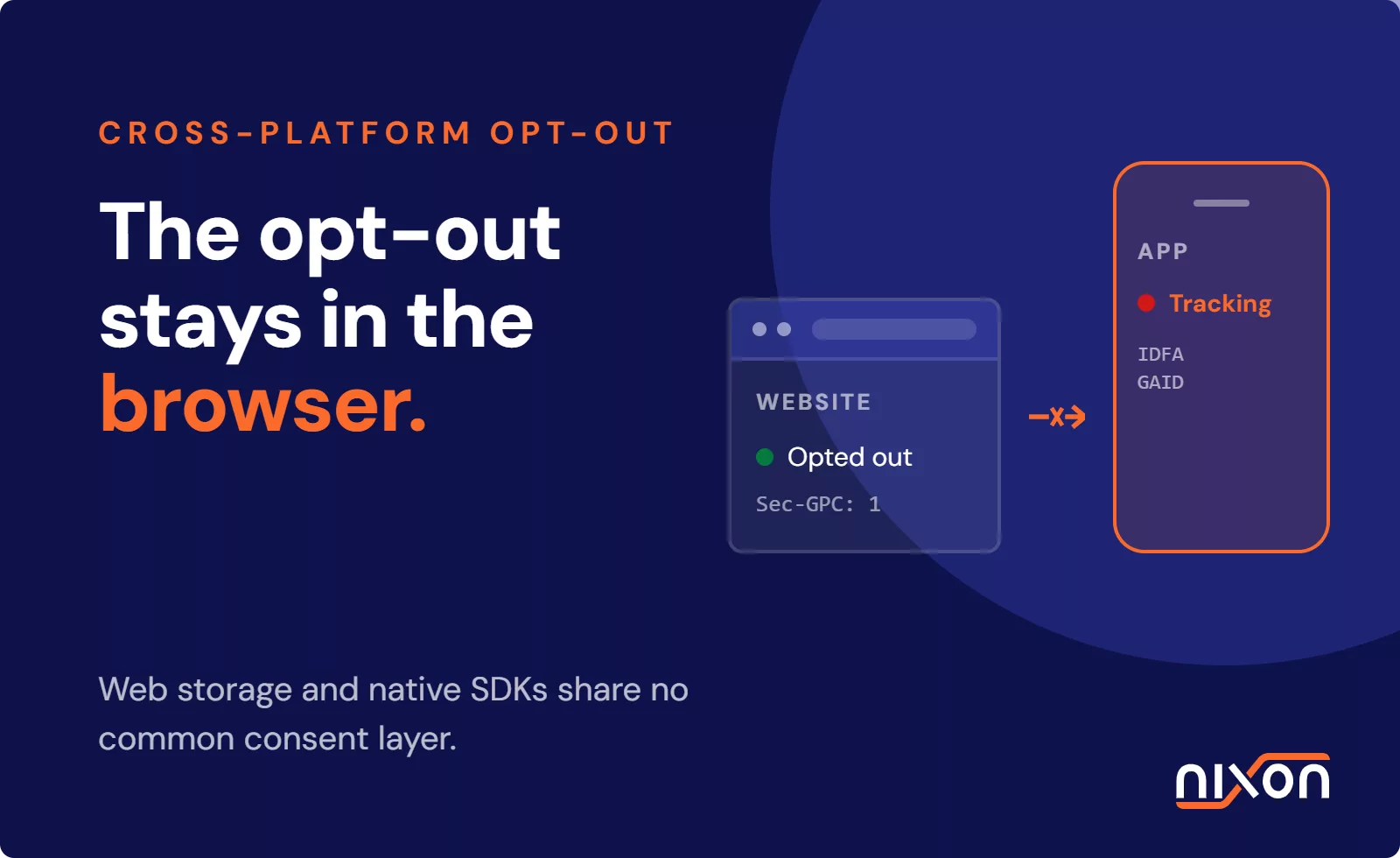


The regulatory landscape isn’t changing because new laws appeared overnight. It’s shifting because regulators, browsers, and users are interpreting consent differently. What worked in 2024 no longer addresses the gap that appears in nearly every privacy audit we run: what your consent banner claims versus what your website actually does before a user makes a choice.
The executive summary
- Consent becomes a data prerequisite, particularly as AI and personalization expand
- Vendor transparency shifts from abstract to specific, affecting how users make consent decisions
- Browser-based consent signals move from conceptual to implemented
- Enforcement scales through automation, expanding regulatory reach significantly
Trend 1: Consent becomes a prerequisite for data use, especially with AI
The core risk: AI doesn’t distinguish between data collected with consent and data collected without it. Once data exists in a system, access becomes use.
Consider this scenario: A customer provides a phone number for a service complaint. Later, someone in marketing thinks, “We have phone numbers in our database, so we should launch WhatsApp campaigns.” AI makes this easier because it surfaces “opportunities” from any accessible data.
The question isn’t just “is our banner well-designed”, but deeper: Does data collection happen before consent? Do you store identifiers that enable later profiling or linking? Are you treating “legitimate interest” as blanket permission? Can you prove consent mechanisms work on every page template, not just the homepage?
If a technology can identify, track, or profile someone, assume it requires explicit scrutiny.
Implementation steps
- Audit network activity before consent across representative page types, not just one landing page
- Test repeat visit behavior because consent handling often differs after the first session
- Monitor tag manager drift since new tags, plugins, and embeds break consent silently
- Define your consent states explicitly for pre-consent behavior, post-accept, post-reject, and per category
How Nixon helps: Nixon Pro detects pre-consent data collection across multiple page types, showing exactly what triggers tracking and how risk varies by template. Nixon Platform applies the same analysis across many sites, ensuring compliance doesn’t depend on whoever last modified the tag manager.
Trend 2: Vendor transparency becomes specific, and that changes user decisions
- Starting with vendor names, then explaining their purposes
- Starting with purpose categories, then listing vendors within each
Implementation steps
- Remove unnecessary vendors because every vendor is a risk surface and friction point
- Group vendors logically so categories match actual use, not just CMP defaults
- Make rejection equally easy by ensuring acceptance and rejection require equal effort
- Verify vendor blocking since a vendor list means nothing if scripts fire anyway
How Nixon helps: Nixon Pro transforms vendor sprawl into a clear inventory of trackers, third parties, and risk levels, enabling you to verify what fires under each consent state. Nixon Platform compares vendors across your portfolio, making it easier to standardize and avoid the “every site has different rules” problem.
Trend 3: Browser-based consent signals move from concept to implementation
- Map your consent architecture including CMP, tag manager, third-party scripts, and server-side calls
- Define your position on consent signals even if not mandatory everywhere yet
- Build for portability so if a user rejects on desktop, the same choice applies on mobile
- Create audit trails to demonstrate what your site does when a signal is present
How Nixon helps: Nixon Pro validates consistency within a single site, including repeat visits and different page templates. Nixon Platform validates consistency across many sites, catching edge cases where one region, template, or embedded tool breaks intended behavior.
Trend 4: Enforcement scales through automation, expanding regulatory reach
Preparation steps
- Assume automated scanning by regulators, journalists, or potential plaintiffs
- Treat compliance as continuous, not a one-time project
- Maintain simple evidence like screenshots, network logs, test results, and version history
- Monitor changes because deployments often break consent without anyone noticing
How Nixon helps: Regulators can scan at scale, while many organizations still verify manually and occasionally. Nixon Pro enables repeatable audits, showing what changed after releases. Nixon Platform does the same across portfolios, helping you spot outliers quickly and prioritize fixes where risk is highest.
The 2026 website privacy compliance checklist
Consent behavior verification
- Tested multiple page types, not only the homepage
- Verified no tracking before consent through network-level analysis
- Tested reject flows and repeat visit scenarios
- Documented what changes when new tags are added
Vendor and third-party management
- Removed unnecessary vendors
- Organized vendor structure to match actual use cases
- Verified vendors don’t fire when rejected
- Track new embeds and plugins as privacy risk
Future-proofing for consent signals
- Know whether you detect GPC or similar browser signals (and how)
- Have a plan for browser-based preference mechanisms
- Can apply consent choices consistently across devices and sessions
Enforcement readiness
- Can produce an evidence package quickly if requested
- Monitor for privacy drift after releases
- Have established verification cadence (monthly or quarterly)
Operational sustainability
- Run repeatable audits on a fixed schedule
- Track changes after releases (tags, plugins, embeds, CMS updates)
- Have centralized comparison of findings across sites and teams
- Can demonstrate proof of behavior, not just configuration