
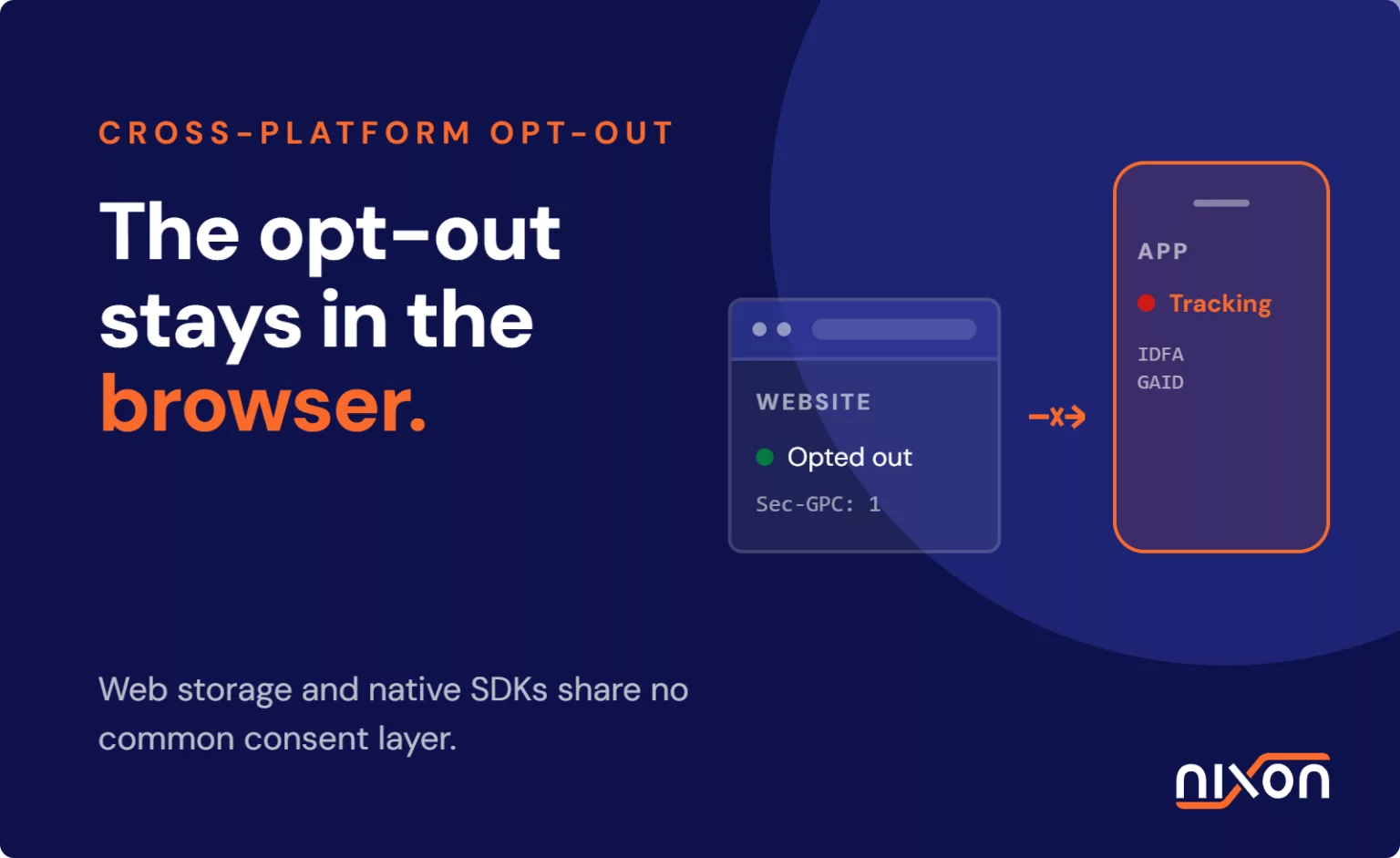
Cross-platform opt-out compliance is the technical synchronisation of user privacy preferences across web browsers, native mobile applications and embedded webviews to ensure tracking signals are uniformly honoured. When a visitor opts out on your website, compliance teams often assume that choice carries over to mobile apps. In practice, technical silos drop these signals at almost every boundary.
A complete audit targets three failure zones: browser storage keys, hybrid webview headers and native SDK tracking flags. The issue stems from the split between browsers and native operating systems. Marketing dashboards promise unified identity management, but in reality consent state rarely reaches mobile SDKs, leaving tag managers firing advertising pixels regardless. Embedded webviews discard universal opt-out signals, and downstream pipelines process personal data without valid consent.
Fixing these gaps requires looking at where tag execution breaks away from consent records. Regulators under US state laws no longer inspect cookie banners in isolation. They test whether an opt-out on a desktop browser actually stops targeted ad traffic across that user session, their mobile app and hybrid webview interactions.
The technical gap between web consent and mobile app state
Cross-platform opt-out compliance demands unified enforcement between web sandboxes and operating system runtimes. Because web browsers isolate cookies while mobile operating systems restrict native identity stores, organisations must actively synchronise opt-out preference signals across client storage, backend identity graphs and application network layers to avoid unlawful data transmission.
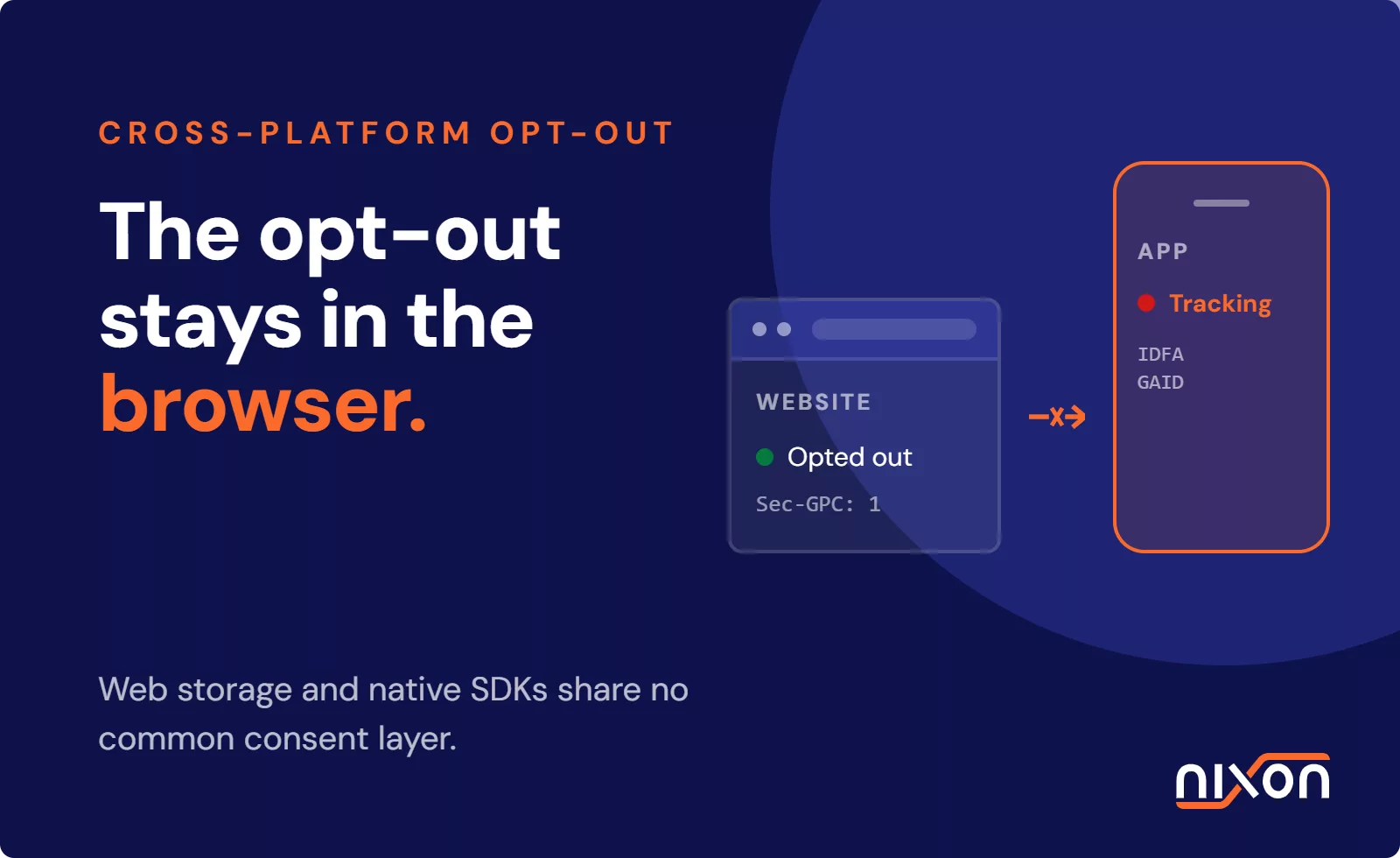
Web opt-out mechanisms rely on browser storage, while native mobile applications use isolated sandboxes. When an individual submits a choice on your website, the browser writes that record to a cookie or local storage key. This preference remains invisible to native code on iOS or Android. Those operating systems reference system advertising identifiers or isolated keychain entries instead.
Cookie storage vs native device identifiers
Desktop and mobile browsers store consent records inside sandboxed web storage. A script in Safari or Chrome inspects cookies and local storage values to check if tracking is permitted. Native mobile code cannot read web cookies. Instead, mobile SDKs query platform frameworks for the Identifier for Advertisers (IDFA) on iOS or the Google Advertising ID (GAID) on Android.
These architectures share no common storage layer. An opt-out captured via your web banner does not change collection flags inside native mobile libraries. Unless a backend links the browser session to a logged-in account and updates the mobile profile, the mobile app keeps transmitting device telemetry and ad engagement events directly to ad networks.
Webview isolation and lost headers
Hybrid applications introduce an even greater vulnerability through embedded webviews. When a mobile app opens an internal browser window using WKWebView or Android WebView, it creates an isolated runtime. In our audits, we regularly see these embedded instances fail to share standard browser cookies. They also discard universal opt-out request headers like Global Privacy Control (GPC).
A user who configured their primary mobile browser to emit universal opt-out signals loses that protection inside an in-app browser. If your web assets rely purely on client-side header detection, the webview renders without receiving the GPC flag. The embedded checkout flow or article page then fires marketing scripts as if the user consented. This failure violates core CCPA-compliant website requirements.
Session synchronisation failures
Unauthenticated user journeys expose structural flaws in cross-platform consent logic. When a visitor navigates a marketing website anonymously, the system anchors their opt-out strictly to an ephemeral client ID. If that visitor later installs the native app or returns on another device, systems treat them as two distinct people. Without identity stitching that ties privacy state back to unauthenticated sessions, the opt-out remains trapped on the originating browser.
Where consent management platforms lose universal opt-out signals
Consent management platforms capture, record and distribute privacy choices. However, capturing a preference is fundamentally different from enforcing it across outbound network traffic. Even well-engineered platforms fail when integrated into complex tag management setups or server-side tracking pipelines.
Tag manager race conditions
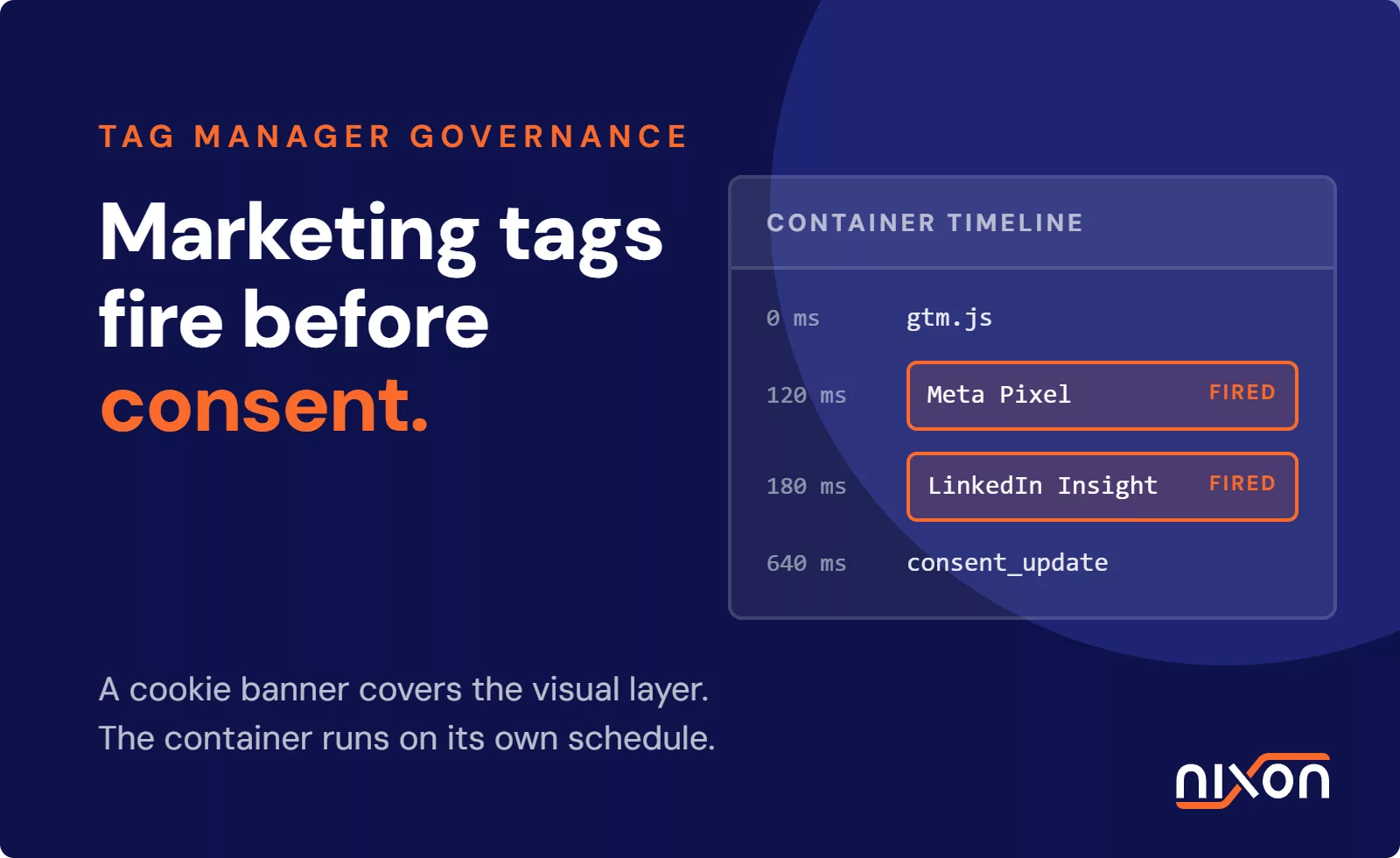
The most common failure in client-side consent enforcement is a race condition between tag managers and CMP scripts. Tag management containers initialise asynchronously to speed up page loads. Container logic often runs before the CMP script finishes decoding the user consent string or parsing the GPC header. As a result, ad tags fire before suppression rules activate.
We see teams blame OneTrust for tag leaks. Yet the flaw is almost always unsequenced GTM containers firing pixels before the CMP script finishes loading. A proper OneTrust cookie consent setup requires deliberate tag sequencing and blocking triggers. These rules ensure advertising pixels wait for verified consent before dispatching network calls.
Misconfigured CMP listeners on hybrid apps
When engineering teams wrap web instances inside hybrid mobile shells, they frequently neglect cross-bridge communication. When we inspect hybrid setups, we find that many implementations miss the native bridge entirely. The JavaScript listener inside the webview registers an opt-out event. Yet without an explicit postMessage bridge to native code, the host mobile application never receives the command to pause native ad tracking SDKs.
The web UI tells the user that tracking is disabled. Meanwhile, native background threads continue streaming geolocation and device metrics to programmatic ad exchanges.
Server-side tracking bypasses
Server-side tracking endpoints introduce severe compliance risks when client-side consent states do not map cleanly to server payloads. Traditional setups just block client tags after an opt-out. Server-side setups are riskier: the client relays an event stream to a first-party collection proxy, which relays that data to third-party endpoints.
A collection proxy may forward incoming requests without stripping identifiers, hashed emails or click parameters. In that scenario, data sharing persists despite client-side banner rejections. Privacy teams must verify that server endpoints systematically drop downstream distribution whenever the client payload indicates an opt-out.
Regulatory enforcement targeting cross-touchpoint signal failures
Enforcement authorities in the United States have moved past static privacy disclosures. Regulatory bodies like the California Privacy Protection Agency (CPPA) and state Attorneys General actively test dynamic user journeys. They verify whether opt-out commands halt backend data transfers in practice.
CPPA expectations for persistent opt-outs
Under California privacy regulations, businesses that sell or share personal information must provide frictionless opt-out mechanisms. Official CPPA regulations on opt-out preference signals mandate that businesses must process opt-out preference signals like GPC across both the browser and any associated profile-level data sharing activities. Failing to respect the signal because a consumer switched from a browser to a mobile application represents an actionable compliance breach.
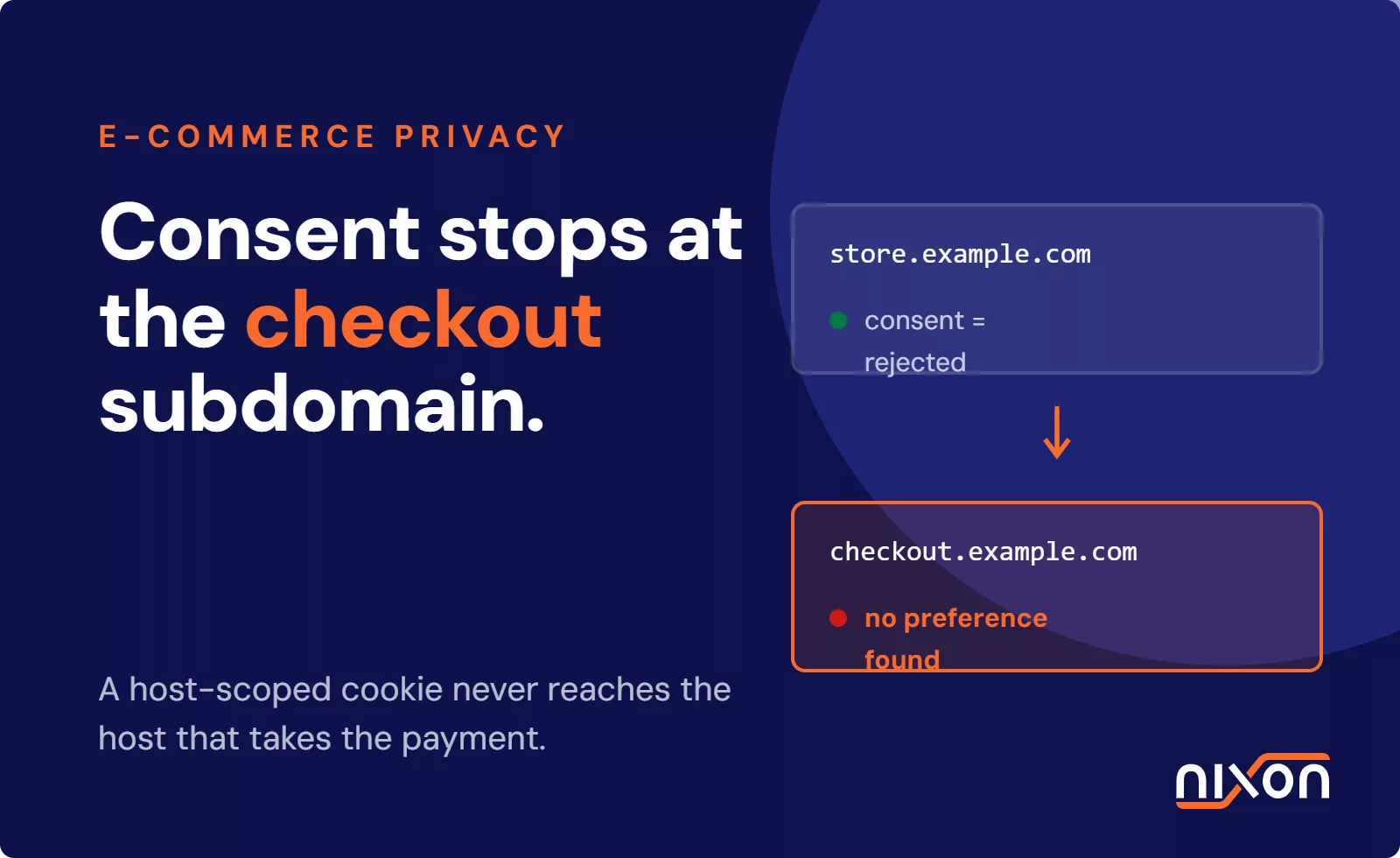
The statute makes clear that businesses cannot force users through redundant steps across subdomains or platforms. If an organisation knows the consumer identity through an authenticated state, an opt-out submitted on the website must apply to that profile across every digital channel, including native mobile software.
FTC and state AG scrutiny on dark patterns and signal drops
Federal and state regulators treat disconnected consent states as deceptive trade practices. The Federal Trade Commission and state agencies have pursued civil penalties where companies presented clear opt-out toggles but kept sending identifiers through secondary advertising pipelines. The California Attorney General CCPA enforcement guidelines reiterate that opt-out rights cover downstream sharing via hidden pixels, mobile SDKs and conversion tracking APIs.
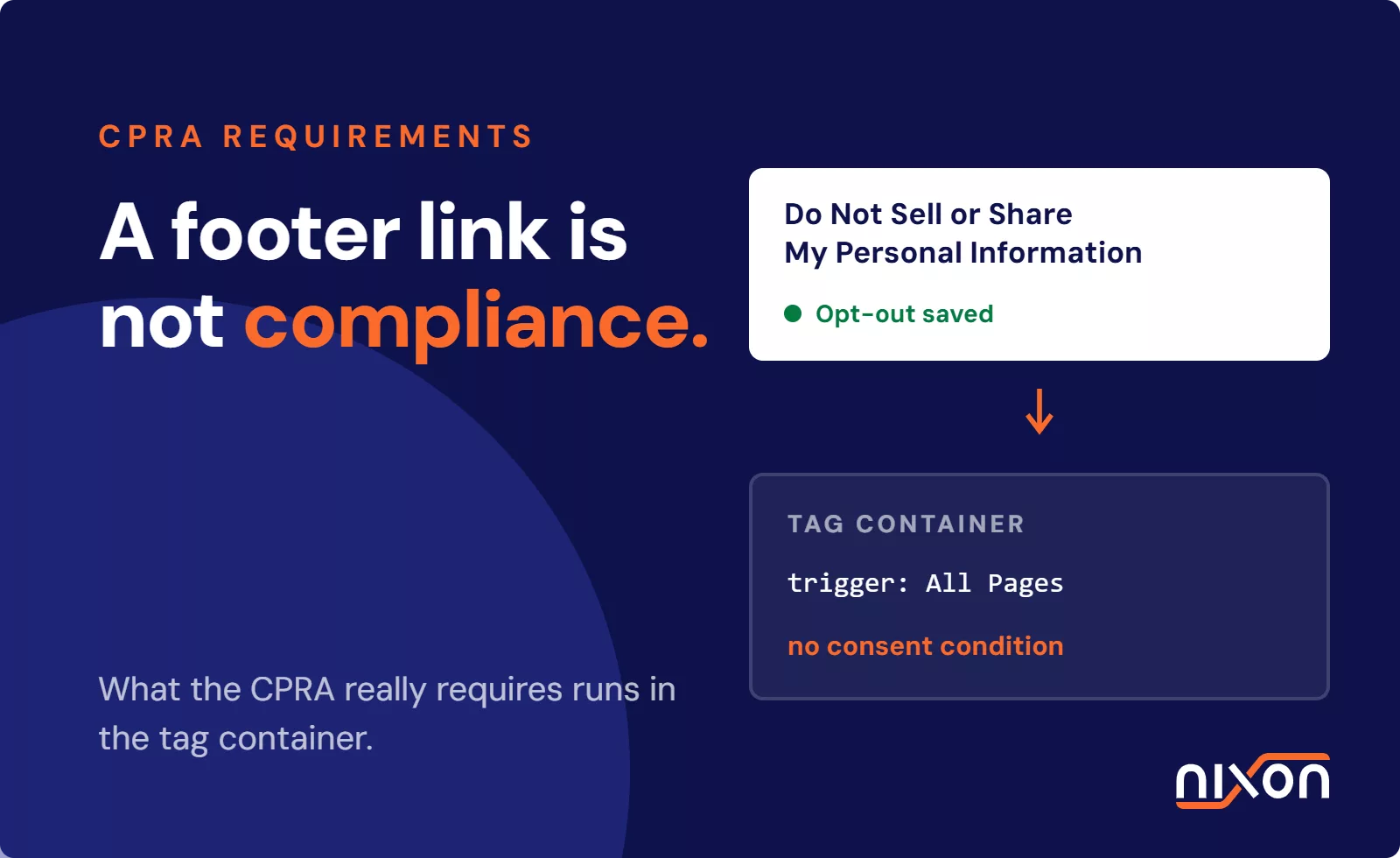
Regulators also go after broken ‘Do Not Sell My Personal Information’ link requirements. Providing a functional link on a desktop footer is insufficient if mobile web visitors or app users cannot locate an equivalent control, or if clicking that control leaves native tracking scripts active.
How to audit your cross-platform opt-out compliance
Verifying cross-platform consent requires deep packet inspection and network analysis rather than superficial user interface testing. Spot-checking a consent banner by confirming that a cookie exists will not reveal background script activity or payload leaks. An accurate audit inspects all outbound network traffic under both permitted and restricted consent conditions.
Step-by-step: Capturing outbound payloads across web and mobile
To audit data flows accurately, engineers must configure proxy tooling such as Charles Proxy, mitmproxy or Wireshark. These tools intercept outbound traffic from target devices. We use this step-by-step workflow during technical audits:
- Proxy configuration: Configure your proxy to capture raw SSL traffic from both desktop browsers and mobile test devices.
- Baseline capture: Establish a baseline by running through normal page flows without opting out, logging every third-party endpoint receiving identifiers or device metadata.
- Storage reset and opt-out: Clear all browser cache and local storage, trigger an explicit opt-out on the website, and repeat the journey.
- Payload verification: Inspect the traffic log to ensure all ad network calls, cross-site trackers and attribution endpoints stop completely.
If network calls to advertising domains persist after the opt-out action, your tag suppression logic failed. Any persistent transmission of user identifiers across network boundaries constitutes an unconsented data transfer that demands immediate remediation.
Testing automated universal opt-out signals
Universal opt-out signals must be audited by simulating requests from privacy-enabled environments. Configure your test browsers to broadcast the Sec-GPC header, or navigate your web assets using a privacy-focused browser like Brave. Verify that your CMP reads the incoming request, automatically updates its internal state to an opted-out status, and halts ad tag execution without presenting a consent barrier.
Perform the same test within mobile webviews by embedding your web pages inside a native shell. Inspect whether the webview correctly relays the Sec-GPC header to your web server. If the embedded instance strips the header, develop custom platform handlers to inject the signal directly into the webview request context.
Validating CMP tag suppression
The final step in your compliance verification involves evaluating whether internal CMP triggers function under high-latency network conditions. Throttle network speeds to simulate real-world conditions, observing whether tracking scripts fire before the consent banner reaches an interactive state. If scripts execute during initial page parsing, you must restructure tag dependencies and remove third-party trackers that run outside your CMP governance framework.
Maintaining cross-platform opt-out compliance requires strict verification wherever websites, webviews and tag managers meet. Manual testing across complex web properties is slow and prone to oversight, especially when marketing teams deploy new scripts between releases. A targeted scan reveals hidden network requests, unblocked tracking scripts and broken consent listeners that standard checks miss. Before regulators inspect your digital endpoints, verify your cross-platform opt-out compliance with Nixon Pro to inspect the browser endpoints loaded across your customer journeys and uncover exactly which scripts fire before consent.
Frequently Asked Questions (FAQ)
Does a website opt-out automatically apply to a mobile app?
No. Website opt-outs write preferences to browser storage such as cookies or local storage. Native mobile applications run in sandboxed operating system environments that do not share browser storage layers. Unless an authenticated user session explicitly links both platforms on your backend, an opt-out captured on a website remains isolated and does not alter native mobile tracking SDK settings.
What is the difference between GPC and CMP opt-out signals?
Global Privacy Control is a standardized browser header or DOM property that automatically communicates a user preference to opt out of data selling and sharing. A Consent Management Platform is a software layer that captures, stores and enforces user preferences. A compliant CMP must automatically detect the incoming GPC signal and suppress tracking scripts without requiring manual user interaction.
Why do tag managers continue firing ad pixels after an opt-out?
Tag managers often fire tags before CMP consent logic resolves, creating an execution race condition. Additionally, tags configured with generic page-view triggers execute independently of consent variables. If tag management triggers are not explicitly tied to CMP consent update events, or if server-side tracking pipelines continue forwarding incoming payloads, advertising pixels continue dispatching personal data downstream.
How does California enforce cross-platform opt-out compliance?
The California Privacy Protection Agency and California Attorney General test interactive data flows rather than inspecting static policy text. Regulators verify whether opt-out mechanisms and GPC signals actively suppress outbound tracking across desktop websites, mobile viewports and associated applications. Continuing to transmit personal data to ad networks after receiving an opt-out violates CCPA regulations regardless of banner placement.
How can web operations teams verify that opt-out signals are respected?
Teams must inspect network traffic using proxy tools or automated privacy scanners to capture outbound payloads before and after opting out. Testing requires sending universal opt-out signals like GPC, monitoring browser webviews, and confirming that tag managers do not broadcast advertising identifiers. Scanning tools identify hidden background scripts and timing errors that standard manual testing misses.