

You operate a website that serves visitors from California and the European Union. You’ve probably heard that both regions have strict privacy laws. But here’s the misunderstanding most teams make: CCPA is not the US equivalent of GDPR. They are fundamentally different frameworks with different philosophies, different consent models and different ways of handling personal information.
This distinction matters because it changes how your website works. The two laws don’t just require different disclosures-they require different behavior from your tracking scripts, your consent mechanisms and your data handling processes. Treating CCPA like GDPR for the US will leave you vulnerable to enforcement action and consumer complaints.
CCPA vs GDPR Website Consent: Opt-Out vs Opt-In
The most important distinction between these laws is how they handle consent. This difference affects nearly everything else.
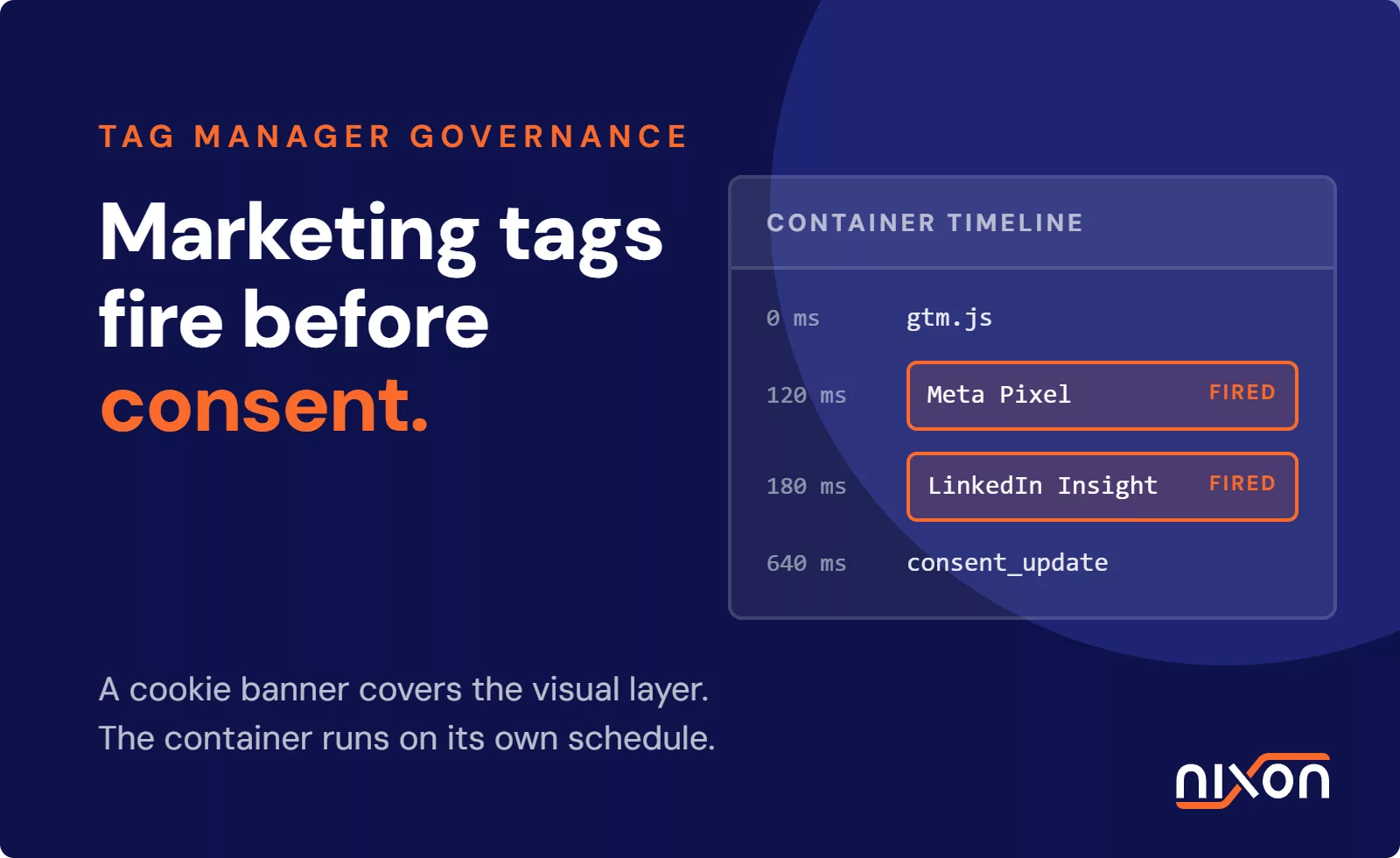
GDPR requires opt-in consent. Before your website loads any script that collects personal data for marketing, analytics, or advertising, you must obtain explicit consent from the visitor. A cookie banner is not decoration. It is a legal requirement. The visitor must actively choose to allow tracking before any cookies are set or tracking pixels fire. This is a “consent-first” model: no collection without permission.
CCPA operates on an opt-out model. Your website can load tracking scripts and collect personal information from the start. However, you must provide a clear way for visitors to opt out of the sale or sharing of their personal information. Crucially, you must honor that opt-out request. The difference is philosophical. GDPR says “ask first.” CCPA says “tell them, then let them refuse.”
For practical website implementation, this means:
- Under GDPR, your consent banner must block scripts from loading until the visitor makes a choice. Third-party tracking pixels, Google Analytics, advertising tags-none of these should fire without consent.
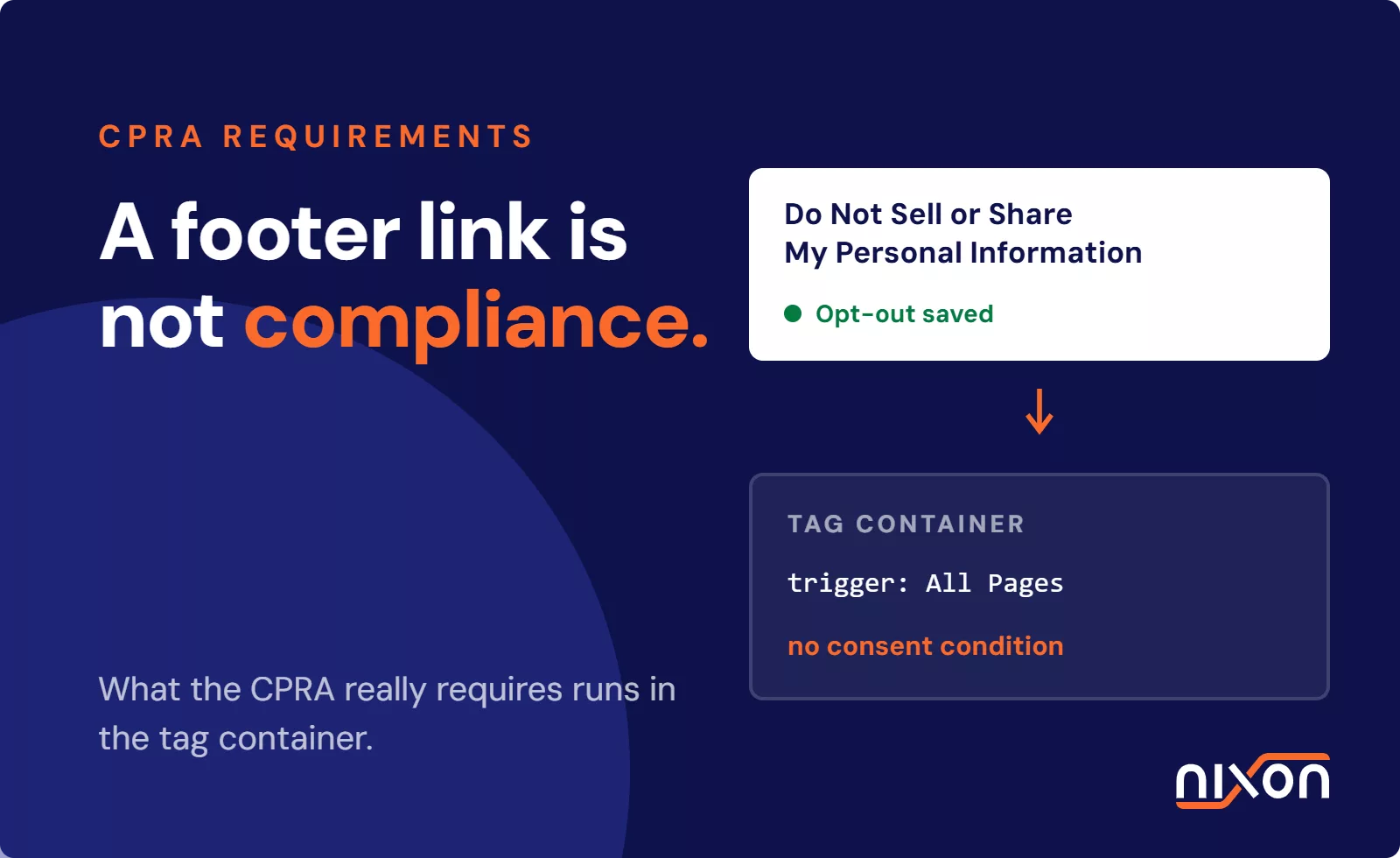
- Under CCPA, scripts can load, but you must provide a “Do Not Sell or Share My Personal Information” link that visitors can use to opt out. You must then honor that preference and stop selling or sharing their data.
Many website teams implement a single consent framework that works for both, treating it as an “abundance of caution.” That is reasonable, but it is not required by CCPA alone. Understand the difference so you make conscious choices about your implementation.
What Each Law Requires on Your Website
To build a website that complies with both frameworks, you need to understand what each law actually demands.
GDPR requirements for websites:
Your privacy policy must clearly explain what personal data you collect, why you collect it, how long you keep it, and who you share it with. You must identify the lawful basis for collection. For most marketing and analytics use cases, that basis is consent. You must obtain explicit consent through a banner or popup before loading tracking scripts. Consent must be freely given, specific, informed and unambiguous. A pre-checked box is not consent. Consent must be as easy to withdraw as it is to give.
You must maintain data processing agreements with any vendor who processes personal data on your behalf. Google Analytics, your email marketing platform, your chatbot-these are all processors. They must contractually commit to protecting data according to GDPR standards.
GDPR gives visitors specific rights: to access their data, to correct it, to delete it under certain conditions, to restrict its use, to object to processing and to port it to another service. Your privacy policy must explain how visitors can exercise these rights.
CCPA requirements for websites:
Your privacy policy must disclose what personal information you collect, why you collect it, and who you share it with. Unlike GDPR, CCPA distinguishes between “sale” and “sharing.” Sale means exchanging personal information for monetary consideration. Sharing means providing personal information to third parties for their own use, such as when you send data to an ad network. If you do either, you must disclose it clearly.
You must provide a “Do Not Sell or Share My Personal Information” link prominently on your website. Visitors can click this link to opt out of the sale or sharing of their information. You must honor the request and stop sharing their data within 45 days. Unlike GDPR consent, which requires a banner before tracking begins, CCPA allows tracking to proceed; the opt-out is how the visitor reclaims control.
CCPA gives visitors the right to know what personal information you collect, the right to delete it, the right to opt out of sales or sharing, and the right to correct inaccurate information. Consumers can also sue websites and vendors for data breaches, without proving negligence.
The terminology difference matters. GDPR uses the term “personal data.” CCPA uses “personal information.” These terms are not identical in scope. GDPR’s definition is broader and more technical. It includes any information that relates to an identified or identifiable person. CCPA’s definition is more specific to commercial contexts. When writing your privacy policy and designing your compliance approach, use the correct terminology for each jurisdiction. This precision prevents misinterpretation and avoids accidental non-compliance.
Where the Laws Overlap
Despite their fundamental differences, CCPA and GDPR share common ground. Understanding this overlap helps you build a compliance strategy that serves both.
Both laws require transparency. You must tell visitors what you are collecting and why. This is the foundation of both frameworks. Your privacy policy is your primary tool, and it must be clear, specific and accessible.
Both laws require that you handle personal data responsibly. GDPR’s “data minimization” principle says collect only what you need. CCPA’s disclosure requirements effectively enforce the same discipline: if you cannot explain why you are collecting something, you should reconsider whether you need it.
Both laws give visitors control. GDPR does this through consent and data subject rights. CCPA does this through opt-out and consumer rights. The mechanism differs, but the principle is the same: the individual should have a way to know about and influence how their data is used.
Both laws impose obligations on your vendors and service providers. GDPR requires data processing agreements. CCPA requires you to disclose your service providers and ensure they do not use personal information for other purposes. You cannot simply buy a tool and forget about compliance. Every third-party script on your website is a compliance obligation.
Finally, both laws allow for enforcement by regulators. GDPR is enforced by data protection authorities in each EU member state. The EDPB (European Data Protection Board) coordinates guidance across Europe. CCPA is enforced by the California Privacy Protection Agency (CPPA) and allows consumers to sue. Violations carry serious penalties. GDPR fines can reach 4 percent of global annual turnover or 20 million euros, whichever is higher. CCPA violations cost 7,500 dollars per intentional violation and 2,500 dollars per unintentional violation, plus consumers can seek damages for data breaches.
Running a Website That Serves Both EU and US Visitors
If your audience is global, you need a strategy that satisfies both laws. Here is how to approach it:
Use a consent management platform that distinguishes between regions. Your banner should detect where the visitor is located and apply the appropriate rules. Visitors from the EU see an opt-in banner that blocks trackers until they consent. Visitors from California see a notice with a “Do Not Sell or Share My Personal Information” link. Visitors from other US states see appropriate banners for their state laws (as of 2026, over 20 states have comprehensive privacy laws).
Implement your data processing agreements carefully. Every vendor that touches personal data needs a contract that complies with GDPR. This contract should specify what data the vendor can access, what they can do with it, and how they must protect it. Document these agreements and keep them current. When you change vendors or update terms, review the contract again.
Write a privacy policy that covers both frameworks. Your policy should explain what data you collect, why and whom you share it with. Use the correct terminology: “personal data” when discussing GDPR and “personal information” when discussing CCPA. Explain the different rights and opt-out mechanisms available under each law. Make it clear and specific. Vague privacy policies do not satisfy either law and will not survive regulatory scrutiny.
Audit your website regularly. Consent mechanisms drift. Scripts change. Third parties add new trackers. Nixon Pro scans your website for compliance issues with both GDPR and CCPA, identifying trackers, scripts and consent gaps. Regular audits catch drift before regulators or consumers do.
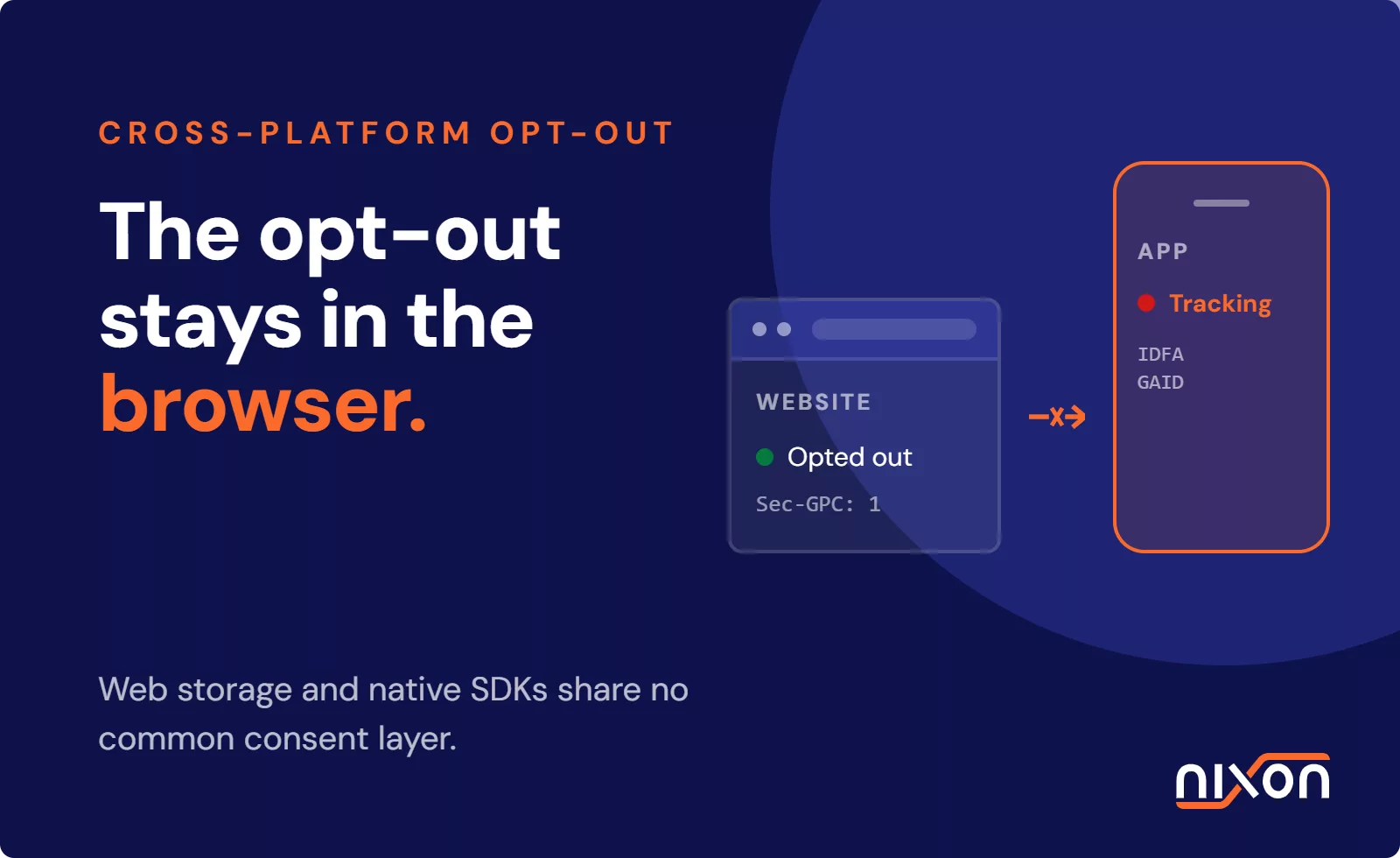
Plan for Global Privacy Control. The CCPA and over 10 other US states now require recognition of global privacy signals like Global Privacy Control (a browser or device signal indicating the user’s privacy preference). GDPR does not mandate it, but the signal is compatible with GDPR consent logic. Supporting Global Privacy Control simplifies your compliance and signals respect for user privacy.
The bottom line: CCPA and GDPR are not the same law applied to different regions. They reflect different regulatory philosophies and require different website implementations. Building for both requires understanding what each law actually demands, implementing the right consent and opt-out mechanisms, and auditing regularly. If you are unsure whether your website is compliant, a compliance scanner can identify gaps quickly.
Need to verify your website against both frameworks? Nixon Pro audits your website for GDPR and CCPA compliance, identifying consent gaps, third-party trackers and data handling issues. Run a free scan to see where your website stands.
For the official legal text, GDPR is published at gdpr-info.eu and the CCPA statute is maintained by the California Privacy Protection Agency.
Related reading: CCPA 2026 compliance: what your website must do now | Digital Omnibus GDPR: the cookie rule changes explained | US state privacy laws in 2026: 20 states compared
Frequently Asked Questions
What is the most important difference between GDPR and CCPA for website owners?
The consent model. GDPR requires opt-in: no tracking script should fire until a visitor actively consents. CCPA uses opt-out: tracking can start by default, but visitors must have a clear way to stop the sale or sharing of their data. This difference changes everything about how your consent banner, tracking scripts and data handling need to be configured. Treating CCPA as simply “GDPR for the US” will leave your implementation wrong for one or both frameworks.
What does my website specifically need to do to comply with CCPA?
Three things. First, disclose in your privacy policy what personal information you collect, why you collect it, and whether you sell or share it with third parties – including ad networks. Second, display a prominent “Do Not Sell or Share My Personal Information” link that visitors can use to opt out. Third, honor that request within 45 days by stopping the sale or sharing of their data. Unlike GDPR, you do not need to block tracking before the visitor makes a choice – but you must genuinely stop sharing data when they ask.
Does my website need two separate consent banners for EU and US visitors?
Not necessarily two banners, but your consent management platform needs to handle both regions differently. EU visitors should see an opt-in banner that blocks tracking scripts until they consent. California visitors should see a notice with a “Do Not Sell or Share” link. Over 20 US states now have comprehensive privacy laws, each with slightly different requirements. A regional detection approach that applies the correct rules based on visitor location is the practical solution for global websites.
Where do GDPR and CCPA overlap and can I build one compliance program for both?
The overlap is meaningful. Both require transparency about what you collect and why. Both require you to give visitors some form of control over their data. Both impose obligations on every third-party vendor that processes personal data on your behalf – contracts and documentation are required under both frameworks. Building around the stricter standard (GDPR opt-in consent) gives you a strong foundation for CCPA compliance, though CCPA-specific requirements like the “Do Not Sell” link and California-specific consumer rights still need separate attention.
What are the financial penalties for violating GDPR versus CCPA?
GDPR fines can reach 4 percent of global annual turnover or €20 million, whichever is higher. CCPA sets fines at $7,500 per intentional violation and $2,500 per unintentional violation – and California consumers can also sue directly for data breaches without having to prove negligence. Both carry serious financial exposure, but GDPR’s percentage-of-turnover model means larger organizations face proportionally larger risk. Neither framework should be treated as low-stakes.