Ecommerce tracker data leaks occur when online storefronts transmit personal identifiers, telemetry or transaction values to external vendors before a shopper grants affirmative consent. These unconsented transmissions happen across client-side scripts, direct browser calls and server-side tracking pipelines. Technical audits show a persistent gap between published consent policies and real-world network requests across retail storefronts. While digital marketing teams deploy consent management platforms, underlying telemetry reveals that personal data escapes immediately. For enterprise security leaders and CISOs managing multi-brand environments, these leaks are not theoretical compliance footnotes. They represent architectural breakdowns across tag execution pipelines, server-side infrastructure and checkout funnels under production traffic.
Marketing teams want rich conversion signals, while privacy engineers require zero unconsented network egress. In production storefronts, marketing scripts almost always win. Front-end delivery pipelines routinely bypass visual privacy controls to capture IP addresses, fingerprints and device cookies before the user even touches a banner, leaving organizations exposed under GDPR and CCPA. Understanding where these tracking architectures fail helps you reclaim operational control across your digital estate.
How ecommerce tracker data leaks occur in modern architectures
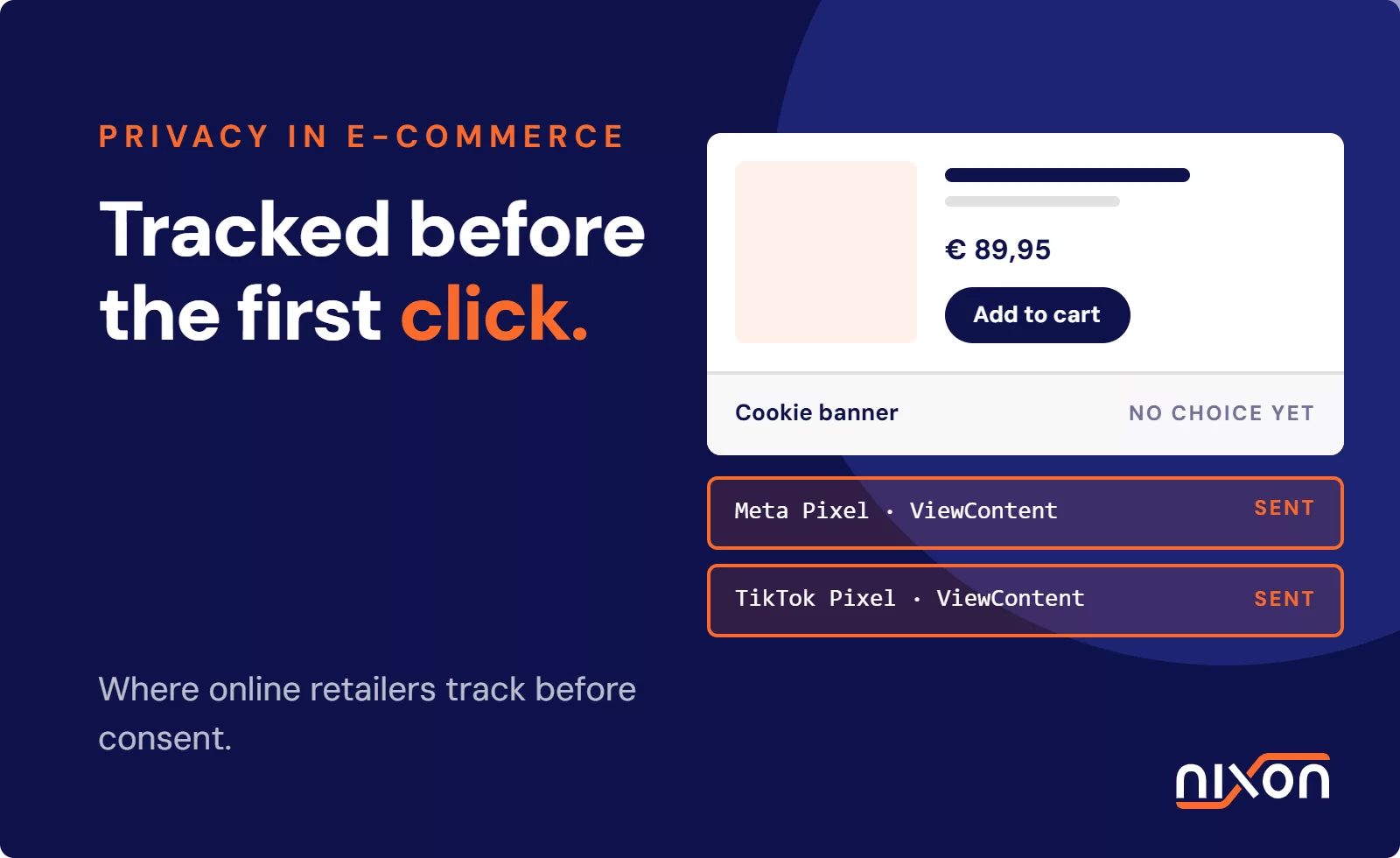
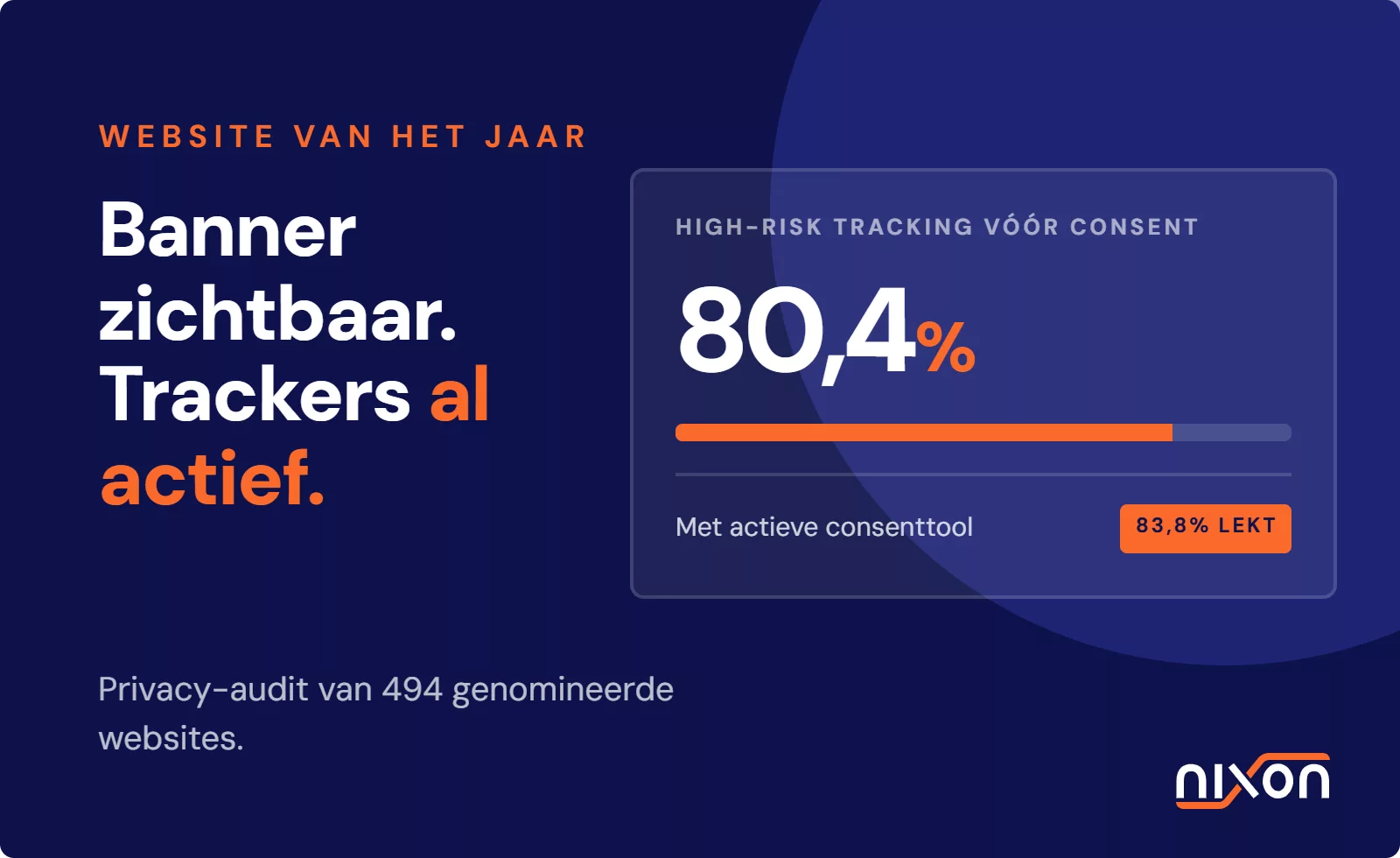
When we test multi-brand storefronts, we regularly see that high visual compliance masks execution failures behind the scenes. In audited retail stores, third-party data collection begins prior to user engagement with a consent interface. Organizations investing in enterprise consent banners still expose themselves to strict enforcement actions due to underlying script behavior.
The gap between banner state and script execution
A consent banner functions purely as a graphical interface, possessing zero native ability to block network traffic unless developers explicitly configure tag loaders to intercept every script. In our audits, third-party ad networks, telemetry scripts and conversion tags regularly fire in parallel with the banner initialization code.
Under ePrivacy Directive Article 5(3), storing or accessing non-essential data on user devices requires prior consent. When a shop transmits unique device IDs before the shopper clicks Accept, it violates this statutory baseline. The written privacy text on screen does not cure premature network transmissions.
Why single-store auditing fails multi-brand portfolios
Retail enterprises rarely operate a single, isolated domain. Enterprise groups routinely maintain dozens of regional storefronts, localized sub-brands and staging environments. Point audits conducted on the flagship brand provide a false sense of security while peripheral shops execute unvetted analytics tags. Regional teams frequently deploy local marketing tags directly via container shortcuts. This practice introduces significant compliance risks in multi-brand website portfolios that remain completely invisible to central risk teams.
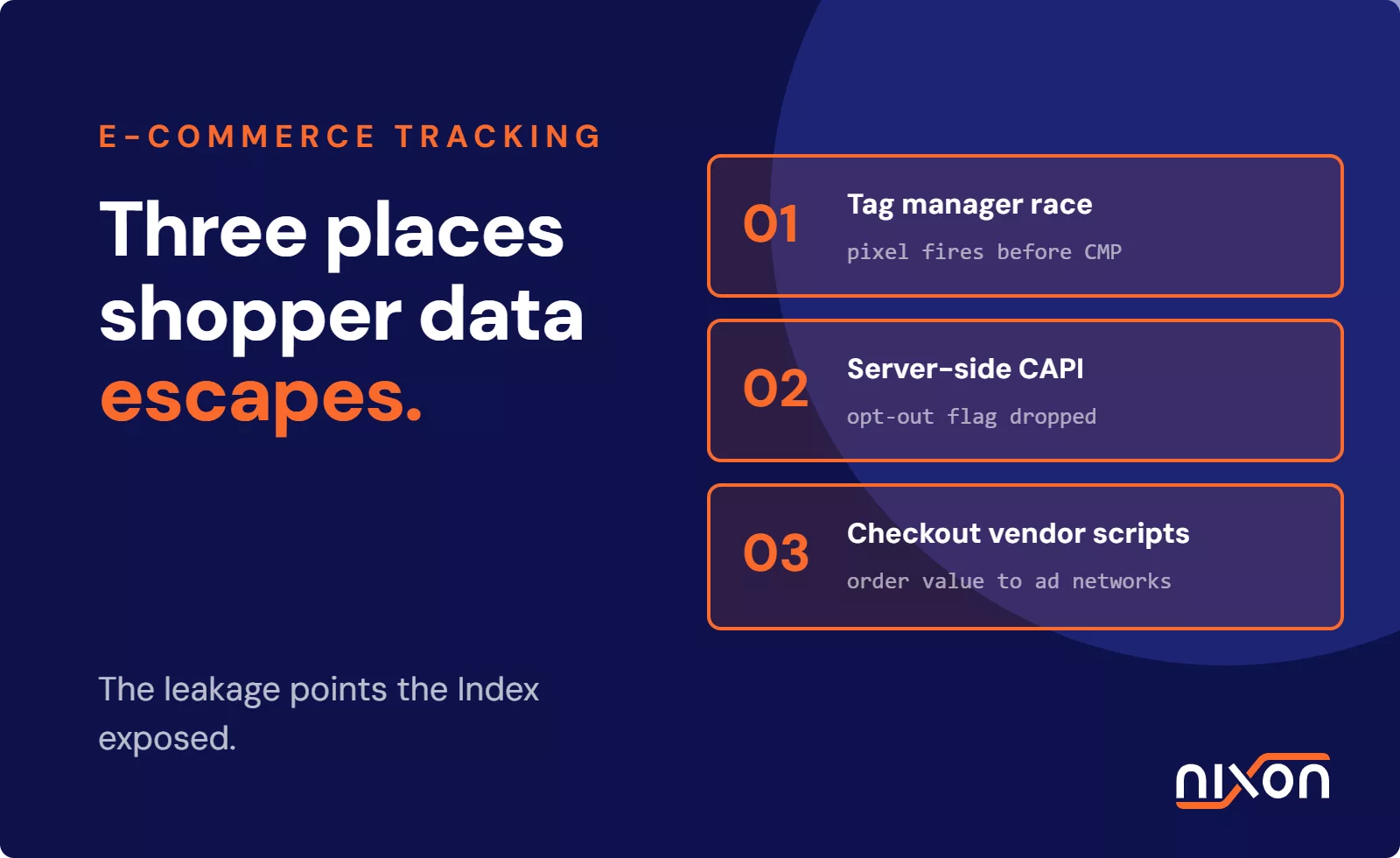
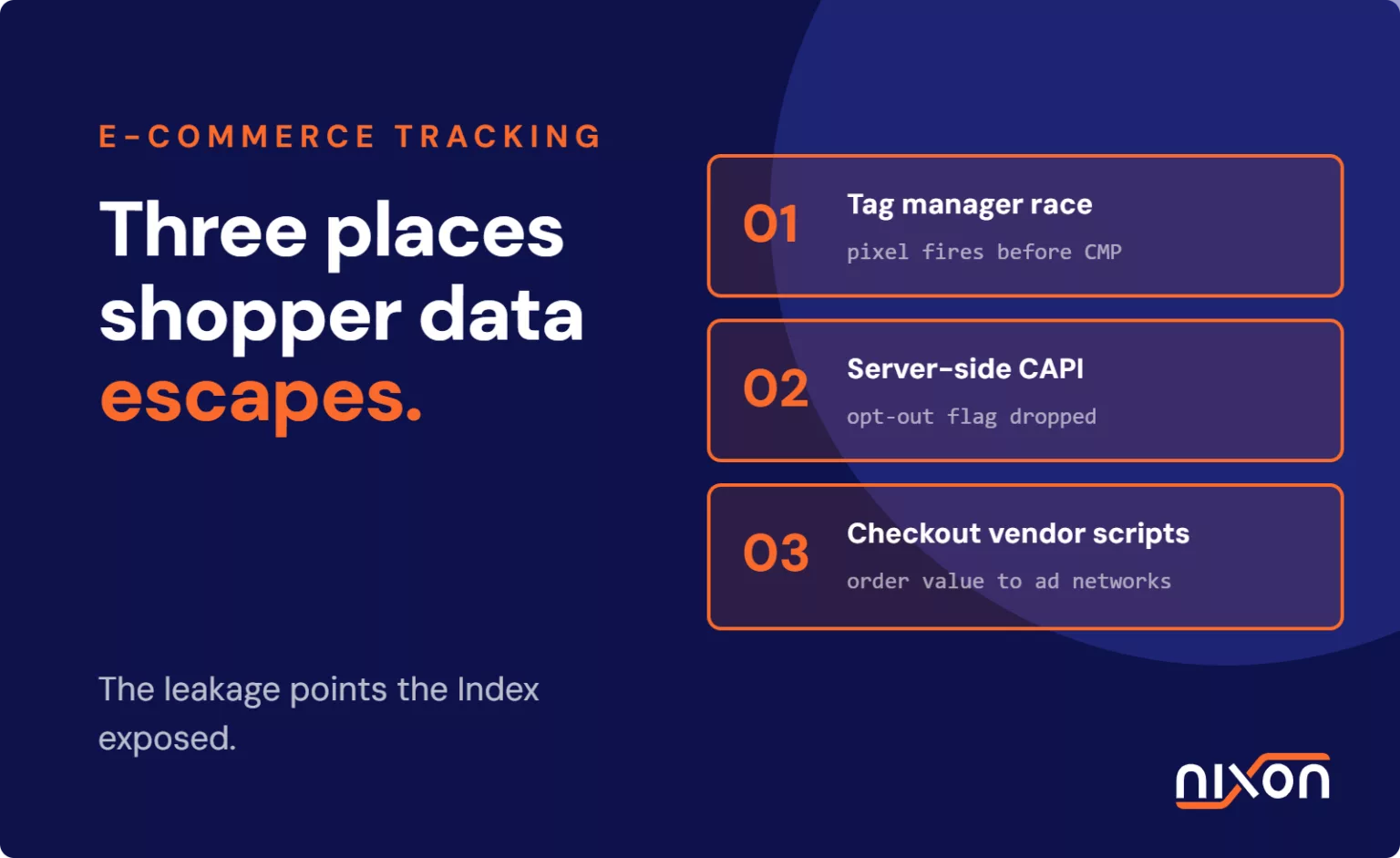
Leakage point 1: client-side tag manager race conditions
Tag management systems introduce complex concurrency problems into modern browser sessions. When a user requests a storefront page, the browser launches dozens of asynchronous requests simultaneously to minimize initial paint times. Consequently, marketing pixels race against the consent platform script to execute their payloads.
Asynchronous script loading versus consent initialization
High-performance web architecture relies heavily on asynchronous script loading to keep conversion funnels fast. However, this introduces severe timing hazards into data collection pipelines. When an ad script beats the CMP across the wire, the tracking payload transmits instantly. By the time the user actually sees a banner prompt, their IP address, browser metadata and cart contents sit on an external server.
Default tag triggers that bypass consent state
Flawed container configuration stands out as the primary cause of automated tag firing. In many implementations, marketing tags rely on generic Page View, DOM Ready or Window Loaded triggers. Unless strict tag firing exceptions gate these triggers, the container executes them immediately upon page arrival. Establishing systematic tag manager consent governance ensures that tags wait for explicit consent signals before executing their collection scripts.
The CNIL guidelines on tracking devices explicitly establish that non-functional trackers cannot drop payloads prior to affirmative consent. When default triggers bypass this barrier, automated audits easily detect the illegal transmission.
Leakage point 2: server-side CAPI and data stream mismatches
To bypass ad blockers and browser cookie restrictions, digital retailers adopt server-side tracking pipelines such as Meta Conversions API (CAPI). Moving data collection to edge nodes and cloud proxies improves site speed. However, it also creates an opaque backend pipeline where privacy compliance often breaks down entirely.
Forwarding hashed customer identifiers without consent validation
Server-side tracking streams incoming web server events directly to advertising platform endpoints via secure API requests. These payloads typically package hashed email addresses, telephone numbers, browser user agents and internal database keys. In broken architectures, storefront backend servers extract user identity records upon customer login or checkout initiation. They forward them directly to marketing endpoints without validating whether the active session holds valid marketing consent.
Server-side endpoints ignoring client opt-out payloads
A frequent structural error involves downstream APIs disregarding the consent status passed from the user’s browser. When an e-commerce visitor rejects tracking, the front-end banner logs it locally, but if the server-side template drops the opt-out flag, the ingestion endpoint treats the stream as fully consented and hands ad platforms enriched customer data anyway. This practice directly undermines CCPA and GDPR compliance for e-commerce properties that promise zero data sharing for opted-out shoppers.
Leakage point 3: third-party vendor script sprawl in checkouts
Checkout environments harbor some of the most sensitive transactional telemetry on an e-commerce website. As shoppers proceed through conversion funnels, third-party software tools continually observe checkout inputs, shipping forms and order confirmations.
Payment gateway widgets and payment method telemetry
Payment processors and Buy Now Pay Later plugins routinely deploy interactive iframes and verification scripts directly onto checkout screens. Fraud mitigation tools may rely on legitimate interest under specific conditions, but many payment integrations ship secondary behavioral telemetry pipelines. Audits show these supplemental scripts often scrape device metrics, screen resolutions and purchase intent indicators. They transmit the resulting data streams back to marketing partners without the shopper’s awareness.
Unmanaged marketing pixels lingering on conversion pages
Conversion confirmation pages present substantial leakage risks. Digital marketing teams frequently drop custom pixels onto the final payment screen to measure campaign ROAS. These scripts often extract checkout values, purchased product categories, order numbers and cleartext customer details directly from the data layer. Without rigorous script governance, unmanaged pixels leak high-value purchase data to foreign analytics networks without user consent.
Governing tracking compliance across enterprise web portfolios
Enterprise e-commerce operations cannot maintain compliance by relying on static assessments. Storefront code bases update continuously through automated release cycles, third-party plugin updates and dynamic tag container republishing. A setup verified on Monday can easily break by Thursday following an unvetted tag update.
Automated change detection versus periodic manual sampling
Manual testing fails because it only examines isolated snapshots of a few selected URLs. Third-party vendors regularly alter their hosted scripts remotely, injecting new secondary domains and trackers into your checkout funnel without notification. Periodic manual sampling misses regressions that appear deeper in customer checkout paths or on regional subsidiary storefronts. While exhaustive point-in-time scans provide indispensable baseline evidence for individual websites, large retail groups pair those audits with continuous change detection to govern wide estates. Understanding how continuous monitoring platforms complement scanners helps risk managers protect complex storefront networks over time.
How to remediate tracking leaks across your pipeline
Resolving systemic leaks requires immediate engineering remediation across every layer of your data stack:
- Audit network egress traffic: Intercept and map every outbound HTTP request across critical checkout steps before the consent banner receives an interaction.
- Refactor container triggers: Replace default Page View triggers with custom events conditioned on explicit consent state variables.
- Synchronize server-side payloads: Configure cloud runtimes and CAPI endpoints to terminate outbound transmissions instantly whenever the consent payload carries an opt-out flag.
- Quarantine checkout vendor scripts: Restrict payment widgets to designated fraud prevention scopes, stripping secondary advertising telemetry.
Catching tag regressions, trigger races and unconsented CAPI streams across dozens of domains requires automated testing at the network level. Operating without continuous verification leaves blind spots across regional storefronts where third-party tags continually update. To see how persistent monitoring halts ecommerce tracker data leaks across your entire online portfolio, book a Nixon Platform demo with our technical specialists.
Frequently Asked Questions (FAQ)
What causes ecommerce tracker data leaks before consent?
Ecommerce tracker data leaks occur when third-party analytics, marketing pixels, or payment widgets load asynchronously before the consent management platform initializes. When tag manager triggers lack explicit consent blocks, the browser fires network requests immediately upon arrival. This transmits device fingerprints, IP addresses, and browsing events to ad networks before shoppers even view the consent banner.
How does a client-side tag manager race condition leak data?
A race condition happens when the browser downloads and executes third-party marketing tags faster than the consent banner script completes initialization. Because asynchronous scripts load concurrently, default pageview triggers execute tracking pixels early. The browser sends shopper telemetry to external vendor servers milliseconds before the user has any opportunity to accept or reject data collection.
Why do server-side CAPI implementations violate consent standards?
Server-side CAPI setups violate consent standards when cloud servers forward hashed customer identifiers directly to ad platforms without checking the user consent record. If the backend ingestion endpoint does not require, parse, and enforce front-end opt-out parameters, personal purchase data streams to marketing networks even when shoppers explicitly refuse advertising cookies on the website.
Can checkout payment scripts transmit data without customer consent?
Payment scripts can strictly process transaction data under contractual necessity and fraud prevention, but they often deploy auxiliary tracking that violates consent rules. Audits reveal that embedded checkout widgets frequently bundle secondary marketing trackers and behavioral telemetry. These secondary scripts collect personal device metrics and purchase habits without obtaining the required legal consent.
How does continuous portfolio monitoring detect tracking regressions?
Continuous portfolio monitoring repeatedly simulates end-to-end user journeys across entire website inventories, auditing raw network requests on every page load. It captures live script execution, detects unexpected third-party domains, and identifies tags that bypass consent rules. When a new release or container change causes a data leak, the platform alerts security teams immediately.