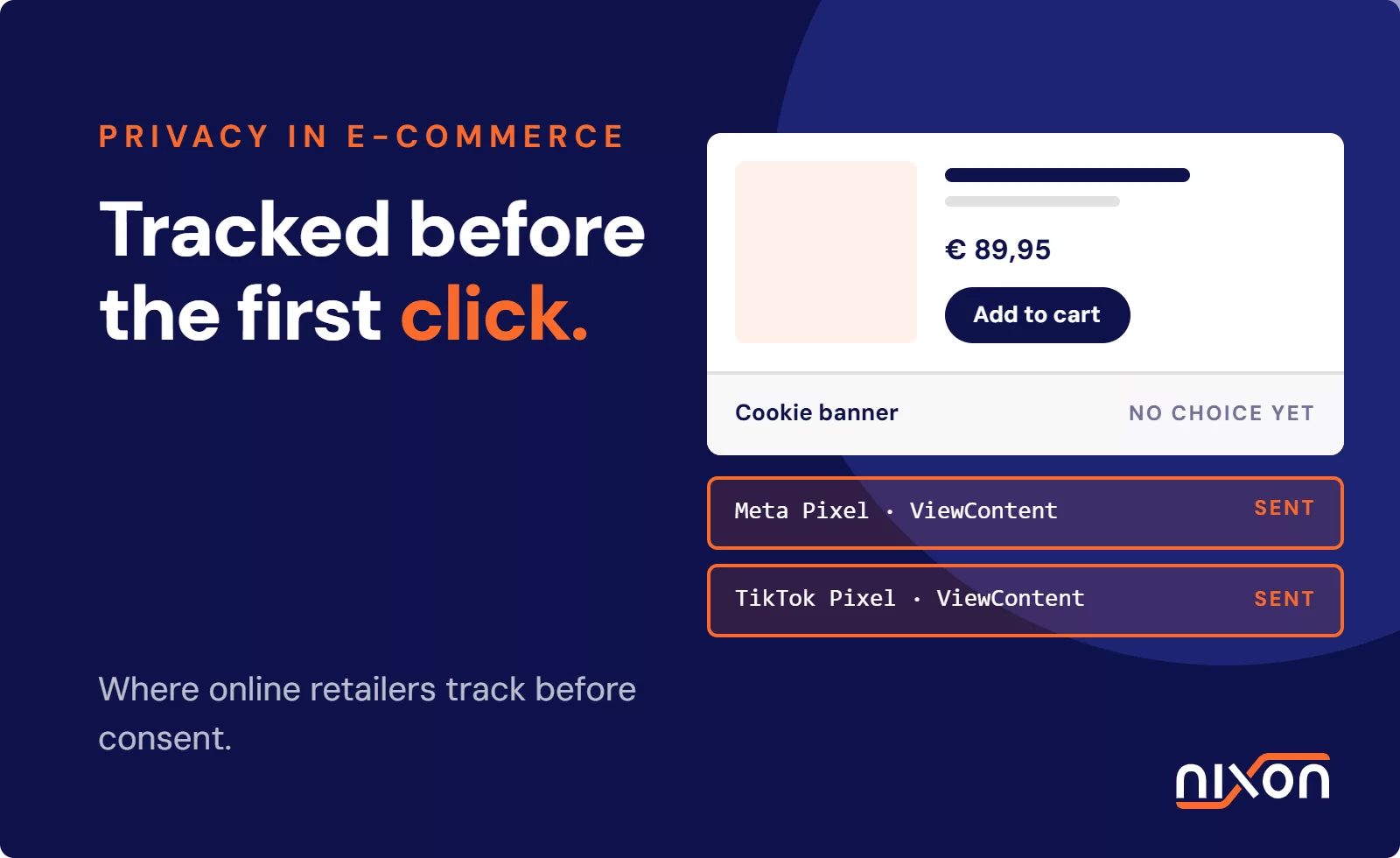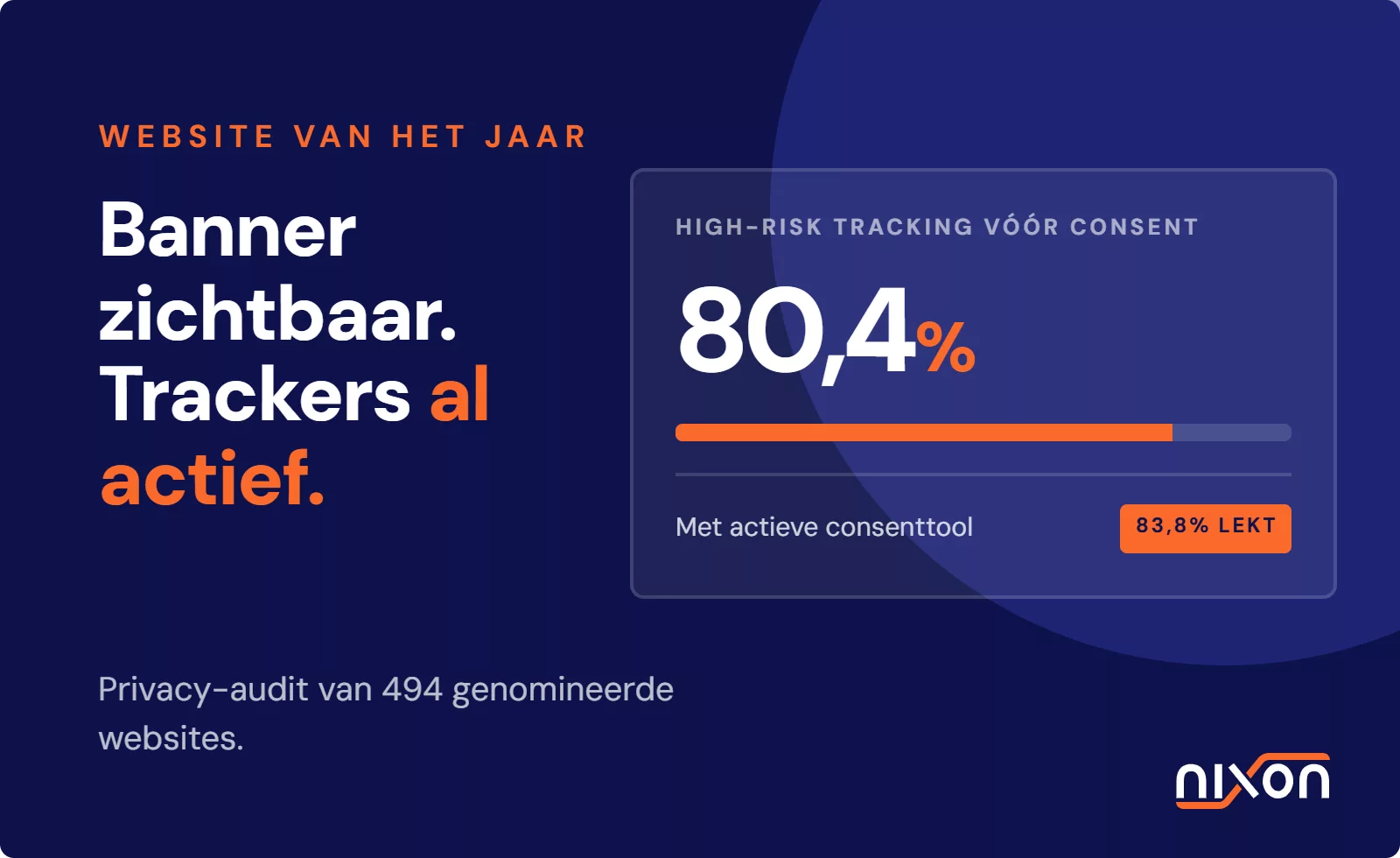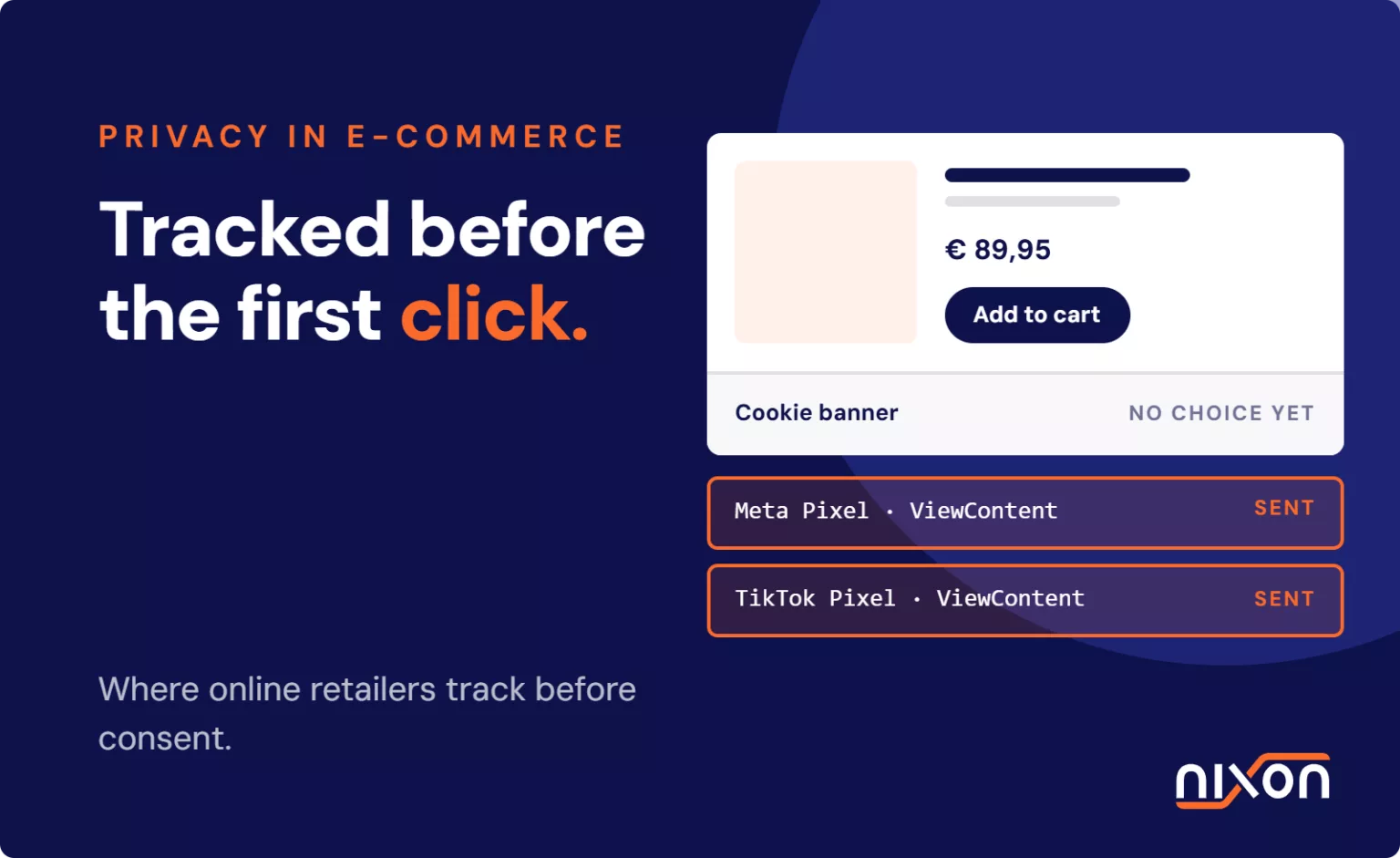
Ecommerce tracking before consent occurs when marketing tags, analytics pixels or third-party retail scripts execute and transmit consumer data prior to affirmative user interaction with a cookie banner. Your consent banner might be live, but your marketing pixels almost certainly fire before shoppers touch it. Field audits by Nixon Digital show that visible consent notices routinely fail to hold back pre-consent retail tracking tags. In modern online retail, the gap between displaying an active banner and actually enforcing script silence creates severe legal exposure. Marketing teams deploy retargeting tags, analytics setups and ad network pixels that harvest visitor intent the second a product page loads. This article breaks down the architectural failures behind ecommerce tracking before consent, examines findings from retail website audits, and highlights the technical leak points online stores must remediate across their digital storefronts.
The compliance gap in online retail consent banners
The optical compliance trap on digital storefronts
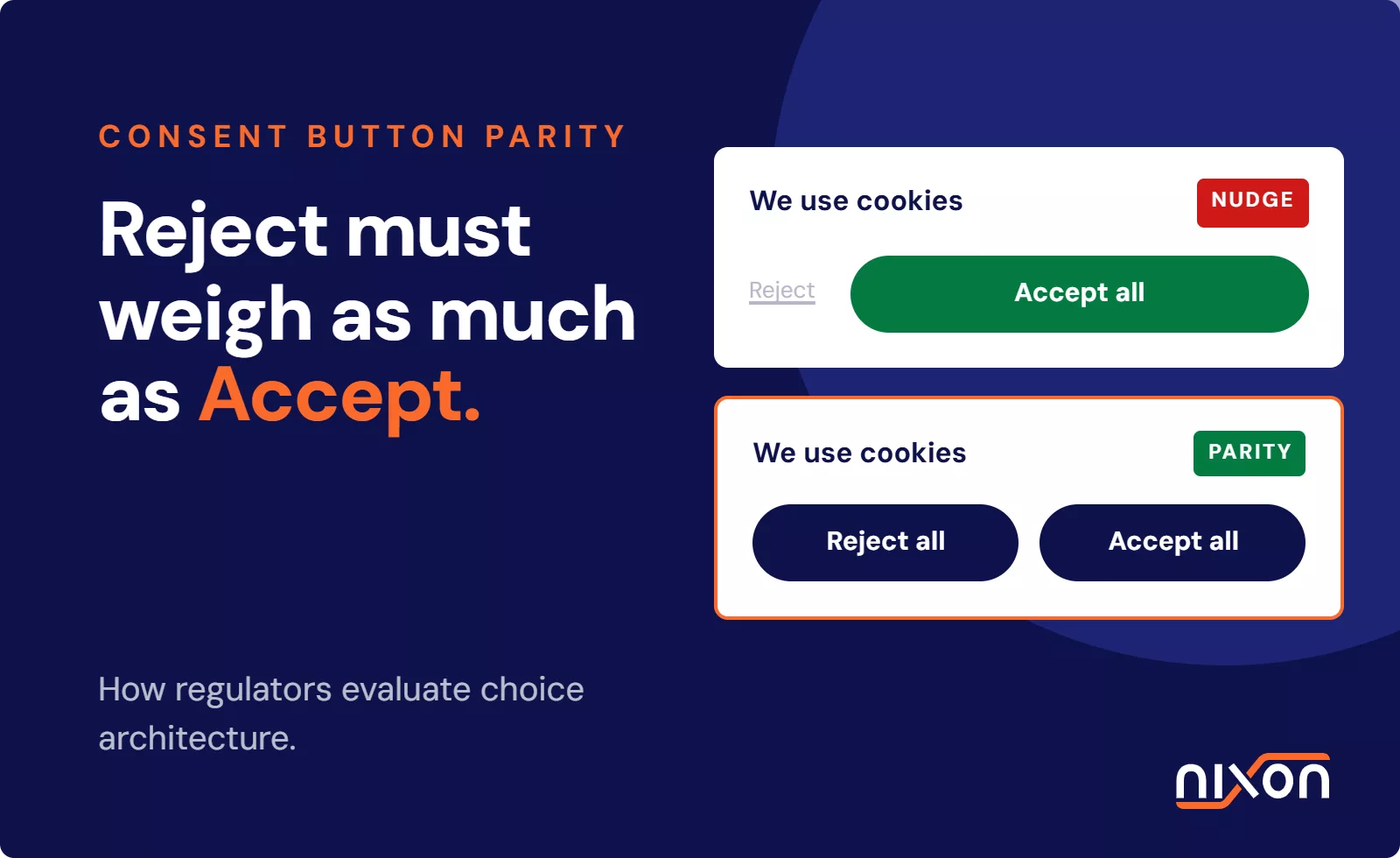
Most retail websites deploy what we call optical compliance. The cookie banner pops up immediately, but open browser developer tools and you see marketing tags executing in parallel. Long before the shopper clicks accept, reject or customize, third-party marketing tags have already transmitted network requests. That illusion gives leadership a false sense of security. The interface looks fully compliant, yet data collection proceeds without user permission. Visitors see a consent choice, but the underlying browser environment ignores it completely.
What explicit consent demands under European privacy law
European privacy rules leave no room for ambiguity regarding when non-essential data collection may begin. Under Directive 2002/58/EC Article 5(3), prior consent is required before storing or accessing information on a terminal device. In EDPB Guidelines 05/2020 on consent, European regulators confirm that valid consent must precede any processing. Regulators require zero network requests to advertising endpoints until the user takes an affirmative action. The Autoriteit Persoonsgegevens cookie guidelines take the exact same position for Dutch webshops. For brands operating across international jurisdictions, maintaining rigorous technical controls is necessary to satisfy both CCPA and GDPR compliance for e-commerce.
Why cookie consent platforms fail to pause scripts automatically
Retail operators often assume that installing a consent management platform (CMP) automatically pauses scripts. In reality, a CMP is only an interface. It records visitor choices and publishes consent signals to the browser. Tags must listen for those signals before they fire. Unless developers configure tags inside the codebase or container to wait, scripts execute immediately on page load. Misconfigured CMP setups routinely fail to intercept hardcoded tags or asynchronous scripts loaded through external sources, resulting in immediate data leaks.
Audit findings from online retail privacy assessments
Headline pre-consent execution rates across online retailers
In our audits of European and US retail storefronts, most stores fire Meta or Google marketing tags on the initial HTTP request, regardless of banner state. When we inspect retail storefronts before any click on the banner, we routinely see non-essential tracking firing on the very first packet. Despite clean consent banners, these storefronts blast unique device identifiers straight to third-party endpoints on the very first network request, long before a single user interaction occurs.
Advertising pixels versus first-party analytics scripts
Audits expose a clear divide between advertising networks and analytics tools. Marketing ad pixels represent the majority of tags firing prior to consent. Teams frequently allow Meta Pixel, TikTok Pixel and Google Ads to execute immediately. E-commerce operators sometimes attempt to defend pre-consent analytics under legitimate interest, but commercial retargeting pixels cross clear legal lines. These ad tags capture browser fingerprints, referrer URLs and viewed products. They share consumer behavior directly with ad networks like Meta and Google without legal permission.
CMP integration breakdowns and script execution timing
The root problem is an integration failure rather than missing consent software. Nearly every retail website with pre-consent leaks runs an active CMP. However, the execution timing between the banner and third-party scripts remains disconnected. Scripts loaded through asynchronous tag bundles fire within the first few hundred milliseconds. They execute well before the CMP interface initializes or captures a visitor choice.
Where does ecommerce tracking before consent happen on online stores?
Third-party tracking across product and collection pages
Retail storefronts leak shopper data most heavily across product detail pages and category collections. When a consumer browses a catalog, marketing scripts record viewing habits, cart additions and product identifiers. These behavioral signals expose individuals to cross-site profiling before they evaluate the privacy notice. Unchecked script execution introduces severe third-party tracker risks, as marketing vendors continuously process commercial interaction data without a verified legal basis.
To inspect your own product pages and verify whether scripts load before banner interaction, you can run an audit. An audit with Nixon Pro maps every cookie, third-party pixel and consent gap across your storefront so your development team can fix tracking leaks quickly.
Tag management container trigger racing and default states
Tag management systems frequently cause pre-consent data leaks directly. Marketing teams often set tags to trigger on generic initialization events. When tags fire on Container Loaded or Page View, they bypass consent evaluation. The tag management container executes tracking pixels while the banner interface is still rendering. Without strict tag manager consent governance, race conditions inevitably occur, allowing advertising networks to harvest browsing data while the consent banner sits untouched.
Conversion tracking and embedded commercial plugins
External plugins also introduce unmanaged tracking outside centralized tag managers. E-commerce platforms like Shopify, Magento and WooCommerce rely on third-party apps for reviews, affiliate tracking, live chat and cart recovery. Many of these plugins bypass primary consent entirely by injecting tracking scripts directly into the raw page template, broadcasting shopper IDs to external ad tech vendors before your CMP even boots.
How multi-brand retail portfolios lose control over tag sprawl
Dispersed regional domains and localized marketing configurations
For enterprise retail operations managing multi-brand portfolios, tracking governance becomes significantly more complex. Different regional teams frequently implement independent marketing campaigns, localized tag management containers and custom affiliate networks across country-specific domains. When individual brand units deploy promotional pixels without centralized oversight, consent configurations break down rapidly. Fragmented architectures introduce major compliance risks in a multi-brand website portfolio, where standard corporate privacy policies fail to reflect actual code execution on localized storefronts.
Why manual tag audits miss code changes between release cycles
Manual code inspections and periodic developer checks are insufficient for modern e-commerce architectures. Marketing teams constantly add TikTok events, swap affiliate tags or test new ad networks between sprint cycles. A digital storefront that verified consent enforcement during an initial audit can easily introduce pre-consent leaks days later through a single tag update. To maintain compliance over time across diverse digital storefronts, organizations require systematic visibility into every external network request.
Eliminating ecommerce tracking before consent requires continuous technical enforcement rather than relying on banner appearances alone. Operating without strict blocking triggers means your storefront violates Article 5(3) on every new visit. If you manage multiple retail properties, see how Nixon Platform monitors a multi-brand portfolio continuously to detect tag regressions and eliminate tracking leaks before choice.
Frequently Asked Questions (FAQ)
What constitutes ecommerce tracking before consent under GDPR?
Ecommerce tracking before consent occurs when a commercial website loads non-essential scripts, advertising pixels or tracking cookies before a shopper provides affirmative consent. Under GDPR and the ePrivacy Directive, all tracking mechanisms that process personal data or store identifiers on a visitor's device must remain completely blocked until the user explicitly opts in through a valid consent interface.
Why do cookie consent platforms fail to stop third-party tracking automatically?
Consent management platforms present visual notices and record user choices, but they do not automatically block underlying scripts by default. Unless web developers configure tag managers and page scripts to wait for specific consent signals, trackers execute asynchronously on page load. Misconfigured tags fire ahead of CMP initialization, leaking personal identifiers before the visitor interacts with the banner.
Can an online retailer fire Google Analytics before obtaining active cookie consent?
In most European jurisdictions, online retailers cannot fire Google Analytics prior to explicit user consent. Because standard analytics setups collect unique client identifiers, IP addresses and browsing parameters across sessions, European supervisory authorities classify them as non-essential tracking. Retailers must hold back all analytics calls until the shopper confirms their consent choice on the website.
How does a multi-brand retail portfolio monitor tracking tag changes over time?
Enterprise retail portfolios monitor tracking tags by deploying continuous, automated website scanning across all their regional domains. Agile marketing releases and localized tag deployments frequently introduce unauthorized pixels between manual reviews. Automated monitoring detects new trackers, identifies trigger race conditions and flags consent gaps instantly, enabling centralized privacy teams to maintain continuous governance across every storefront.
What is the difference between essential retail cookies and marketing trackers?
Essential retail cookies are strictly necessary to deliver services explicitly requested by the shopper, such as maintaining shopping cart contents, securing checkout transactions or preserving user sessions. Marketing trackers collect behavioral data, build customer profiles and facilitate retargeting across third-party ad networks. While essential cookies require no prior consent, all marketing trackers must remain paused until approved.