California SB 690 CIPA reform alters website tracking litigation across the United States. For two years, plaintiff firms flooded courts with demand letters. They alleged routine analytics tags and advertising pixels functioned as illegal wiretaps. Corporate legal teams celebrate the end of mass shakedown letters. However, shifting exclusive enforcement to public prosecutors raises the technical bar for engineering teams. State regulators inspect raw browser network payloads rather than settling cheap claims out of court.
What California SB 690 changes under CIPA
California SB 690 is legislation amending the California Invasion of Privacy Act to eliminate the private right of action for software pen register claims, transferring exclusive enforcement over website tracking scripts directly to the California Attorney General and public prosecutors. The bill specifically amends Sections 638.50 and 638.51 of the California Penal Code.
The end of the private right of action for software pen registers
Lawmakers drafted these penal codes decades ago for physical telephone lines. Litigators repurposed them against modern tracking scripts, server beacons, and session recorders. That tactic fueled thousands of mass arbitration claims. According to the California SB 690 statutory text, the legislature eliminated this private right of action for software-based tracking claims. Private individuals and speculative law firms can no longer sue website operators under these pen register provisions.
Exclusive enforcement authority transferred to public prosecutors
The statute does not repeal privacy expectations around tracking technologies. Instead, it consolidates administrative authority under state oversight. Restricting claims to public prosecutors, including district attorneys and the Attorney General, immediately eliminates volume-based demand mills. More importantly, it shifts enforcement to dedicated state units that understand browser engineering, network routing, and payload delivery.
Statutory penalties and legal exposure under the amended penal code
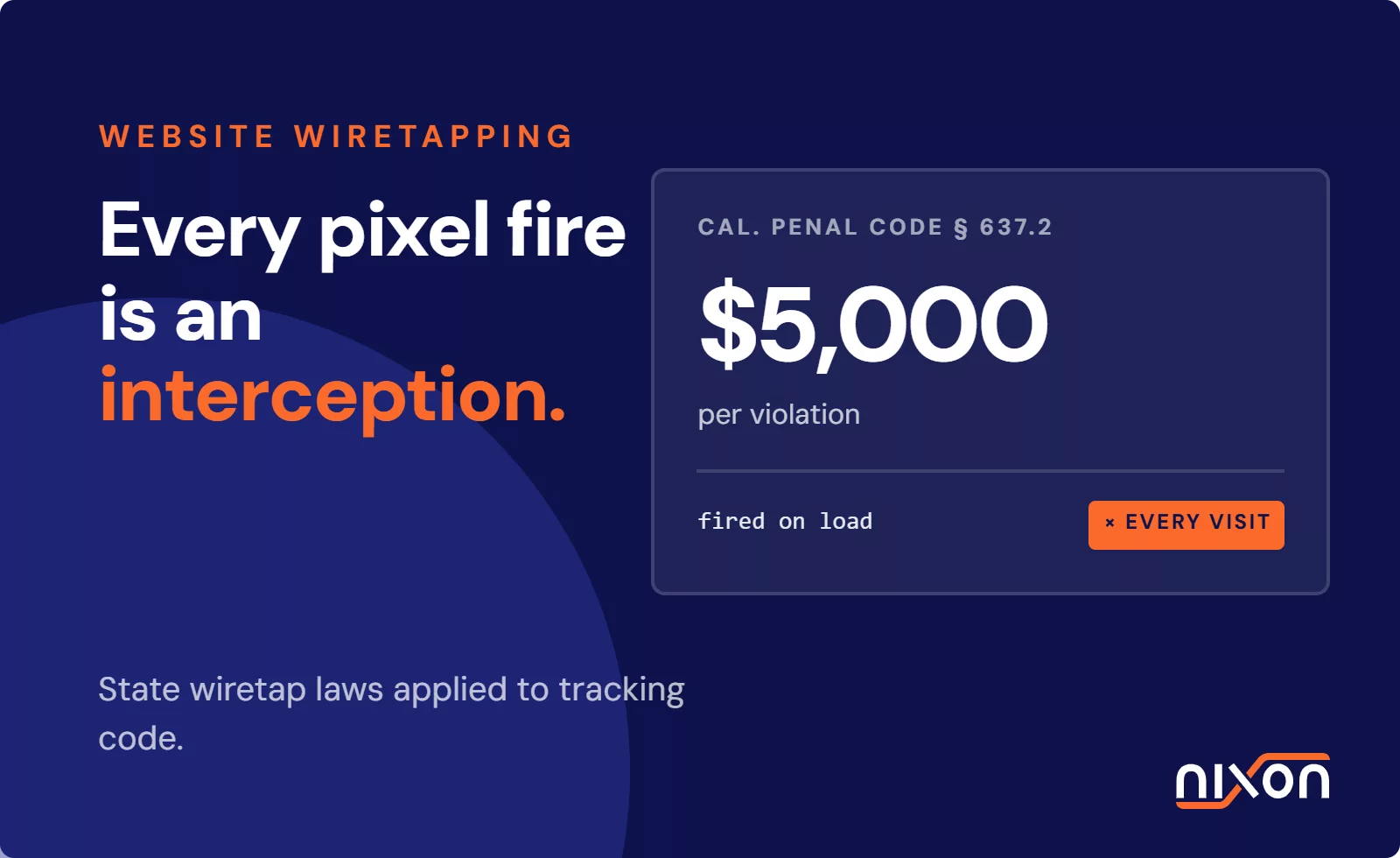
Historically providing damages of $5,000 per violation under California Penal Code § 638.51, plaintiffs multiplied claims across single page impressions until business exposure routinely reached millions of dollars. Private litigators can no longer exploit these penalties for quick settlements. However, public prosecutors retain full authority to seek substantial civil penalties against systemic non-compliance.
Why the shift to Attorney General enforcement demands deeper technical audits
Private settlement tactics differed fundamentally from sovereign regulatory investigations. This operational distinction explains why basic front-end compliance measures remain insufficient for modern web properties.
Private settlement tactics versus state regulatory investigations
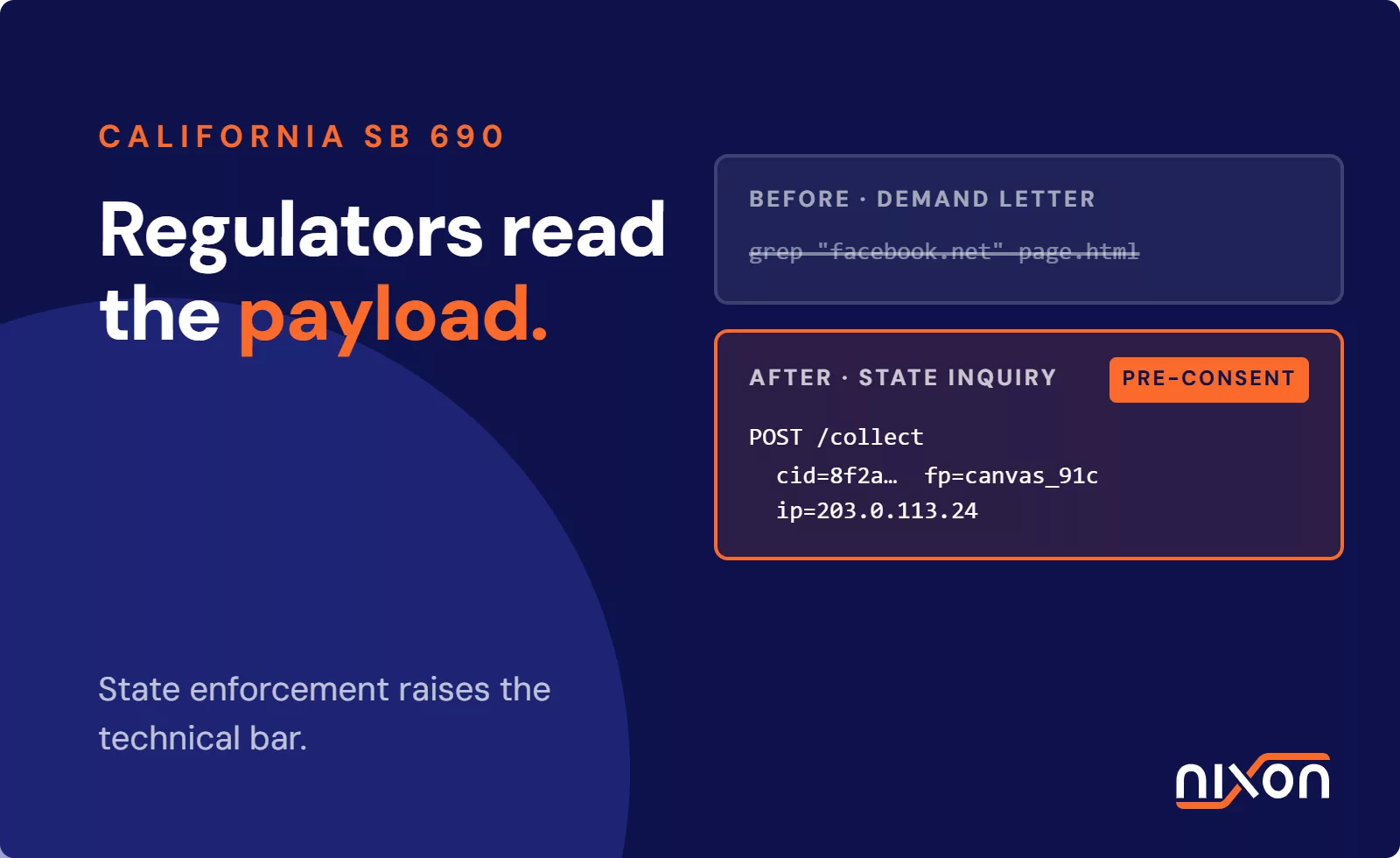
Private plaintiffs relied on automated scrapers that searched page source code for vendor domains. They sent formulaic demand letters threatening statutory fines, hoping defense counsel would settle quickly. The California Department of Justice conducts thorough, evidence-based technical inquiries instead. State investigators do not settle for quick financial payouts. They examine engineering logs, contractual data-sharing terms, and privacy configurations across your entire digital stack.
What the California Department of Justice looks for in HTTP network traffic
State analysts evaluate actual data packets transmitted to external servers. They check whether a website sends persistent identifiers, cross-site pseudonymous keys, device fingerprints, or raw IP addresses before establishing a lawful basis. When an analytics library transmits telemetry during sensitive user journeys, regulators treat that outbound traffic as an intentional data transfer. To see how these expectations operate in practice, review our technical guide on What a CCPA-Compliant Website Actually Looks Like.
Why front-end consent banners fail to prevent script data leaks
Many organisations assume that installing a consent management platform resolves technical risk. In our audits, we regularly see standard banners merely overlay visual buttons onto the interface while underlying tags fire in the background. Tag containers deploy marketing pixels before the visitor interacts with the banner, causing immediate data leaks. Establishing proper Tag Manager Consent Governance ensures tracking tags remain fully blocked until the user makes an explicit choice.
The overlap between CIPA pen register rules and CCPA enforcement
Eliminating private CIPA claims does not permit unconstrained marketing pixels. CIPA wiretapping concepts align directly with active consumer privacy standards enforced across California.
How tracking pixels trigger sale and share definitions
Substantive concerns raised in pen register litigation mirror statutory definitions under the California Consumer Privacy Act. Whenever a third-party pixel transmits user behavioural data to advertising networks for cross-context behavioural advertising, the state classifies that transmission as a sale or share. If your technical architecture loads pixels before capturing permission or honouring an opt-out, you face direct liability under primary consumer privacy statutes.
Global Privacy Control signal handling across web properties
State prosecutors and administrative agencies focus heavily on browser opt-out mechanisms. According to CPPA Enforcement Division updates, regulators actively target undisclosed third-party tracking scripts and GPC signal compliance. If a user visits your website with an active Global Privacy Control header, your server scripts and tag managers must recognise that parameter instantly. You can read our analysis of Cross-Platform Opt-Out Compliance to evaluate how opt-out signals should propagate across digital platforms.
Regulatory alignment between the California Privacy Protection Agency and DOJ
State enforcement in California operates as a coordinated dual front between the CPPA and the Department of Justice. The CPPA enforces administrative mandates. Meanwhile, the Attorney General holds broad enforcement power across civil consumer protection laws and criminal penal codes. Together, they review whether your corporate disclosures match your technical reality. To align your tracking setup with regulatory mandates, examine our breakdown on What the CPRA Really Requires for Your Website.
How to verify tracking script compliance after SB 690
To verify tracking script compliance under SB 690 and prevent regulatory scrutiny, follow these three technical audit steps:
- Inspect browser network payloads for persistent device identifiers and unconsented transmissions.
- Validate tag management triggers to confirm CMP suppression halts third-party data transfers.
- Establish verifiable baseline audit documentation before regulators initiate a formal inquiry.
Inspecting browser network payloads for persistent device fingerprints
When we verify a website, we start directly in the network tab under fresh, unauthenticated sessions to see which external hostnames receive HTTP POST requests before any banner interaction. Watch query string parameters for canvas fingerprints, screen dimensions, battery levels, or hashed system values. State regulators view these persistent tracking signals as digital identifiers that trigger strict statutory consent rules.
Validating CMP suppression across tag management containers
Testing CMP suppression inside tag containers comes down to one technical check. Are your triggers strictly bound to explicit consent events rather than default page-load events? When a user clicks an opt-out link or rejects targeting categories, your container must halt data transmission to third-party endpoints immediately. Verifying this behavior manually across dynamic templates is slow and prone to errors. That manual lag leaves unintended tracking scripts running in production environments.
Establishing baseline audit data before regulatory inquiry
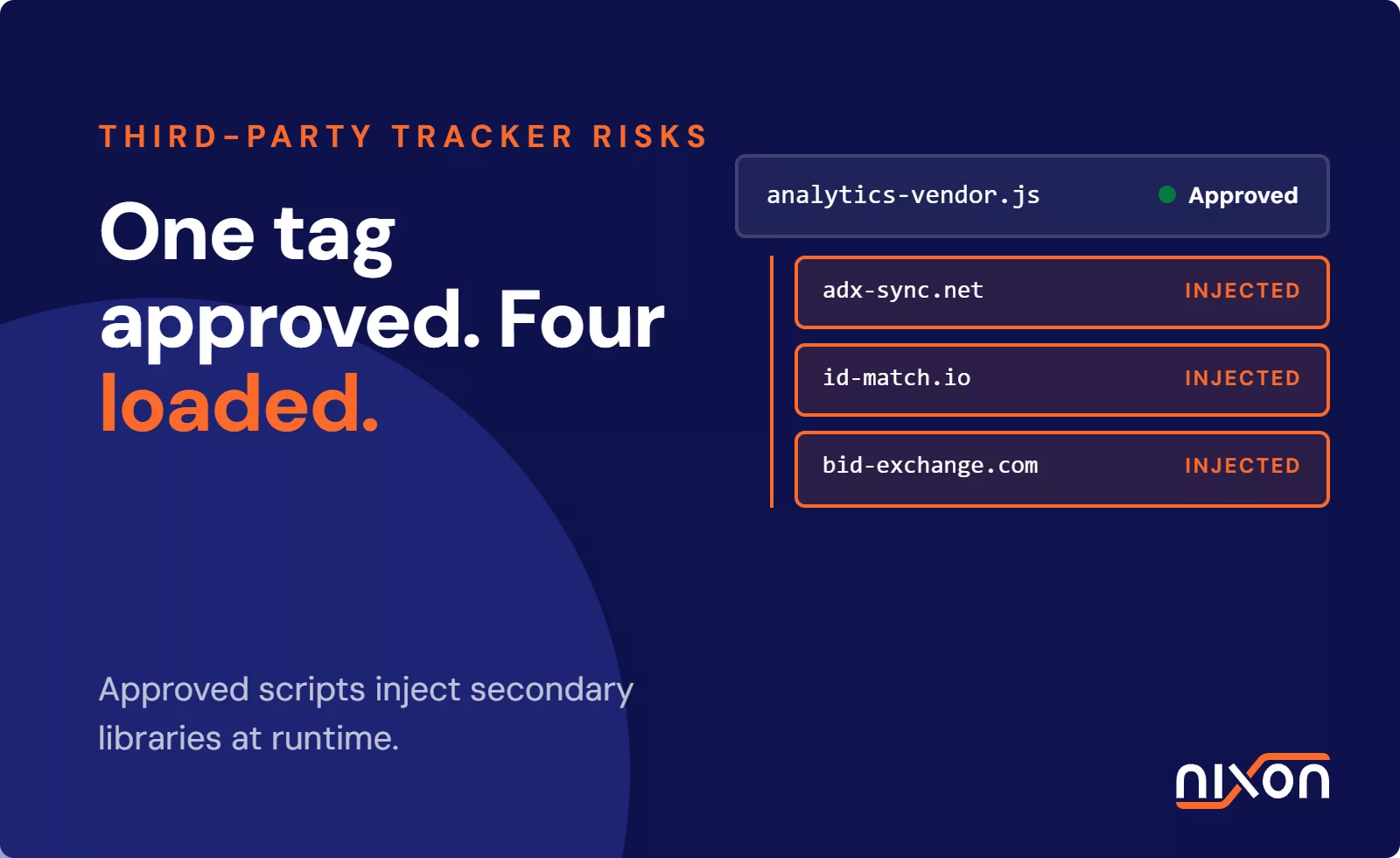
Marketing teams often install chat widgets and conversion pixels without notifying legal counsel, causing compliance drift across production templates. Auditing network calls systematically provides an exact inventory of every third-party vendor firing in production, flagging rogue scripts and unhonoured opt-outs before an inquiry lands. Performing an in-depth baseline audit delivers the verifiable technical documentation required to answer state regulatory scrutiny.
Testing templates manually to confirm scripts halt after an opt-out consumes hours and overlooks dynamically injected tags. A targeted audit reveals exactly which third-party endpoints receive user identifiers without proper authorization. To prepare your digital estate for the post-California SB 690 CIPA enforcement reality, you can check your privacy compliance with Nixon Pro to identify unconsented scripts and secure your data flows.
Frequently Asked Questions (FAQ)
Does California SB 690 apply retroactively to pending CIPA lawsuits?
The statutory text restricts future private enforcement by reserving software pen register claims exclusively for public prosecutors. However, pending litigation remains subject to judicial interpretation regarding retroactive application. Courts across California are actively evaluating whether procedural statutory amendments require the dismissal of active private claims or if previously filed civil complaints may proceed under earlier procedural standards.
Can individuals still sue websites for privacy violations in California?
Yes, individuals retain private rights of action under specific statutory carve-outs. While SB 690 eliminates private lawsuits for software-based CIPA pen register claims, consumers can still file civil actions under the CCPA for qualified security breaches involving non-redacted personal data. Additionally, traditional common-law privacy torts and wiretapping claims involving non-pen-register technologies remain available to private plaintiffs.
How does California SB 690 affect third-party tracking pixels?
SB 690 removes the immediate risk of predatory private litigation regarding tracking pixels, but it does not legalise unmonitored tracking. The California Attorney General and the CPPA actively inspect whether marketing scripts share personal data without statutory disclosures or in violation of user opt-out choices. Technical script governance remains strictly necessary to avoid regulatory enforcement actions.
What is the difference between CIPA pen register rules and the CCPA?
CIPA is a criminal wiretapping statute historically focused on unauthorised devices recording outgoing telecommunications metadata without consent. In contrast, the CCPA is a comprehensive civil consumer privacy framework governing the collection, use, sale, and sharing of personal data. Following SB 690, both statutory regimes are enforced by public regulators who examine network traffic and tracking technologies.
How should privacy teams audit website tracking scripts after SB 690?
Privacy teams should conduct technical network inspections to verify which external scripts execute before user consent or opt-out signals trigger. They must validate tag manager containers to ensure full script suppression when visitors transmit Global Privacy Control headers. Implementing an automated technical audit provides an authoritative baseline of all outbound browser payloads prior to regulatory inquiry.