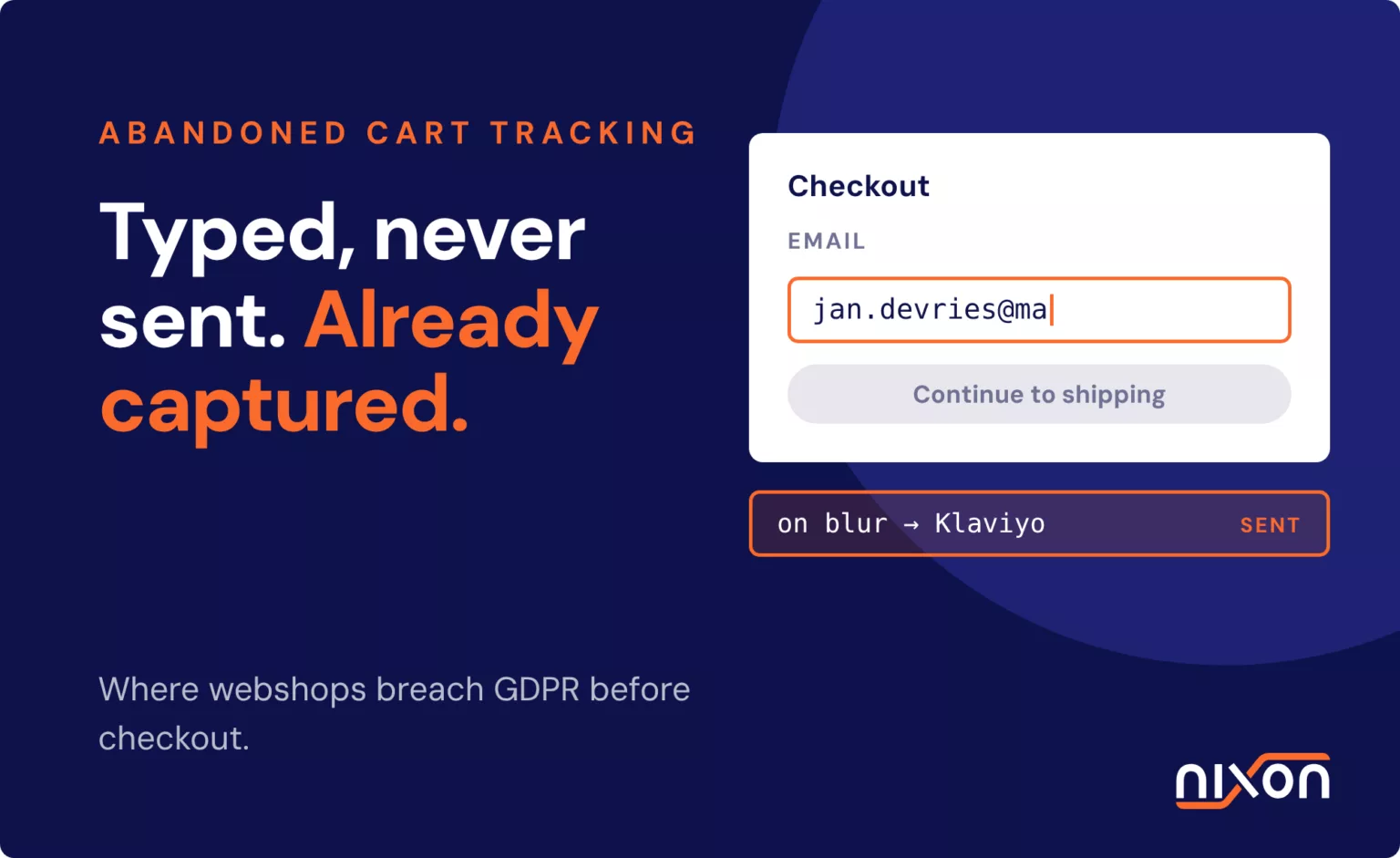
Abandoned cart tracking breaks GDPR compliance the moment an online store captures shopper data prior to explicit submission. Under the GDPR and ePrivacy rules, abandoned cart tracking refers to collecting visitor contact details to recover incomplete purchases. That practice strictly requires unambiguous consent or an existing customer relationship before any data leaves the browser. Capturing unsubmitted form inputs without prior consent turns standard cart recovery into an unlawful interception.
Ahead of Black Friday, marketing teams quietly configure tools like Klaviyo and Omnisend to scrape checkout inputs before buyers click pay. Client-side scripts that record input fields in real time trigger immediate regulatory liabilities. Lawful cart tracking requires strict control over how tracking code interacts with checkout fields.
Why abandoned cart tracking breaches GDPR before checkout
Cart abandonment mechanisms rely on tracking scripts embedded within the website codebase or deployed via a tag container. These scripts monitor consumer activity across product pages, cart drawers and checkout steps. The compliance hazard stems from the specific event triggers that vendors use to capture contact data before a customer completes an action.
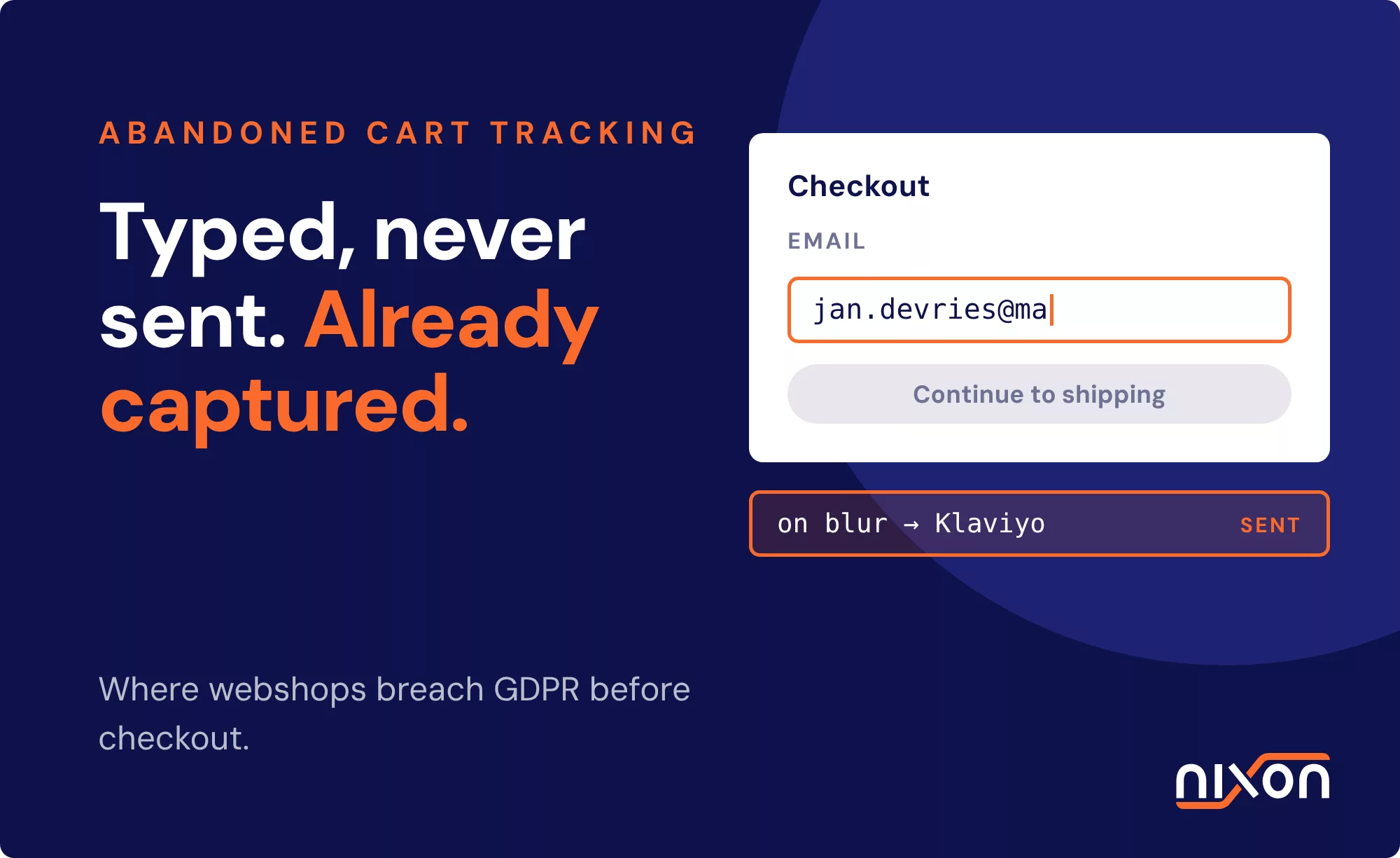
In our audits of international retail checkouts, we routinely observe Klaviyo and Omnisend listeners reading input fields on blur, long before anyone clicks submit. Marketing teams treat dynamic recovery as standard practice, but unconsented capture violates foundational privacy requirements.
Client-side event listeners and keystroke logging
Traditional form tracking fires when a visitor clicks an explicit action button, such as “Continue to shipping”. In contrast, modern cart recovery tools install dynamic client-side event listeners directly onto form inputs. These listeners detect JavaScript events such as change, blur, or keyup.
When listeners attach to keyup or blur events, they pull values out of the DOM immediately. They exfiltrate partial email strings even if the shopper reconsiders and closes the tab. The website code transmits personal data before the customer ever confirms an intent to share it.
Syncing unsubmitted forms to Klaviyo, Omnisend and ad platforms
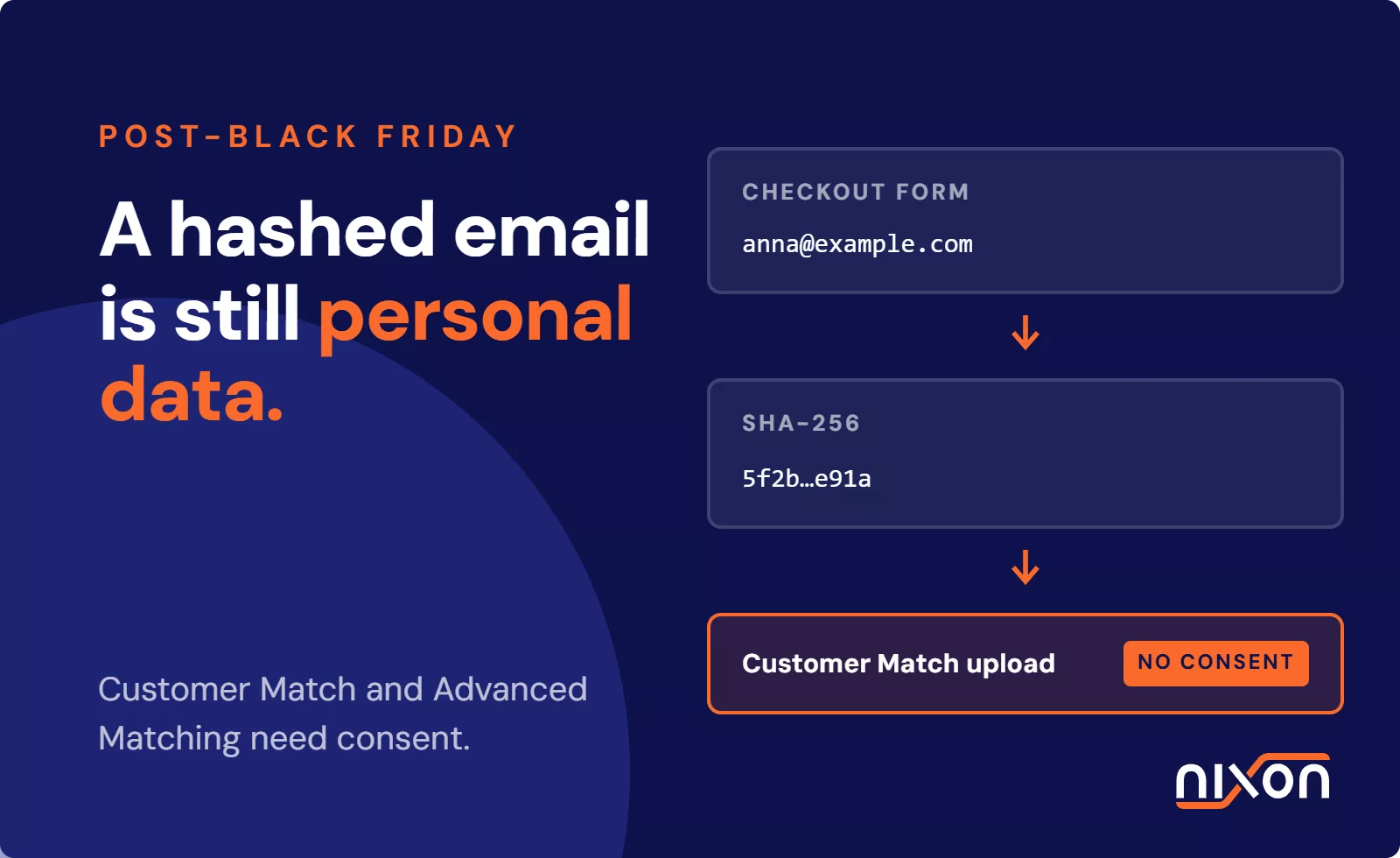
Once captured by client-side code, the visitor email and cart identifiers leave the browser via asynchronous requests. Platforms like Klaviyo and Omnisend use these payloads to generate active visitor profiles and queue automated recovery emails. Concurrently, advertising pixels and server endpoints sync cart values and hashed emails to ad networks for retargeting.
Tools like Klaviyo or Omnisend are standard marketing technology, and cart recovery workflows are not inherently illegal. The breach happens because of trigger timing. When scripts ingest personal data without prior consent, retailers breach European data protection standards. For deeper analysis of funnel risks, see our guide on e-commerce privacy compliance and checkout tracking.
Is abandoned cart tracking legal under GDPR and ePrivacy?
Abandoned cart tracking is legal under GDPR only if explicit consent is obtained beforehand or if tracking occurs after a user actively submits their details. Capturing unsubmitted keystrokes or form inputs on blur without prior opt-in is strictly unlawful under both ePrivacy Directive Article 5(3) and GDPR Article 6.
Deploying scripts that siphon unsubmitted checkout data exposes retail operations to dual enforcement risks under European regulations. This processing violates both digital privacy rules governing terminal devices and general rules for lawful processing.
Article 5(3) of the ePrivacy Directive on terminal equipment access
Under Article 5(3) of the ePrivacy Directive (Directive 2002/58/EC), accessing information on terminal equipment requires prior consent, unless strictly necessary for a requested service. Accessing text typed into a browser before submission constitutes reading terminal equipment data.
Cart abandonment tracking serves a commercial marketing purpose rather than core technical functionality. Recovery emails are not strictly necessary to render the webpage or process an existing transaction. Executing recovery scripts without prior consent breaches ePrivacy rules. This principle matches the CNIL guidelines on trackers and consent, which state that tracking devices aimed at profiling require unambiguous consent before activation.
Article 6 GDPR lawful basis: why legitimate interest fails here
Processing personal data requires a valid lawful basis under Article 6 of the GDPR (Regulation (EU) 2016/679). Marketing communications require clear consent or strict soft opt-in criteria. Many e-commerce teams attempt to justify abandoned cart tracking under legitimate interest via Article 6(1)(f). This argument fails when applied to unsubmitted forms.
Under the GDPR balancing test, an organisation must demonstrate that processing aligns with the reasonable expectations of the individual. A shopper who enters an email address and deliberately abandons the page does not reasonably expect partial keystrokes to be harvested for direct marketing. Consequently, legitimate interest cannot justify capturing unsubmitted form inputs.
The soft opt-in myth for unsubmitted checkouts
Retailers also misapply the commercial soft opt-in rule. In European jurisdictions, sending direct marketing emails without prior consent is permitted only when contact details were obtained during a genuine sale. Typing an email address into an uncompleted form does not establish a commercial sale or an active negotiation, rendering the soft opt-in entirely inapplicable.
Cross-border implications and wiretapping litigation risks
For brands operating in both European and North American markets, capturing unsubmitted form inputs creates cross-border litigation exposure. The technical mechanism used to harvest keystrokes introduces severe risks under regional privacy and surveillance statutes.
How unsubmitted capture mirrors US session replay wiretapping lawsuits
In the United States, plaintiffs frequently target website operators who capture unsubmitted form text using state wiretapping statutes, such as the California Invasion of Privacy Act (CIPA). These civil claims argue that dynamic script listeners intercept communication contents in transit without party consent. E-commerce teams can review our analysis of website wiretapping lawsuits regarding trackers to understand how US plaintiffs litigate pre-submission data capture.
EU regulators call it unlawful processing under Article 6, while US litigators call it wiretapping under CIPA. Both sue over the exact same client-side payload: software recording data that the customer never formally transmitted. Retailers using unified global storefront codebases face compounding legal risks if checkout triggers are not configured per jurisdiction.
European DPA scrutiny of behavioral checkout tracking
European supervisory authorities like the CNIL and the Italian Garante regularly evaluate technical checkout funnels to penalise dark patterns and unauthorized user profiling. Regulatory investigations assess whether scripts execute before consent is obtained from the visitor. When an e-commerce platform uses dynamic listeners to harvest data from unsubmitted fields, authorities treat the practice as systemic unlawful processing without a legal basis.
Remediating checkout tracking across your webshop portfolio
To eliminate pre-submission leaks, technical teams need a direct three-step engineering workflow that decouples marketing listeners from unconfirmed form fields and locks tags to consent states.
Step 1: Audit event listeners and strip field-level triggers
Checkout remediation begins by examining every script attached to form inputs. Inspect input elements for active event listeners on change, blur and keyup, and remove them from your checkout codebase. Tag firing rules must decouple from passive field interactions, firing only when the user executes an affirmative action such as clicking “Continue to payment”.
Step 2: Gate recovery tags behind CMP consent signals
Consent orchestration must govern all downstream analytics and recovery tooling. Cart tracking scripts, retargeting pixels and customer journey tools must respect user choices before firing network requests. Scripts cannot execute unless the visitor has granted explicit consent for marketing and profiling categories. Auditing your tag manager consent governance ensures that scripts respect consent signals across every checkout step.
Step 3: Establish continuous regression testing for checkout tags
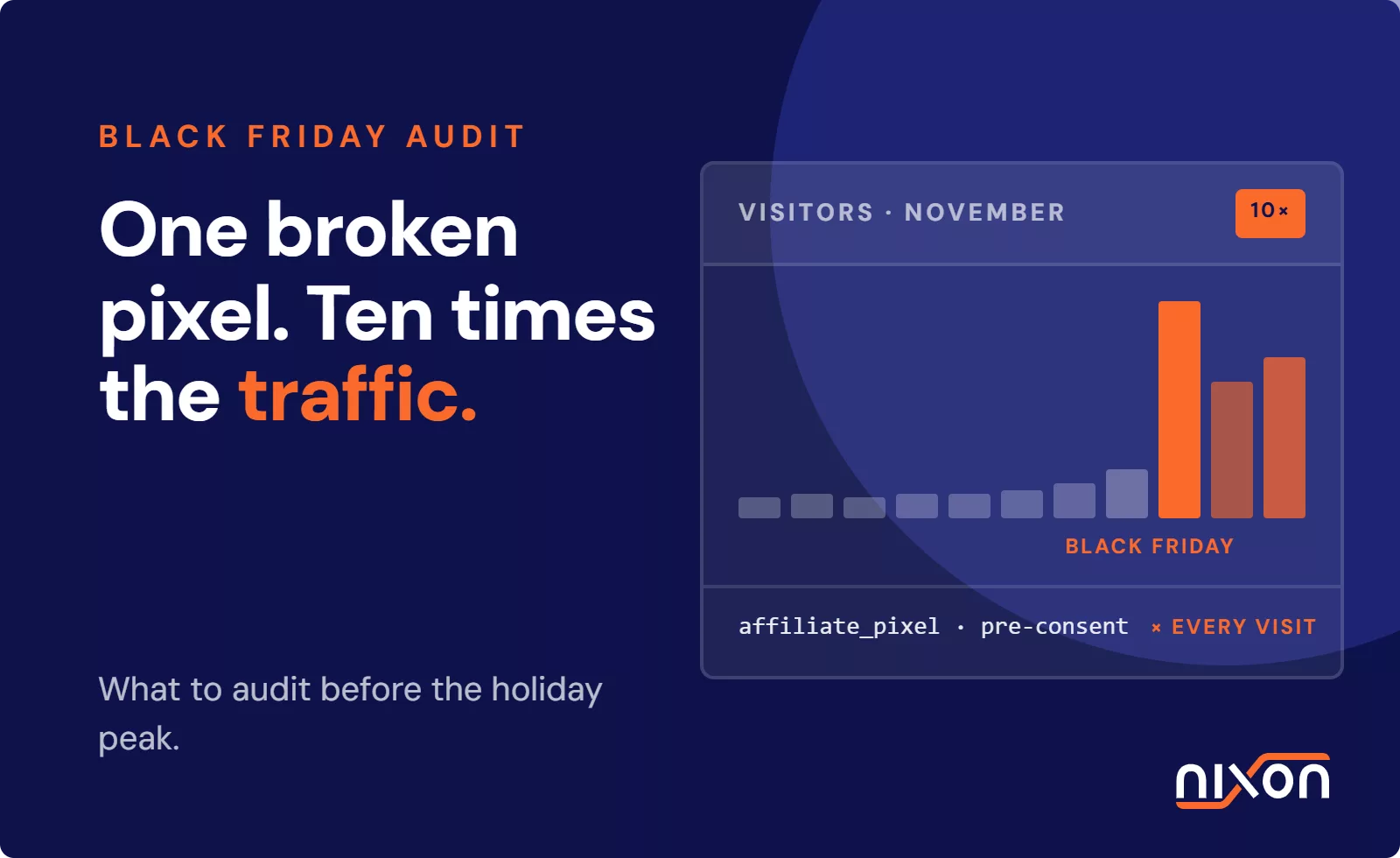
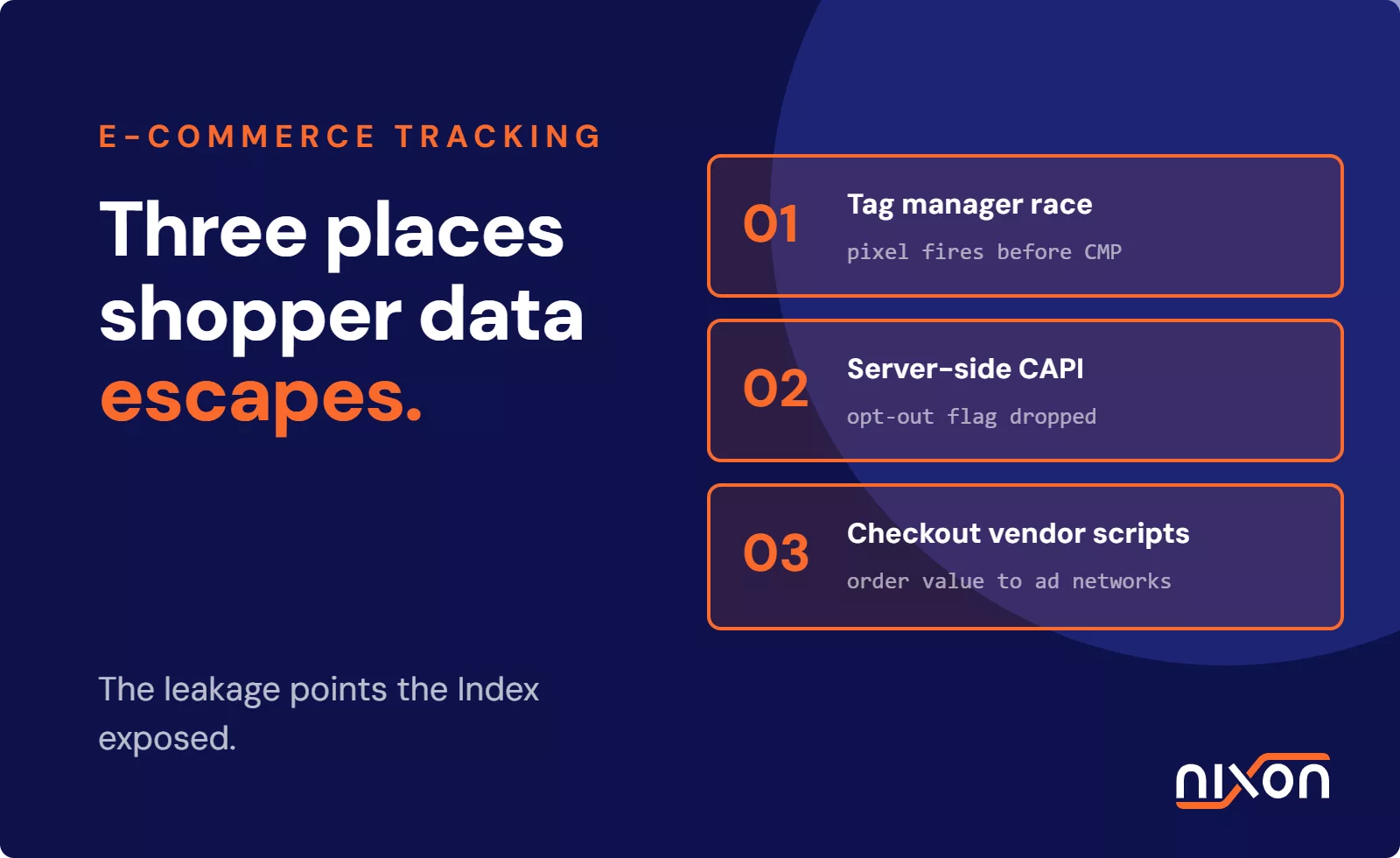
Manual spot checks on a staging checkout provide a false sense of security. Marketing teams routinely deploy new tags, adjust container triggers, or update platform plugins during high-velocity promotional periods like Black Friday. A single tag manager update can inadvertently reintroduce dynamic listeners or cause pixels to fire before consent banners register choices.
Manual checks cannot keep pace with continuous configuration drift, particularly across multi-brand checkouts in different locales. Catching technical leaks requires continuous visibility into script behaviour. Managing compliance risks across multi-brand website portfolios requires automated monitoring that inspects checkout tags as they fire in production.
Keeping abandoned cart tracking GDPR compliant across dozens of checkout templates requires continuous verification across every locale. Catching unsubmitted form scraping before an enforcement notice lands demands active inspection of live network requests across all regional storefronts. If your organisation manages multi-brand checkouts and needs continuous visibility into rogue tracking scripts, explore how to protect your revenue funnels and request a demo of Nixon Platform to monitor your live domains.
Frequently Asked Questions (FAQ)
Is abandoned cart tracking gdpr compliant if the shopper has not submitted the form?
No. Capturing personal data such as an email address from an input field before the user clicks submit violates European data protection rules. Under Article 5(3) of the ePrivacy Directive and Article 6 of the GDPR, reading terminal device data and processing personal identifiers for marketing requires prior consent or an affirmative action, which unsubmitted keystrokes do not provide.
Can webshops rely on legitimate interest for abandoned cart recovery emails?
Legitimate interest cannot justify capturing unsubmitted form data. A shopper typing into a field without submitting does not reasonably expect their contact details to be siphoned for marketing. The data subject's privacy rights outweigh the merchant's commercial interest, meaning explicit consent is required before capturing or utilizing the data.
Does the e-commerce soft opt-in exception apply to abandoned checkouts under GDPR?
The soft opt-in exception does not apply to abandoned checkouts where no purchase occurred. Under EU privacy regulations, soft opt-in permits direct marketing only when contact details are collected during the actual sale of a product or service. An unsubmitted form does not constitute a completed sale or formal commercial negotiation.
How do marketing tools like Klaviyo or Omnisend capture cart data before checkout?
These platforms deploy client-side JavaScript event listeners that attach to form fields. The scripts monitor browser events like blur or keyup. When a visitor types their email and clicks outside the field, the script captures the string and sends it to the vendor API immediately, even if the visitor abandons the page without submitting.
What is the difference between keystroke logging and standard checkout analytics?
Standard checkout analytics track aggregate funnel metrics, such as drop-off rates, using pseudonymous session events that do not capture raw personal input fields. Keystroke logging actively intercepts and records specific text values typed into form fields, such as email addresses or names, exfiltrating identifiable personal data before any formal submission event occurs.