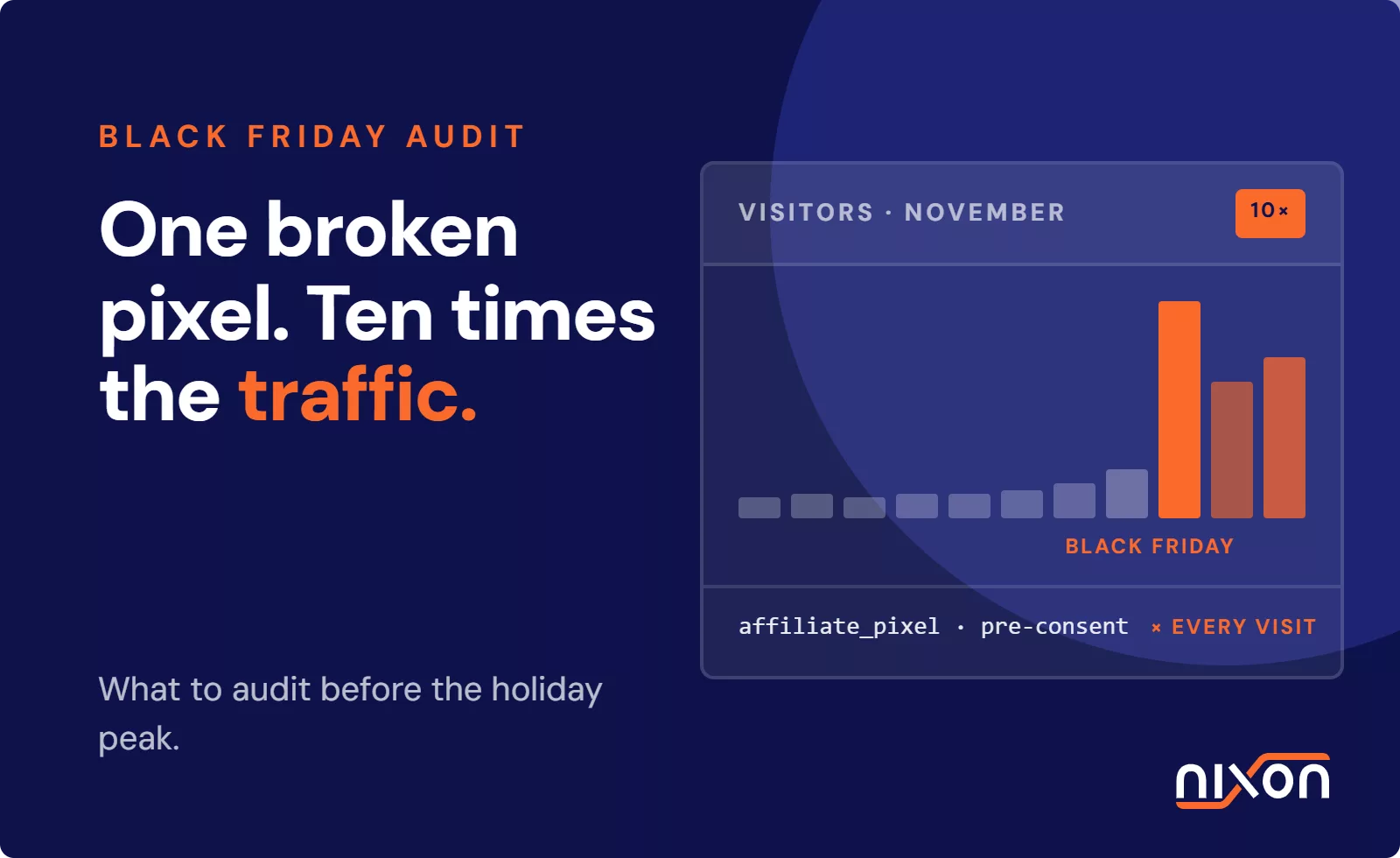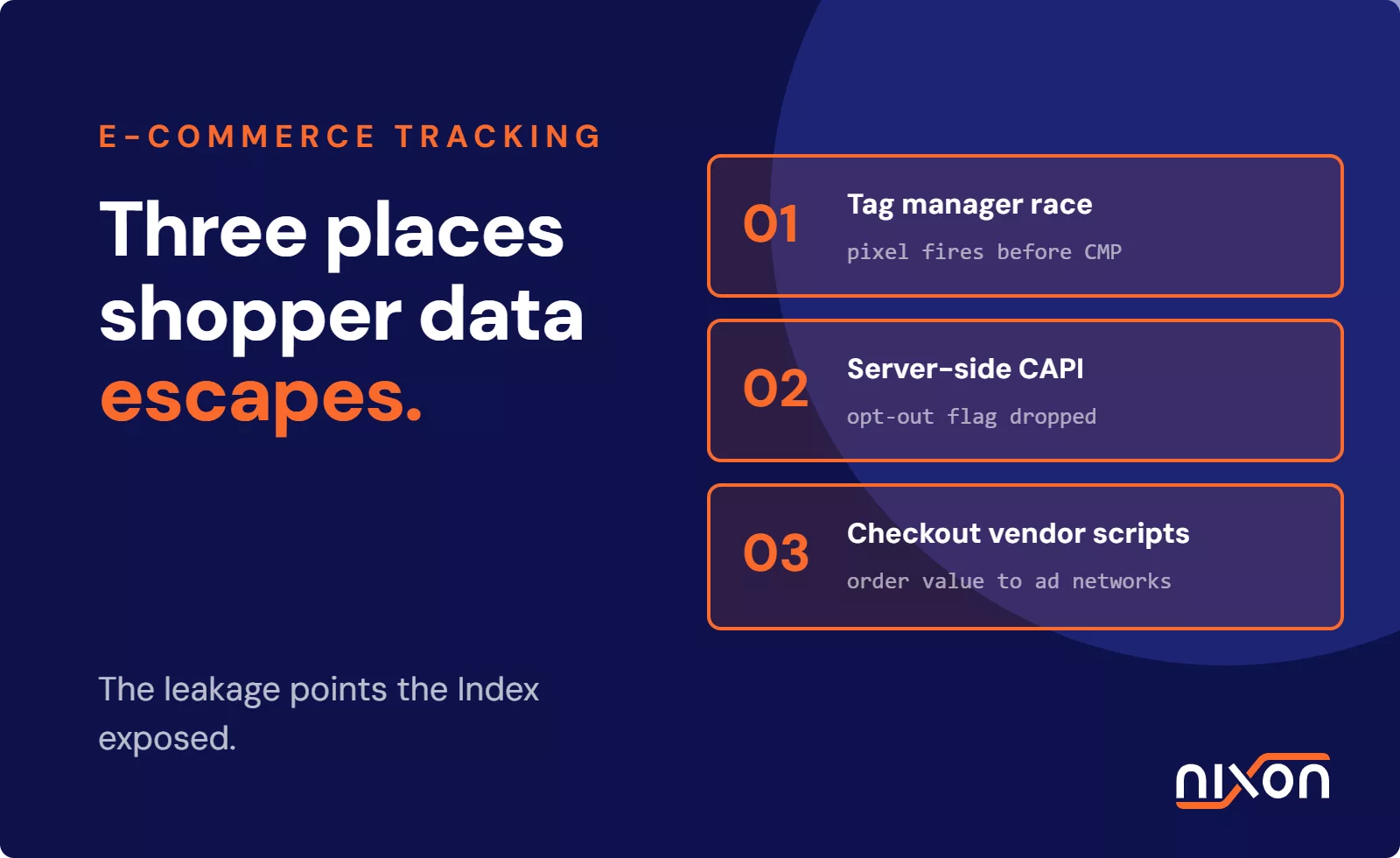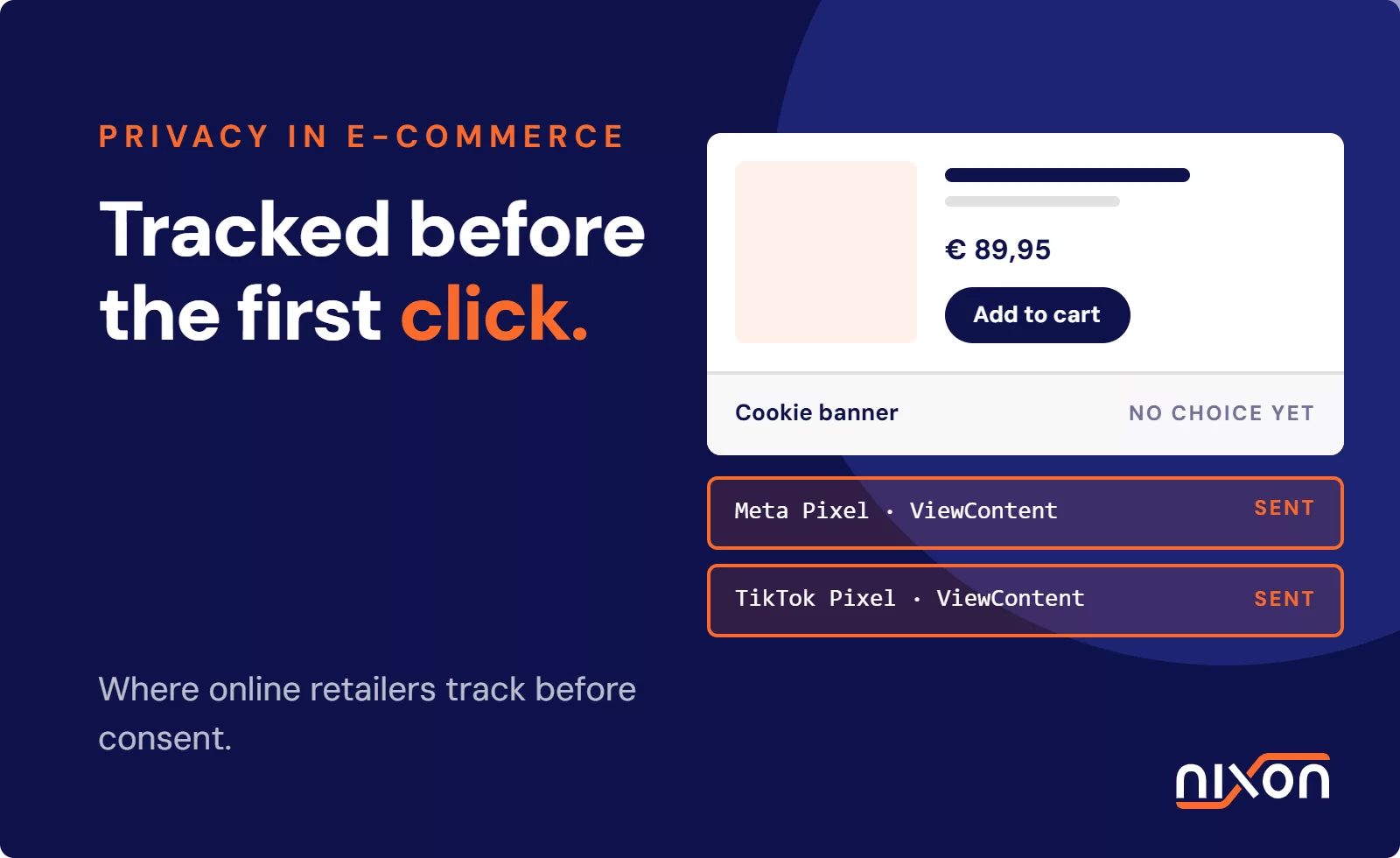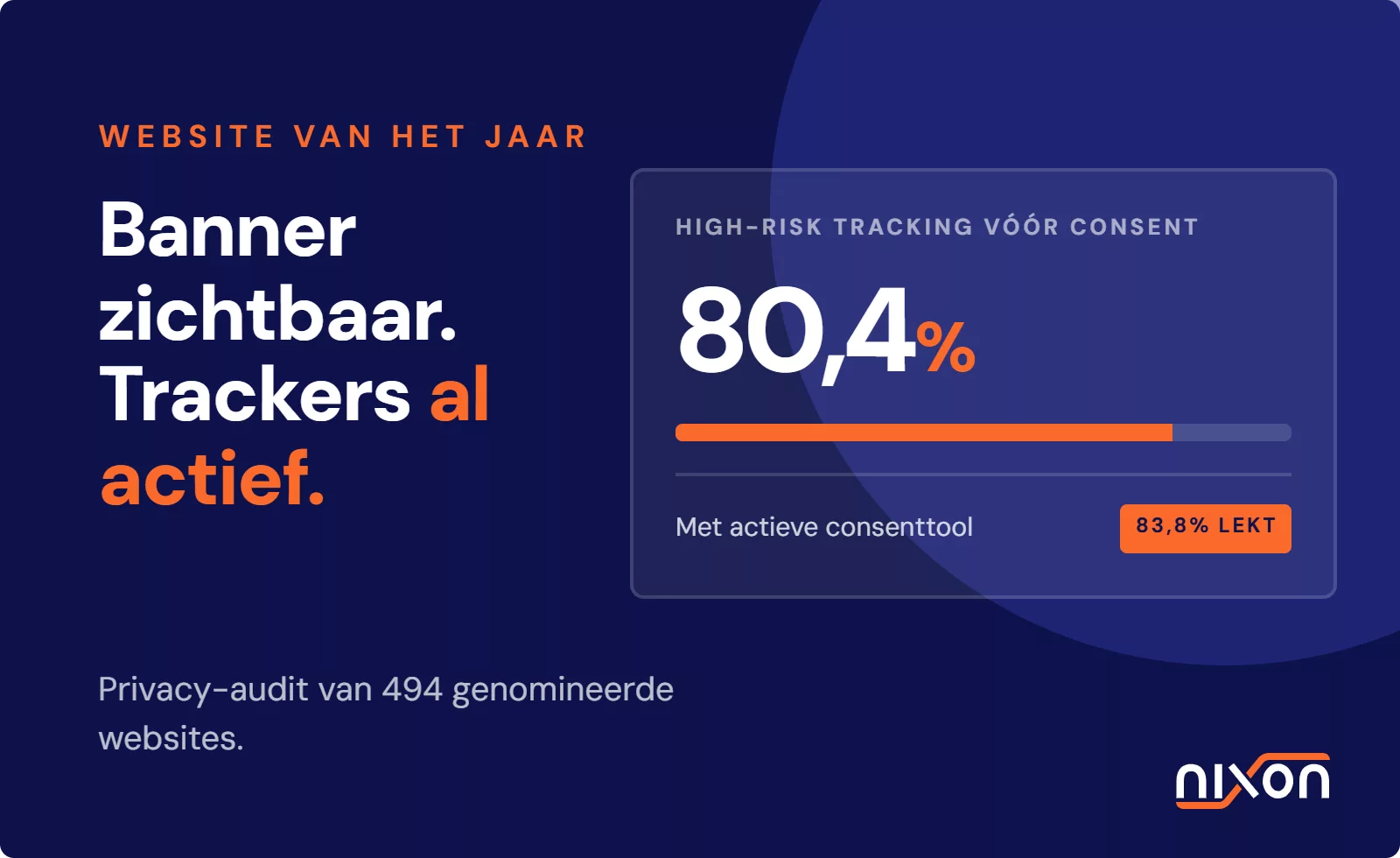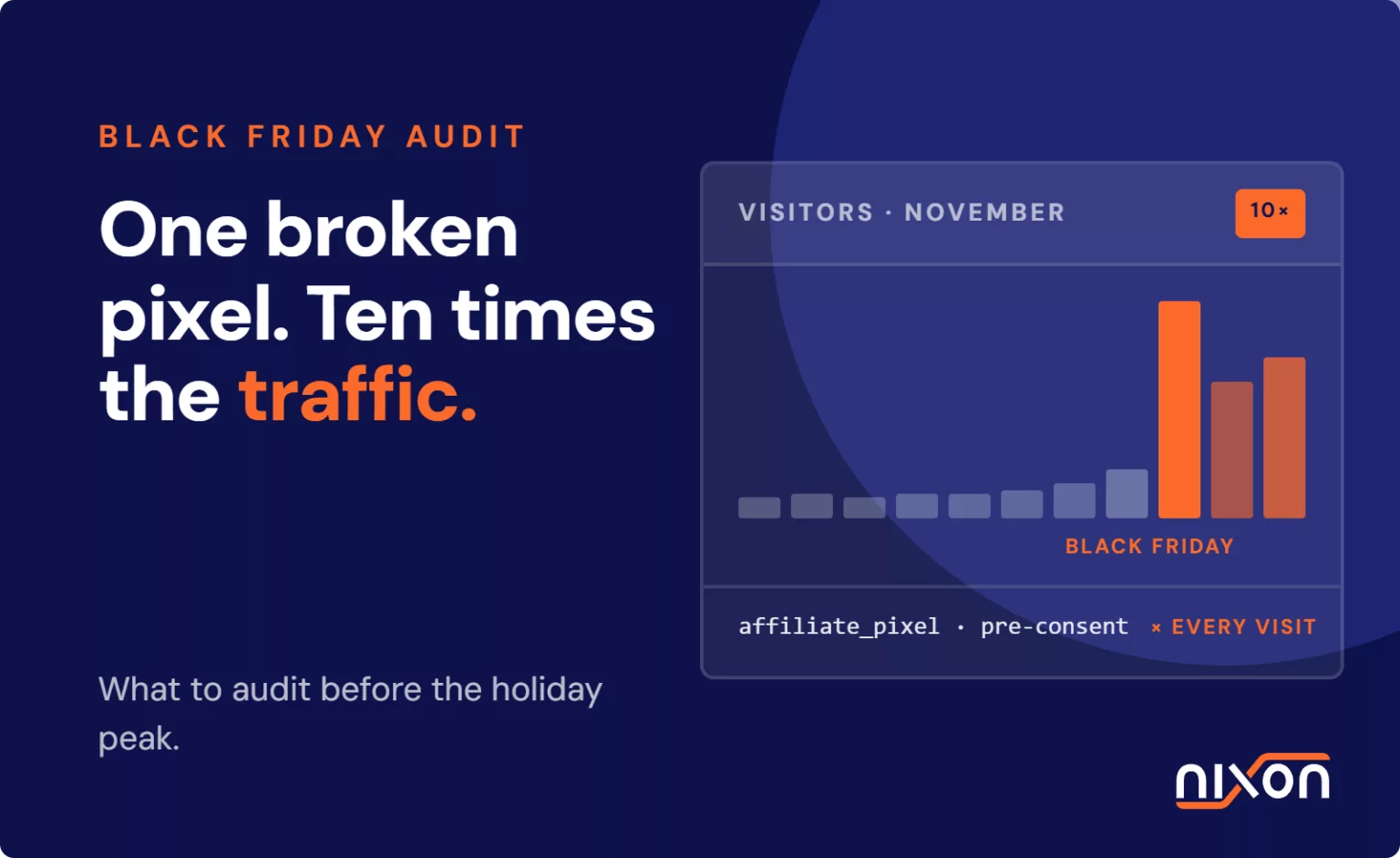
A Black Friday website privacy audit is a technical review of promotional tags, affiliate pixels and checkout scripts conducted before holiday traffic spikes. It ensures unvetted marketing trackers do not collect customer data without valid consent. Every November, e-commerce teams push unreviewed tags into production to hit revenue targets. Unvetted tracking pixels then execute before consent while traffic surges tenfold. We see this breakdown every retail season. Therefore, a structured audit ensures your holiday campaigns, affiliate links and dynamic checkout scripts respect consumer choices before peak visitor volumes arrive.
Why traffic spikes multiply website privacy liabilities
During standard operational months, a broken tracking trigger affects a modest baseline of visitors. During Black Friday weekend, however, that same defect fires hundreds of times per minute across thousands of concurrent shoppers. This multiplication turns routine technical debt into widespread non-compliance across European and US jurisdictions.
The mathematical scaling of tracking violations
Under European privacy legislation, each unauthorized tracker deployment represents an independent breach. For example, an unconsented ad pixel firing for 100 visitors a day creates limited legal exposure. When retail volume surges tenfold during promotional peaks, that unconsented pixel executes millions of unlawful network calls instead. Consequently, online retailers face severe exposure under Directive 2002/58/EC (ePrivacy Directive) and GDPR Article 83. The severity of potential administrative fines correlates directly with the volume of impacted consumers and the duration of tracking.
Regulator focus on peak retail periods
Data protection authorities actively inspect high-traffic retail domains during fourth-quarter sales events. Regulators such as the French CNIL routinely deploy automated crawlers to detect pre-consent cookie placement, non-compliant banner interfaces and dark patterns. In addition, the official CNIL guidelines on tracking devices establish that tracking scripts must not initialize prior to explicit positive consent. When automated sweeps catch retail platforms harvesting consumer data unlawfully during Black Friday, authorities hold clear proof of widespread e-commerce privacy compliance vulnerabilities.
Which marketing tags should you audit before Black Friday traffic peaks?
Marketing departments face immense pressure to maximize holiday conversion rates. As a result, digital marketing teams frequently publish ad-hoc campaign tags, affiliate tracking pixels and dynamic retargeting code through container software without notifying technical privacy leads.
Temporary holiday ad pixels and conversion tags
Flash sales often introduce temporary advertising networks, specialized attribution tools and experimental social media pixels. In the rush to launch campaigns, marketing agencies connect tags to standard page view events instead of verified consent triggers. Therefore, implementing rigid tag manager consent governance ensures that custom event triggers block new tags automatically until the consumer explicitly grants consent for marketing purposes.
Affiliate network postback scripts
Black Friday campaigns rely heavily on external publisher networks, coupon websites and influencer attribution models. These integrations typically require specialized postback pixels, redirect scripts or client-side storage keys to attribute multi-touch affiliate conversions. Furthermore, many affiliate scripts drop unique identifiers or read device data the instant a visitor arrives via a promotional link. Unless these external resources respect consent management parameters, they generate significant third-party tracker risks across partner domains.
Dynamic retargeting parameters on product pages
Dynamic product catalog retargeting tags collect granular browsing patterns to serve personalized promotions across external display networks. These scripts extract stock-keeping units (SKUs), item prices and cart payloads straight from the document object model. Thus, if your tag manager fires product catalog tags before the user clicks accept, you leak basket contents and SKUs straight to Meta and Google without a valid legal basis.
Checkout funnels and unmanaged dynamic scripts
Landing pages leak data, but checkouts leak identities. High-volume checkout steps load session recorders, payment scripts and helpdesk widgets that expose private customer data under peak load. Hence, the conversion funnel presents the highest privacy sensitivity across the entire purchase journey.
Abandoned cart trackers capturing form data
Aggressive cart abandonment tools are ubiquitous during competitive holiday retail drives. Cart scrapers are the worst offenders here, grabbing unsubmitted email fields the moment a shopper clicks into the form. If your platform syncs unsubmitted customer data into email retargeting funnels without consent, it directly violates European consent mandates and California Consumer Privacy Act (CCPA) disclosure requirements.
Payment gateway trackers and bundled analytics
Modern payment gateways use dynamic fraud prevention scripts and embedded iframes to secure transactions. Fraud prevention is strictly necessary, but payment vendors frequently bundle analytics or telemetry into those same scripts. Because of this practice, technical teams must audit every payment asset directly. Strip or block the telemetry layer immediately, and never give vendors a free pass under the guise of security.
Customer support chat widgets on checkout pages
To reduce checkout drop-offs during high-pressure promotions, online shops routinely embed real-time chat widgets and AI helpdesk assistants. Many chat vendors embed persistent tracking cookies, track visitor movements across pages and broadcast network requests to third-party endpoints immediately upon script execution. Consequently, unless your engineering team configures your tag architecture to halt chat script initialization pending analytics consent, these auxiliary widgets undermine site-wide privacy compliance.
How to run a Black Friday website privacy audit before launch
You cannot catch race conditions by clicking around in preview mode. You need a systematic opt-out test across every critical funnel. Auditing your production release candidate before peak marketing pushes isolates script deployment regressions prior to public exposure.
- Step 1: Inspect network payloads under simulated opt-out across top landing pages.
- Step 2: Validate consent management platform blocking rules under realistic network throttling.
- Step 3: Verify tag manager triggers across each sequential checkout stage.
Step 1: Inspect network payloads under simulated opt-out
Technical teams must inspect browser developer network tabs while navigating the store under clean session profiles. Start by loading primary promotional landing pages with a cleared cache. Next, decline consent on the banner prompt, then examine HTTP network requests for unauthorized communications. Ensure that advertising hosts like Meta, TikTok, Google and affiliate ad servers receive no pings, referral query strings or device fingerprint data when consent is denied.
Step 2: Validate consent management platform blocking rules
A consent management platform (CMP) banner is ineffective if underlying scripts continue to execute in the background. Rapid client-side rendering engines, asynchronous script loaders and aggressive cache layers can cause competitive race conditions where trackers load before the CMP finishes initialising. For this reason, testing must confirm that automatic script blocking rules and custom JavaScript callbacks consistently halt unauthorized scripts under varying connection speeds and device profiles.
Step 3: Verify tag manager triggers across checkout stages
Trace firing rules inside Google Tag Manager or your alternative container across each sequential stage of checkout. Specifically, verify that promotional scripts remain suppressed on cart, shipping, billing and order confirmation views unless corresponding storage consent parameters are present. Regular technical testing identifies orphan tags and broken exclusion rules before real shoppers trigger high-velocity data leaks.
Conducting a Black Friday website privacy audit before promotional traffic spikes prevents simple tracking oversights from turning into widespread regulatory liabilities. To identify hidden tag leaks and verify your consent rules across every promotional funnel, audit your website with Nixon Pro before peak traffic arrives.
Frequently Asked Questions (FAQ)
What makes a Black Friday website privacy audit different from a routine audit?
A Black Friday website privacy audit focuses on high-risk, temporary technical deployments. Standard audits assess baseline operations, but peak retail periods introduce rushed promotional tags, affiliate tracking pixels, and aggressive cart abandonment scripts. High traffic volumes scale minor script leaks exponentially, magnifying regulatory exposure under GDPR and CCPA when thousands of visitors browse your site simultaneously.
Can temporary promotional tags bypass our cookie consent management platform?
Yes. Marketing teams often deploy temporary promotional tags via Google Tag Manager using generic triggers such as page view or DOM ready. If these triggers lack explicit consent constraints, or if scripts execute before your consent platform initializes, tags bypass blocking mechanisms completely. This allows third-party marketing networks to collect shopper data before users grant permission.
Why are abandoned cart recovery tools a high privacy risk during peak sales?
Abandoned cart recovery tools frequently capture keystrokes from checkout forms before customers click submit. If your site captures emails, phone numbers, or cart contents without explicit consent or adequate notice, it breaches GDPR and ePrivacy requirements. Syncing unsubmitted form data to marketing vendors creates severe liabilities during high-volume sales periods.
Do affiliate tracking pixels require explicit consent under GDPR?
Yes. Affiliate tracking pixels read or write device information such as unique identifiers, click IDs, or cookies to attribute sales. Under the ePrivacy Directive and GDPR Article 7, these operations require prior, informed consent. Affiliate tracking scripts cannot be classified as strictly necessary, meaning they must remain blocked until the customer opts in.
How quickly can a pre-flight privacy audit identify tracking leaks before launch?
A dedicated pre-flight scan identifies technical tracking leaks across your digital properties within minutes. It maps firing scripts, detects cookies set before consent, and pinpoints container misconfigurations across your conversion funnel. This rapid verification allows engineering and privacy teams to patch trigger flaws before public marketing campaigns and traffic spikes begin.