Achieving retargeting audience compliance after Black Friday exposes major technical flaws in online retail setups. In the rush to re-engage holiday shoppers, marketing teams often populate custom audiences with visitors who declined tracking. Adding unconsented visitors to remarketing lists breaches fundamental privacy rules. It exposes retail brands to regulatory action from DPAs like the CNIL under GDPR Article 83 and the ePrivacy Directive.
In our audits of e-commerce setups, we repeatedly see remarketing pools built without valid opt-in records. Many brands assume browser scripts are the only compliance problem, quietly processing server-side customer profiles without consent while their pipelines pull records indiscriminately from abandoned carts, product page visits and checkout forms. E-commerce teams must examine where audience data originates. You must verify that your technical tracking architecture respects consent decisions before scaling paid ad campaigns.
What retargeting audience compliance requires under GDPR and ePrivacy
Retargeting audience compliance is the technical and legal protocol of ensuring that consumer identifiers, browsing activity and transaction events transfer to advertising platforms only after recording verifiable, affirmative consent under GDPR Article 6 and the ePrivacy Directive. It requires real-time synchronization between frontend banner choices, server pipelines and ad network audience managers.
Many online merchants believe remarketing falls under ordinary commercial operations. Under European law, targeted advertising is invasive processing that requires unambiguous permission before trackers monitor individual browsing habits across the web.
Why legitimate interest fails for behavioural retargeting
Online retailers often claim legitimate interest under Article 6(1)(f) to justify tracking previous store visitors. Regulators have repeatedly killed this defense for profiling and behavioral ads. The EDPB guidelines on targeting social media users state that legitimate interest cannot serve as a lawful basis here. Intrusive profiling, cross-site tracking and real-time behavioral segmentation exceed reasonable consumer expectations. Controllers must establish verifiable consent before collecting tracking data.
Enforcement decisions from authorities like the French CNIL clarify that terminal device access requires unambiguous opt-in consent. The CNIL cookie and tracker enforcement guidelines confirm that ePrivacy consent must precede data storage or access on user devices. Controllers cannot claim legitimate interest for downstream profiling when the underlying collection mechanism requires prior consent under ePrivacy rules.
Article 6 lawful basis and explicit consent standards
Compliance with GDPR Article 6 lawful basis requirements demands that controllers record valid consent under Article 6(1)(a) before transferring identifiers to advertising networks. Consent must be freely given, specific, informed and unambiguous. A visitor clicking away from a banner, continuing to browse, or clicking a reject button cannot be added to an advertising cohort.
Controllers must prove that consent was captured before creating any retargeting audience. If an e-commerce platform passes customer actions to ad networks without timestamped consent records, the processing is unlawful. Failure to isolate consenting users from opted-out visitors invalidates the legal basis for the entire audience pool.
How Meta Pixel and CAPI leak non-consenting visitors
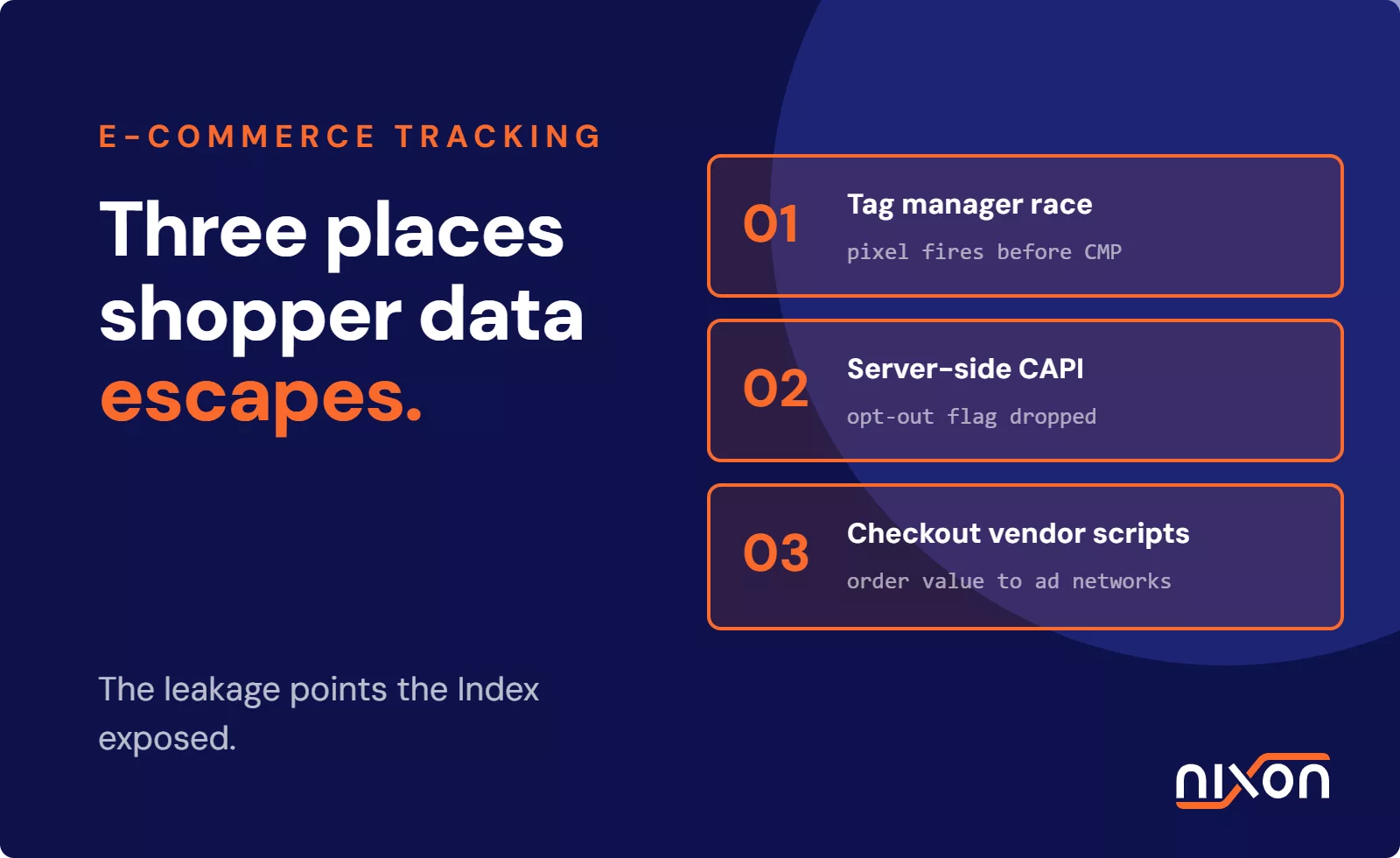
Retail platforms introduce serious vulnerabilities during peak traffic events like Black Friday. When standard tracking mechanisms bypass banner preferences, organisations suffer hidden e-commerce tracking leaks that contaminate audience lists across Meta Business Manager. In technical reviews, we observe these failures across three main collection points.
Client-side pixel firing before CMP interaction
The most common failure point occurs when the Meta Pixel executes on page load before the consent management platform records a choice. Web developers frequently deploy the Meta base code directly in the website header or through unconditional container triggers. When a shopper lands on a Black Friday deal page, the browser immediately transmits page view events, IP addresses and user-agent strings to Meta.
Even if the visitor subsequently clicks “Reject All” on the banner, the client-side tag has already sent their visit. That event data feeds directly into broad retargeting lists, lookalike modeling pools and conversion tracking groups. To prevent this leak, marketing teams must implement strict tag manager consent governance so that advertising scripts remain blocked until an explicit affirmative trigger fires.
Server-side Conversions API bypassing frontend banner opt-outs
In practice, we see engineering teams treat Meta Conversions API (CAPI) as a technical workaround for ad blockers, completely detaching server pipelines from frontend consent choices. In many configurations, the e-commerce backend dispatches server events directly to Meta via cloud containers. These include ViewContent, AddToCart and InitiateCheckout events.
If the backend server fails to parse the visitor’s consent cookie, it forwards server-side events for every single cart interaction. This happens regardless of frontend banner rejections. The ad network processes these payloads, identifies the user profile through matching data and automatically populates retargeting pools. This technical bypass directly undermines user choice and creates systemic non-compliance.
Hashing customer identifiers without consent records
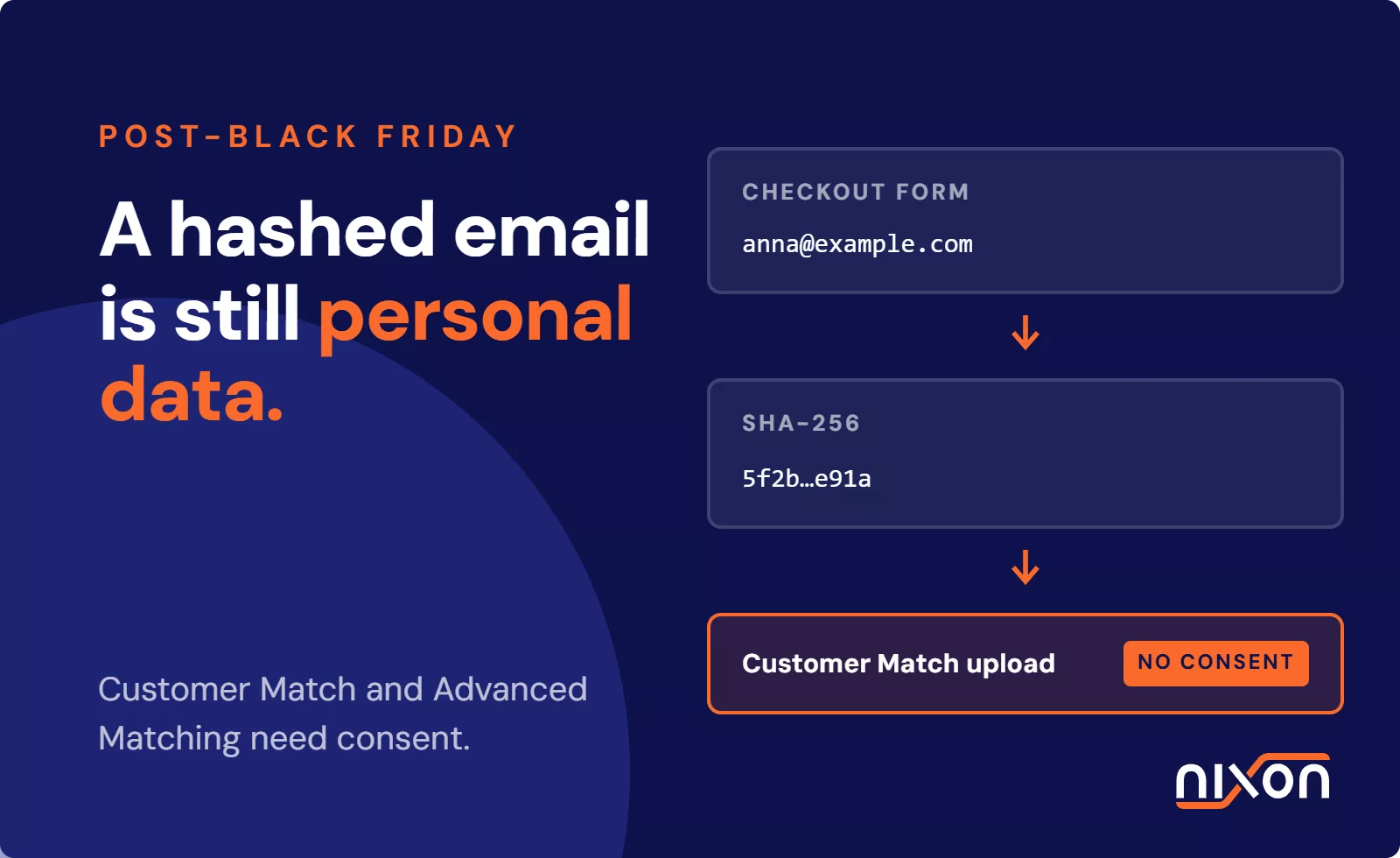
Meta Advanced Matching links web visitors with Facebook or Instagram accounts using personal identifiers like email addresses, phone numbers or physical addresses. E-commerce systems commonly hash these identifiers using SHA-256 before transmission. Teams often believe this technical transformation removes GDPR requirements. Under European law, hashed personal data remains pseudonymous personal data, not anonymous data.
Transmitting hashed email addresses from checkout forms without consent violates Article 6. When a shopper rejects trackers but enters an email to buy, pushing that hash into Meta Advanced Matching breaks the law unless verifiable consent is attached. Advanced Matching features must remain tied to verified consent parameters.
Google Customer Match and first-party audience traps
Another major trap during post-holiday marketing is assuming first-party data is exempt from consent restrictions. Many merchants assume that because an individual shared their email address directly during a Black Friday purchase or cart interaction, that data can be uploaded to Google Ads without restriction.
Uploading checkout drop-off lists without advertising consent
During Black Friday, thousands of shoppers abandon checkouts after entering personal details. Marketing teams often export these abandoned checkout lists to create high-intent recovery lists within Google Customer Match. However, collecting an email address to facilitate an order does not grant legal permission to use that address for ad targeting.
Under GDPR, using customer contact information for programmatic ad profiling requires an explicit marketing consent checkbox. Processing transactional data for paid behavioral targeting without opt-in consent violates purpose limitation requirements under Article 5(1)(b). Uploading checkout drop-off data to advertising networks without clear promotional consent generates immediate legal liability.
Google Consent Mode configuration oversights
To assist with compliance, Google requires digital properties to communicate consent choices through Consent Mode parameters, notably ad_user_data and ad_personalization. Implementing Google Consent Mode v2 is mandatory for building remarketing audiences in the European Economic Area.
Severe configuration errors occur when tag management setups fail to map consent categories correctly. If your tag container passes default granted states without waiting for CMP resolution, Google treats incoming customer data as eligible for ad personalization. The same risk occurs when containers fail to set ad_personalization=denied when visitors reject tracking. Retailers must audit their tag management systems to ensure that audience-building tags stay silent whenever consent is refused.
Auditing retargeting lists and CMP sync before holiday campaigns
To secure compliance before launching post-holiday ad campaigns, e-commerce brands need a structured verification methodology. Privacy officers and technical leads should follow a four-step audit process to verify every pathway where customer identifiers flow into paid media platforms.
-
Audit client-side tag triggers against CMP signals. When we inspect client-side tags in staging and production environments, we verify that all marketing scripts map to explicit consent categories. For enterprise teams running a OneTrust cookie consent setup, this means ensuring targeting tags (typically Category C0004) depend strictly on affirmative consent triggers. Check network inspection panels to confirm that zero tracking calls reach Meta, Google or TikTok servers before interaction.
-
Test explicit rejection and navigation persistence. Simulate explicit rejection paths on your consent banner. Confirm that marketing tags remain dormant across subsequent page navigation. Tag containers must respect blocking states dynamically without firing speculative tracking hits or unconsented page views.
-
Filter backend server pipelines against consent timestamps. Match backend event logs against CMP consent storage records. When a customer interaction occurs, your server-side dispatcher must inspect the visitor’s consent state before assembling payloads. If the visitor opted out, the server pipeline must terminate the payload or strip all personal identifiers, including IP addresses and hashed identifiers.
-
Purge non-compliant legacy audiences from ad managers. Audit existing customer lists inside Google Ads and Meta Business Manager. Remove any static lists created from unverified checkout drops or abandoned cart exports. Establish automated filters that sync CMP consent status with internal customer databases. This ensures that only validly consented shoppers populate active remarketing funnels.
Manually synchronizing complex CMP rules with custom tag architectures and server pipelines is slow and error-prone. If your organisation needs to verify that your tracking pipelines, tag managers and CMP configurations remain compliant across every touchpoint, explore our OneTrust implementation services or get hands-on implementation help from Nixon to audit and configure your consent rules so you can resolve audience leakage before ad spend goes out the door.
Frequently Asked Questions (FAQ)
Can you retarget visitors who reject cookie tracking under GDPR?
No. When a user rejects tracking via your cookie banner, you cannot collect their identifiers, log their actions, or add them to remarketing cohorts. Attempting to track them using alternative methods like server-side tagging, digital fingerprinting, or backend database events violates GDPR Article 6 consent requirements and ePrivacy mandates.
Does hashing customer emails satisfy GDPR consent for Google Customer Match?
No. Hashing personal data using algorithms like SHA-256 produces pseudonymous data, which remains fully protected personal data under GDPR Article 4(1). You must capture explicit, verifiable consent for advertising and profiling before uploading any customer lists to Google Customer Match, regardless of whether the identifiers are hashed before transmission.
Why does Meta Conversions API (CAPI) require CMP consent verification?
Meta Conversions API processes individual user events directly on web servers. If your server dispatches these events without checking consent records, you transmit personal data for opted-out users directly to Meta. Server-side data collection must honor the same consent choices as frontend browser tags to maintain legal compliance under GDPR.
Can legitimate interest be used as a lawful basis for retargeting audiences?
No. European data protection authorities, including the EDPB, confirm that behavioural profiling, cross-platform tracking, and personalised ad targeting carry intrusive risks that override a business's commercial interests. Therefore, legitimate interest cannot serve as a valid legal basis; organisations must always obtain freely given, explicit consent beforehand.
How do you remove non-consenting users from existing retargeting lists?
You must audit your ad platform audiences and purge any records that lack verifiable opt-in timestamps. For customer match lists, delete uploaded files derived from unchecked checkout drop-offs or non-consented leads. For dynamic pixel audiences, shorten lookback windows and reconfigure tag triggers so non-consenting profiles expire without receiving further targeted ad spend.