

When regulatory proposals for a mandatory browser consent signal EU framework first appeared, website operators hoped cookie banners might finally become obsolete. However, the EU Council’s decision to drop Article 88b from the Digital Omnibus reform has put centralized browser signaling on hold. This major U-turn leaves many privacy and web teams wondering what comes next. This post analyzes why the Council reversed course. We also explore what it means for website compliance and how your team should manage cookie consent moving forward.
What was Article 88b and browser consent signaling?
Article 88b was a proposed amendment within the EU’s Digital Omnibus package. It was designed to streamline how users give consent for cookies and trackers. The core idea was to let users set their privacy preferences once, at the browser or device level. This preference would then be automatically transmitted to every website they visited, effectively creating a universal consent signal. In theory, this would eliminate the need for websites to display a cookie banner to a user who had already registered their choice.
The mechanism aimed to solve “consent fatigue,” the exhaustion users feel from repeatedly clicking “accept” or “reject” on countless banners. For a deeper look at the initial proposal, see our previous analysis of browser consent signals. Article 88b would have mandated that websites and browsers respect these signals. This would have established a technical standard for communicating consent choices automatically. The goal was to make the user’s choice more persistent and powerful, reducing friction while enhancing privacy. The proposal was similar in spirit to universal opt-out mechanisms like the Global Privacy Control (GPC) signal recognized under California law. The difference was its specific legal mandate across all EU member states.
Why the EU council abandoned automated consent signals
The removal of Article 88b was not a minor tweak but a significant policy shift. It resulted from intense lobbying, practical technical challenges, and strategic concerns about market power. The final EU Council position on the Digital Omnibus reflects a retreat from this ambitious plan.
Pushback from publishers and adtech
The strongest opposition came from the digital advertising and publishing industries. They argued that a browser-level “reject all” signal would drastically reduce consent rates for tracking. This would undermine the economic model that supports free content online. Publishers feared a sharp drop in advertising revenue if they could no longer collect the data needed for personalized ads. This economic pressure created a powerful lobbying effort that framed automated consent signals as a direct threat to the digital media industry.
Technical standardization hurdles
Implementing a universal browser consent signal across the EU presented enormous technical obstacles. A workable system would require a standardized protocol. All browsers, consent management platforms (CMPs), and website technologies would need to interpret it reliably. Questions arose immediately. How would the signal handle granular consent for different data processing purposes? How would it be securely transmitted and verified to prevent spoofing? Achieving consensus on a single technical standard among competing tech giants like Google, Apple, and Mozilla proved to be an insurmountable challenge within the legislative timeline.
Concerns over browser platform dominance
Regulators also grew wary of concentrating more power in the hands of a few large browser vendors. If browsers became the official gatekeepers of consent, they would gain significant control over the flow of data online. This could create new anti-competition risks. For example, a company like Google could set consent standards that favor its own advertising network. The EU, already engaged in multiple antitrust battles with Big Tech, was reluctant to hand these same companies the keys to the EU’s consent framework.
What this means for cookie banners and consent management
With Article 88b off the table, the compliance rules for websites in the EU are clear: the status quo remains. Cookie banners and explicit, granular consent are not going away soon. This reality has several important consequences for privacy teams.
Cookie banners remain the legal standard
Without a browser-level alternative, the cookie banner remains the primary legally recognized method for obtaining user consent under GDPR and the ePrivacy Directive. Per EDPB guidance on consent mechanisms, consent must be freely given, specific, informed, and unambiguous. A properly configured banner is the only practical way to meet these requirements on a per-website basis. The dream of a banner-free internet is, for now, on hold.
Why CMP configuration is non-negotiable
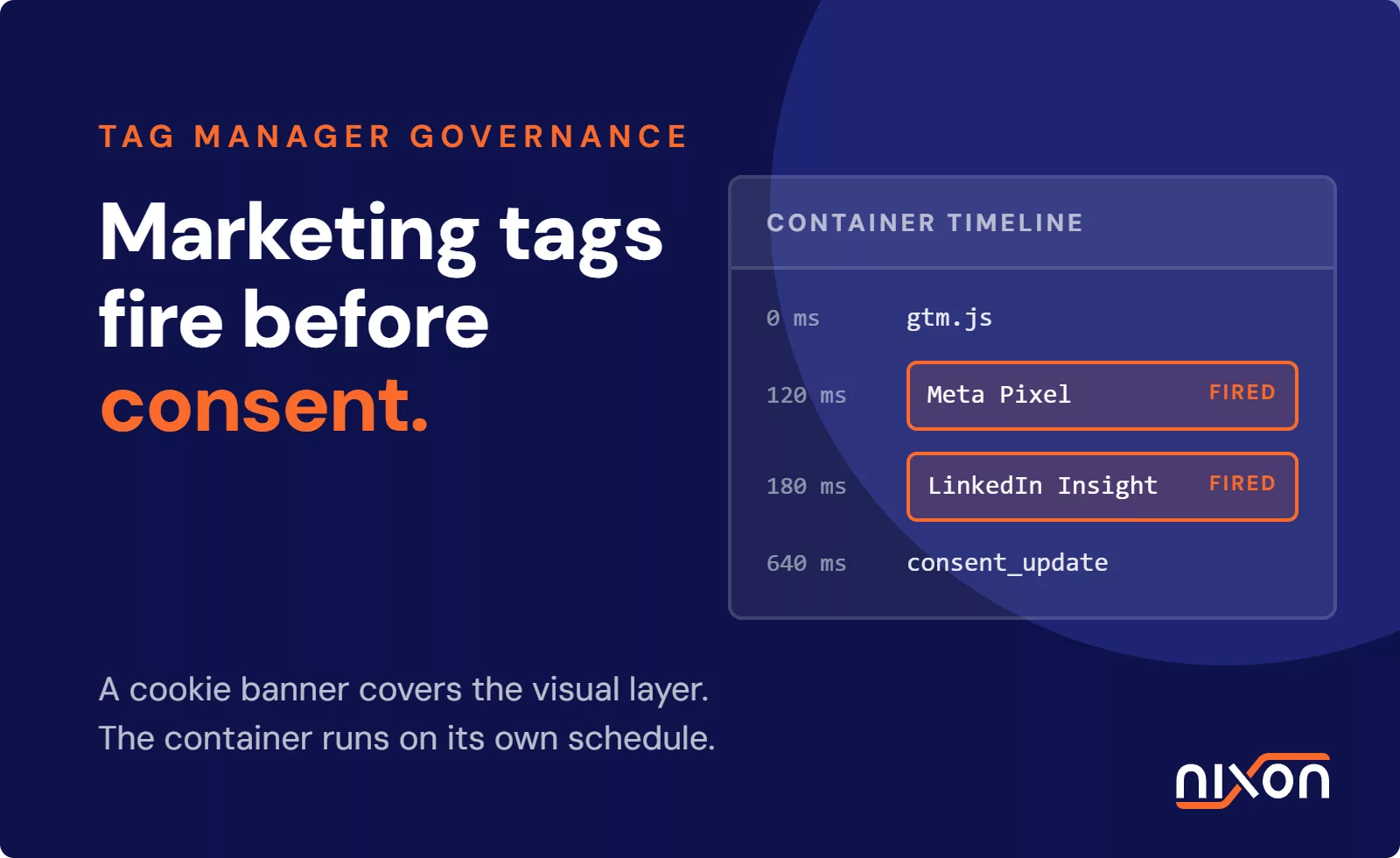
This legislative U-turn highlights the importance of a correctly configured Consent Management Platform. Websites cannot rely on an incoming browser signal. Their own CMP is solely responsible for blocking or allowing scripts and trackers based on user choice. A misconfigured CMP that allows trackers to fire before a user gives consent is a direct violation. The complexity of modern tag management systems means that ensuring the banner’s choice is technically enforced requires continuous diligence.
Preparing for multi-jurisdictional compliance
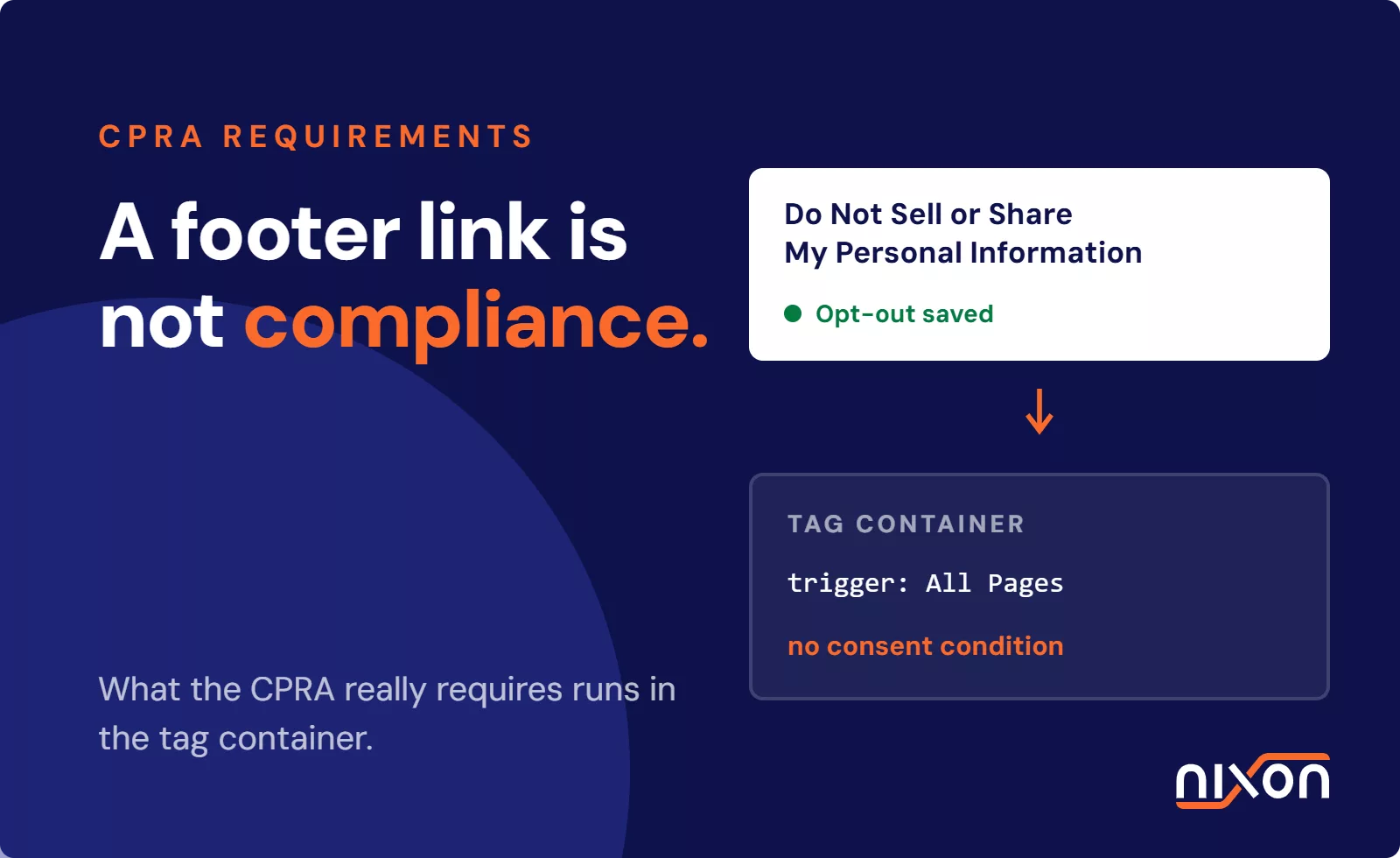
The divergence between the EU’s approach and regulations in places like California is now sharper. US state laws are increasingly mandating respect for universal opt-out signals like GPC. This means global organizations must manage a hybrid system. They need one that presents a banner for EU users and one that recognizes automated signals from US users. This dual requirement makes a flexible, geo-aware compliance strategy essential.
How to manage ongoing compliance across enterprise web properties
For large organizations managing dozens or hundreds of websites, the EU’s decision reinforces the need for a structured and scalable approach. Waiting for a single regulatory fix is not a viable strategy. Instead, the focus must be on building a durable, internal program.
Moving beyond ad-hoc cookie fixes
Many organizations still treat cookie compliance as a one-off project. A developer fixes a banner, a scan is run, and the issue is considered closed. This is no longer sufficient. New scripts are added, marketing teams launch new campaigns, and website code changes daily. Compliance is not a static state but a continuous process. Ad-hoc fixes inevitably lead to gaps as websites evolve. The new Digital Omnibus cookie rules further integrate enforcement with GDPR, raising the stakes.
Establishing continuous monitoring and governance
A mature privacy program requires automated, continuous monitoring. This involves regularly scanning all web properties to detect new trackers, changes in cookie behavior, or CMP misconfigurations. When a new unclassified tracker appears on a brand website, a central governance team needs to be alerted automatically. This moves compliance from a reactive, manual task to a proactive, managed system.
Partnering with expert remediation teams
Building this level of governance in-house can be challenging. It requires a combination of technical expertise, legal knowledge, and operational discipline. Partnering with a specialized team can provide the necessary tools and processes. They can establish a baseline, remediate existing issues, and implement the ongoing monitoring needed to maintain compliance. This ensures that as regulations evolve, your organization has a framework in place to adapt.
The EU Council’s shift on the browser consent signal EU proposal confirms that website operators are responsible for their own consent frameworks. Explicit, banner-based consent remains mandatory under GDPR. For organizations that need to build this durable compliance framework for their enterprise websites, a managed compliance program provides the necessary continuous monitoring and expert oversight.
Frequently Asked Questions (FAQ)
Did the EU cancel browser consent signals entirely?
Not entirely, but the mandatory, EU-wide implementation proposed in Article 88b has been dropped from the Digital Omnibus reform. The concept of browser signals may return in future legislation, but for now, there is no legal requirement for EU websites to support them. Websites must continue to rely on cookie banners for consent.
Are cookie banners still mandatory across EU websites?
Yes. With the removal of the browser-level consent proposal, cookie banners remain the primary legally compliant method for obtaining user consent under the GDPR and ePrivacy Directive. Websites must present clear options for users to accept or reject cookies and trackers before any non-essential data processing occurs.
How do EU rules differ from US universal opt-out signals?
The key difference is legal recognition. In US states like California and Colorado, laws require websites to honor universal opt-out signals like the Global Privacy Control (GPC) as a valid user request to opt out of data sales or sharing. The EU has not established a similar legally binding, universal mechanism for consent, leaving the responsibility on each website's banner.
What should enterprise web teams do after this Council U-turn?
Enterprise teams should double down on their existing consent management processes. The focus must be on ensuring every website's Consent Management Platform (CMP) is correctly configured to block trackers before consent. They should also implement continuous, automated monitoring to detect compliance gaps across their entire portfolio, as they cannot rely on a browser-level fix.
Will browser consent signals return in future EU legislation?
It is possible, but not in the short term. The idea of reducing consent fatigue is popular, but the technical and political hurdles that caused this proposal to fail remain. Future regulations, such as the ePrivacy Regulation, might revisit the concept, but for now, compliance strategies should be based on the existing framework of explicit, banner-based consent.