Black Friday cookie consent requires an e-commerce website to block commercial trackers until a shopper explicitly opts in, even during sudden traffic spikes. Peak traffic often breaks this protection when content delivery network latency delays consent banners, causing advertising tags to execute before visitors make a choice. To prevent unlawful tracking during flash sales, engineering teams must deploy fail-closed container triggers and isolate checkout tags. When traffic surges across product pages, consent management platforms struggle with script delivery times, causing third-party vendor scripts to misfire while media agencies simultaneously push unvetted retargeting pixels directly into live tag containers. If your consent banner executes after tracking tags fire, every checkout visitor is tracked unlawfully under European privacy rules. A compliant privacy policy will not save you when scripts misfire under load. You need real-time technical containment.
Why peak sales break Black Friday cookie consent timing on e-commerce websites
During extreme promotional traffic spikes, JavaScript execution timing on e-commerce websites frequently disintegrates. Online stores often load dozens of third-party tags for audience measurement and retargeting. When hundreds of concurrent visitors hit category pages simultaneously, asynchronous script delivery exposes subtle timing flaws. When we audit e-commerce stores during November sales surges, we routinely find race conditions that remain hidden during normal trading periods.
CDN latency and script timeout races
Consent management platforms depend on external JavaScript stubs delivered via shared vendor CDNs. Under massive shopping surges, latency on these third-party networks increases significantly. Your tag container often loads before the CMP stub resolves its configuration rules. When the container races the CMP stub, the browser processes tracking scripts before the banner even registers the user. While the banner interface pops up a few seconds later, tracking scripts have already executed in the background, transmitting customer IP addresses and browsing parameters across advertising networks before the user makes a choice.
Tag managers defaulting to fire on page load
The primary cause of pre-consent tracking during traffic spikes is loose trigger configuration. In many online stores, tags remain bound to standard Container Loaded or DOM Ready events without strict blocking rules. A strict tag manager consent governance setup prevents tags from resolving before an explicit consent confirmation fires. Without strict dependencies, browser workers process standard container tags immediately if CMP initialization stalls. The browser then transmits customer data without user authorization.
What cookies do when CMP scripts fail to load
Understanding what cookies do on a website during an unresolved script timeout highlights your legal exposure. When tracking scripts execute ahead of user choice, they instantly write unique device identifiers to local browser storage. Under ePrivacy Directive Article 5(3), storing information or accessing information on user devices requires prior informed consent. The Court of Justice of the European Union reaffirmed this principle in CJEU Case C-673/17 (Planet49). The court confirmed that pre-ticked boxes or passive browsing do not constitute valid consent. When scripts fire because a banner experienced network lag, that automatic data collection breaches EU standards immediately.
Triage step 1: contain rogue agency pixels and temporary promo tags
The operational scramble of peak promotional events often leads marketing departments to push unvetted changes. External media teams frequently insert promotional campaign pixels directly into production containers hours before a campaign launches. They try to track promotional audiences across platforms like TikTok, Meta or Pinterest without notifying privacy engineers.
Identifying unauthorized media tags in live containers
During live trading hours, digital leads must audit newly published container versions immediately. Agency media buyers face aggressive sales targets and routinely deploy custom HTML tags that lack consent variables. Inspect container version histories for deployments published outside your standard review cycle, paying special attention to custom JavaScript snippets containing external image pixels or unvetted listeners attached to cart buttons.
Enforcing fail-closed triggers in tag managers
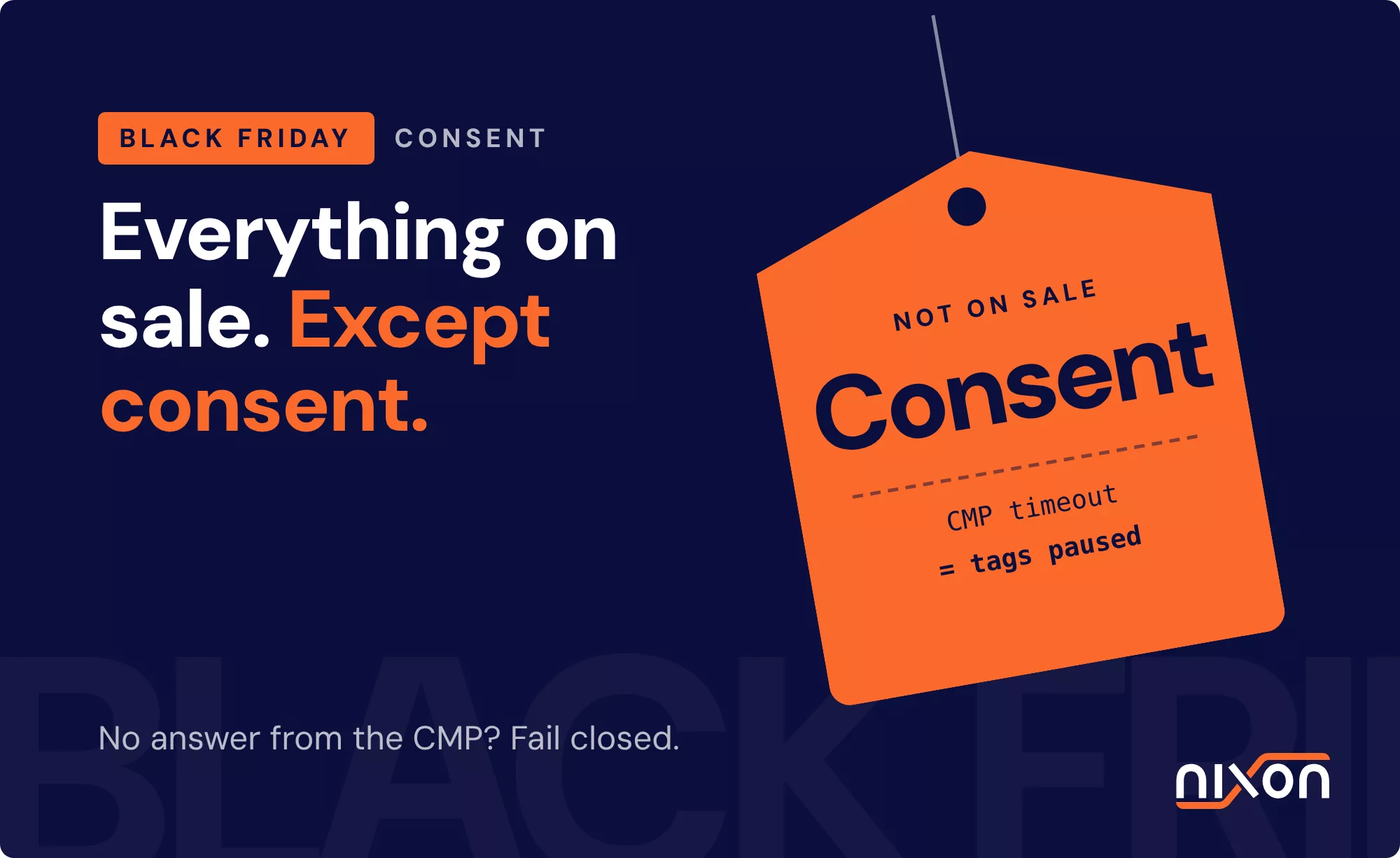
The only dependable defense against unvetted advertising pixels is a fail-closed trigger architecture. Technical timeout configurations in tag managers must fail closed rather than firing marketing tags when CMP status is unresolved. If a consent status returns undefined, times out or encounters a network error, commercial tracking tags must remain paused. Processing personal data through marketing tags without valid consent violates lawful basis requirements under GDPR Article 6(1)(a). Blocking triggers that require positive consent state variables protect your business from systematic data collection violations during sudden traffic spikes.
Triage step 2: stop affiliate tracking leaks in the checkout funnel
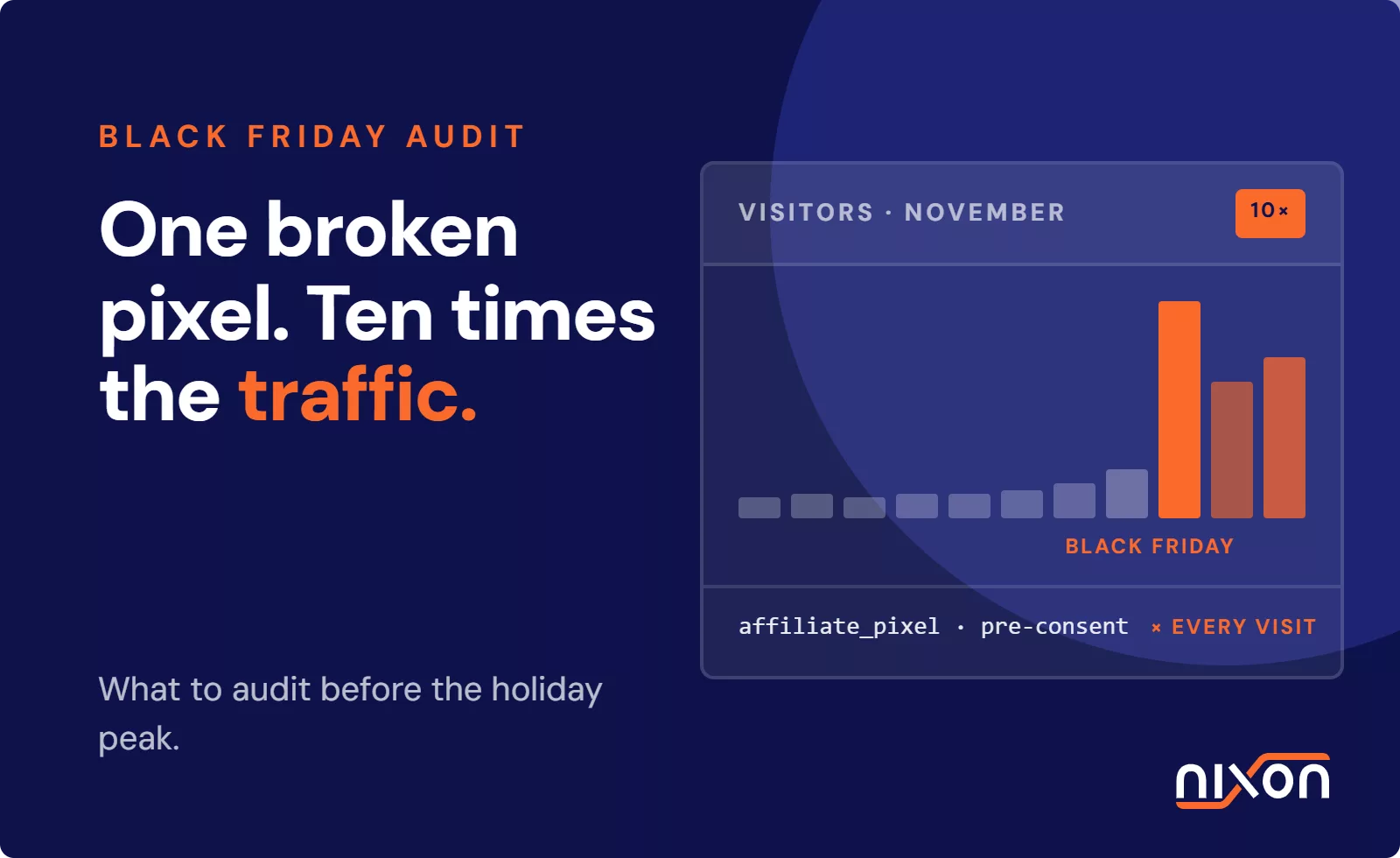
Affiliate networks and coupon extension aggregators introduce severe compliance vulnerabilities across high-converting e-commerce funnels. During peak promotional periods, affiliate scripts fight aggressively to drop attribution cookies on purchase confirmation pages to claim commercial commission.
Affiliate network scripts overriding consent states
Many legacy affiliate networks supply merchant code that explicitly bypasses tag management logic. These scripts frequently sit hardcoded inside checkout templates. In other cases, they execute via custom plugins embedded directly into e-commerce checkout platforms. When buyers enter the checkout process, these scripts attempt to write attribution cookies before verifying marketing storage consent. These patterns represent significant e-commerce data leakage points. They expose order values and hashed shopper parameters to third-party ad networks without an appropriate legal basis.
Checkout funnel isolation and cookie blocking
Contain affiliate leaks during live trading hours by isolating your conversion and order confirmation templates. Split pure accounting pings from commercial ad tracking. Tracking direct merchant referrers for internal accounting can often run server-side without third-party ad pixels. Transmitting personal browser data to third-party ad brokers requires unambiguous opt-in consent. If an affiliate script cannot be constrained by CMP consent state variables, wrap its execution block in a strict JavaScript condition. This script wrapper checks for explicit user consent before the external DOM element is constructed.
How to verify script blocking while peak sales continue
Digital teams frequently fall into the trap of monitoring vendor status dashboards instead of testing real browser behavior. A green operational checkmark on a vendor status page provides zero insight into whether your specific deployment leaks tracking data during peak consumer traffic.
The danger of assuming CMP green status means compliance
A consent banner can render visually on screen while completely failing to stop underlying network calls. If you use a OneTrust cookie consent configuration, the visual interface might present clean accept and reject buttons to your visitors. Underlying tags will still transmit tracking beacons if trigger groups, tag firing priorities or custom events fail to align with the active consent model. Evaluating compliance visually during a sales surge creates a false sense of security while network data continues to leak outward to ad exchanges.
Testing tag manager execution paths under live conditions
Digital engineers must verify real script blocking behavior by inspecting active container execution paths under simulated load. Observe network payloads directly in developer tools. Confirm that marketing vendor endpoints receive zero HTTP requests when consent is rejected or pending. Look specifically for pre-consent pings sent by advertising pixels or analytics tools attempting to model conversions. Auditing production pages during traffic spikes exposes unauthorized third-party trackers, unmapped data brokers and broken container triggers that standard vendor dashboards routinely overlook.
To triage live tag leaks during peak trading, follow this immediate containment checklist:
- Freeze non-essential container publishing across all media agency workspaces.
- Audit live network calls on category and checkout URLs without accepting cookies.
- Set default firing states for all commercial tags to block execution until explicit consent events fire.
- Isolate checkout templates to ensure affiliate scripts do not execute before marketing consent registers.
- Inspect unmapped endpoints to catch cookieless pings attempting to bypass banner rules.
Managing high-velocity promotional sales without privacy incidents requires strict validation of your tag architecture. If you need to verify your live checkout architecture and identify scripts firing before user consent, audit your cookies with Nixon Pro to uncover hidden tracking tags and ensure your store maintains full Black Friday cookie consent compliance throughout peak traffic.
Frequently Asked Questions (FAQ)
What causes cookie consent banners to fail during Black Friday traffic surges?
Traffic surges create network latency on shared content delivery networks hosting consent management platform scripts. When CMP scripts delay loading, browsers process website tag manager containers first. This execution race condition causes tags configured on basic page-load triggers to fire and place tracking cookies before the consent interface can evaluate user choices.
Can marketing tags legally fire if a CMP script times out?
No. Under the ePrivacy Directive and GDPR Article 6, non-essential trackers require unambiguous prior consent before executing or storing cookies. If a consent platform times out or fails to load entirely, tag managers must fail closed, blocking marketing and measurement tags until an affirmative opt-in signal is confirmed.
How do third-party affiliate scripts bypass consent management platforms?
Affiliate scripts frequently bypass CMP controls because they are hardcoded directly into checkout templates or e-commerce plugins rather than routed through a governed tag manager. Under high traffic, these unmanaged scripts execute unconditionally on transaction confirmation pages, setting tracking cookies and transmitting order data without verifying consent status.
What is the difference between a CMP loading and scripts actually being blocked?
A CMP loading simply means the visual banner displays to visitors in their browser. Actual script blocking requires technical integration that halts network requests to third-party endpoints until consent is granted. A banner can display perfectly while misconfigured tag triggers in the background fire marketing tags unlawfully.
How can digital teams test live script blocking without disrupting checkout traffic?
Teams should inspect browser network tabs and container debug environments on live pages, verifying that third-party ad network domains receive zero HTTP requests before consent is given. Using targeted technical scans allows engineers to identify pre-consent script execution and container leakage points without impacting customer purchasing flows.